Pharmacometabolomics Study of Sulfamethoxazole and Trimethoprim in Kidney Transplant Recipients: Real-World Metabolism and Urinary Excretion
Marieke A. J. Hof, Hessel de Haan, Stepan Stepanovic, Stephan J. L. Bakker, Eelko Hak, Gérard Hopfgartner, Frank Klont, TransplantLines Investigators

TL;DR
This study examines how the antibiotic cotrimoxazole is metabolized and excreted in kidney transplant patients, revealing new metabolites and their potential environmental impact.
Contribution
The study identifies previously unreported metabolites of cotrimoxazole and highlights their relevance for environmental and clinical monitoring.
Findings
Glucuronide conjugates and isoxazole ring-opened variants of sulfamethoxazole were identified as new metabolites.
Trimethoprim accounted for 75% of the total signal intensity, indicating its significant presence in excretion.
The study provides insights into real-world metabolism of cotrimoxazole in kidney transplant recipients.
Abstract
Background/Objectives: The increased use of antibiotics is raising concerns about environmental contamination and antibiotic resistance, exemplified by the case of cotrimoxazole, a widely prescribed combination of sulfamethoxazole and trimethoprim. After oral administration and absorption, both drugs are excreted in their parent and metabolized forms, which is a factor that is commonly considered in environmental studies. Many studies, however, rely on pharmacokinetic data from drug developers, who mostly investigate drug metabolism in healthy male volunteers rather than in actual patient populations. Methods: We investigated the real-world metabolism and urinary excretion of cotrimoxazole in an LC-SWATH/MS-based pharmacometabolomics study of 149 kidney transplant recipients who took part in the TransplantLines Biobank and Cohort Study (NCT0327284). Results: Our study confirmed (as…
Genes, proteins, chemicals, diseases, species, mutations and cell lines named across the full text — each resolved to its canonical identifier and authoritative record.
Click any figure to enlarge with its caption.
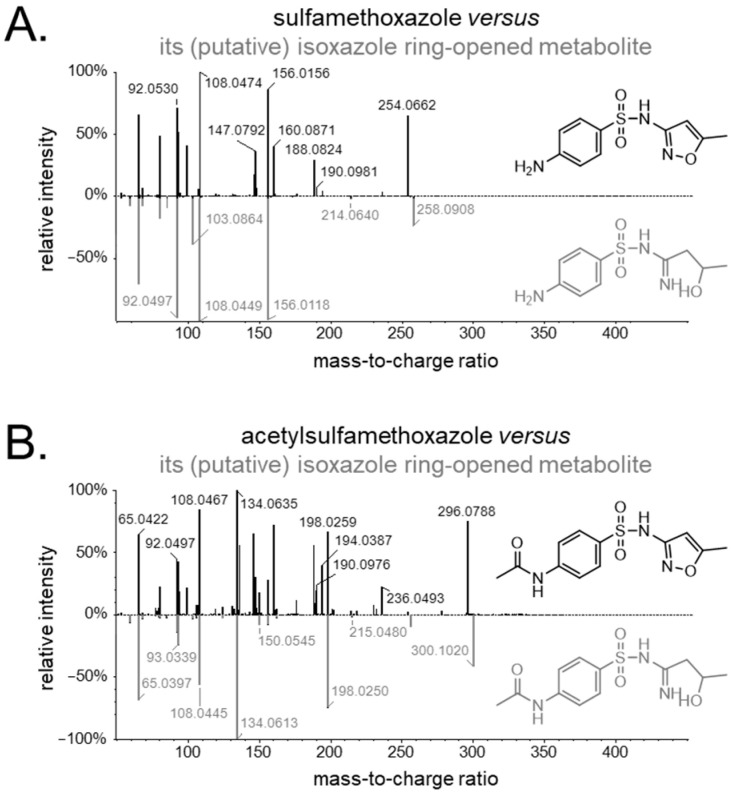 Figure 1
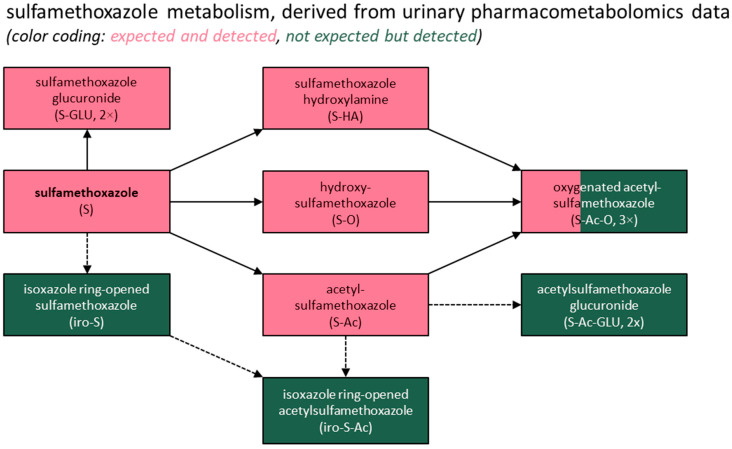 Figure 2
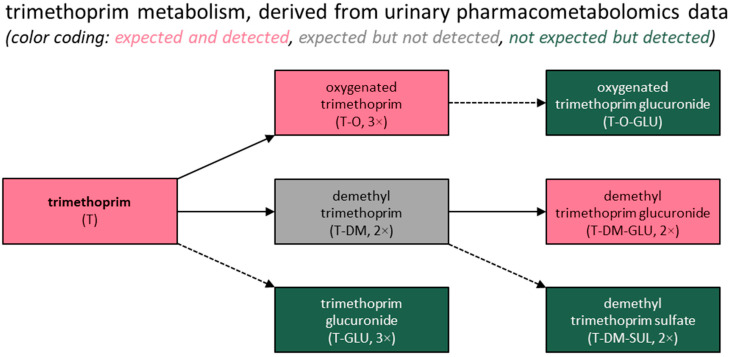 Figure 3
Peer Reviews
No public reviews on file for this paper yet. If you reviewed it on a platform where reviews are public (OpenReview, ICLR, NeurIPS, ICML), you can paste yours below so the community can read it here.
Videos
No videos yet. Explain this paper in a talk, walkthrough, or lecture? Add one.
Taxonomy
TopicsPharmacological Effects and Toxicity Studies · Pneumocystis jirovecii pneumonia detection and treatment · HIV/AIDS drug development and treatment