A Systematic Review on the Occurrence of Babesia spp. and Anaplasma spp. in Ticks and Wild Boar from Europe—A 15-Year Retrospective Study
Ioan Cristian Dreghiciu, Diana Hoffman, Tiana Florea, Ion Oprescu, Simona Dumitru, Mirela Imre, Vlad Iorgoni, Anamaria Plesko, Sorin Morariu, Marius Stelian Ilie

TL;DR
This study reviews the spread of Babesia and Anaplasma in ticks and wild boars across Europe over 15 years, showing regional differences in infection rates.
Contribution
The paper provides a systematic review of Babesia and Anaplasma prevalence in wild boars and ticks, highlighting their role as pathogen reservoirs.
Findings
A. phagocytophilum had the highest prevalence in Slovakia (28.2%) and Poland (20.34%).
Babesia spp. showed higher prevalence in Italy (6.2%) but was rarely detected in Romania and Spain.
Spleen and multi-organ samples had higher positivity rates than blood samples, indicating organ-specific pathogen localization.
Abstract
The wild boar (Sus scrofa) has experienced significant population growth as well as geographic expansion across Europe over the past 15 years, leading to increased concerns regarding its role in the transmission of zoonotic pathogens. Among these, Babesia spp. and Anaplasma spp. are of particular importance due to their impact on both wildlife and domestic animals. This study systematically reviews the prevalence and distribution of Babesia and Anaplasma spp. in wild boars and associated tick vectors across multiple European countries, synthesizing data from literature published between 2010 and 2024. A comprehensive search of Scopus, Google Scholar, and PubMed databases was conducted using predefined keywords related to babesiosis, anaplasmosis, wild boars, Europe, and tick-borne diseases. A total of 281 studies were initially retrieved, of which 19 met the inclusion criteria following…
Genes, proteins, chemicals, diseases, species, mutations and cell lines named across the full text — each resolved to its canonical identifier and authoritative record.
Click any figure to enlarge with its caption.
 Figure 1
 Figure 2
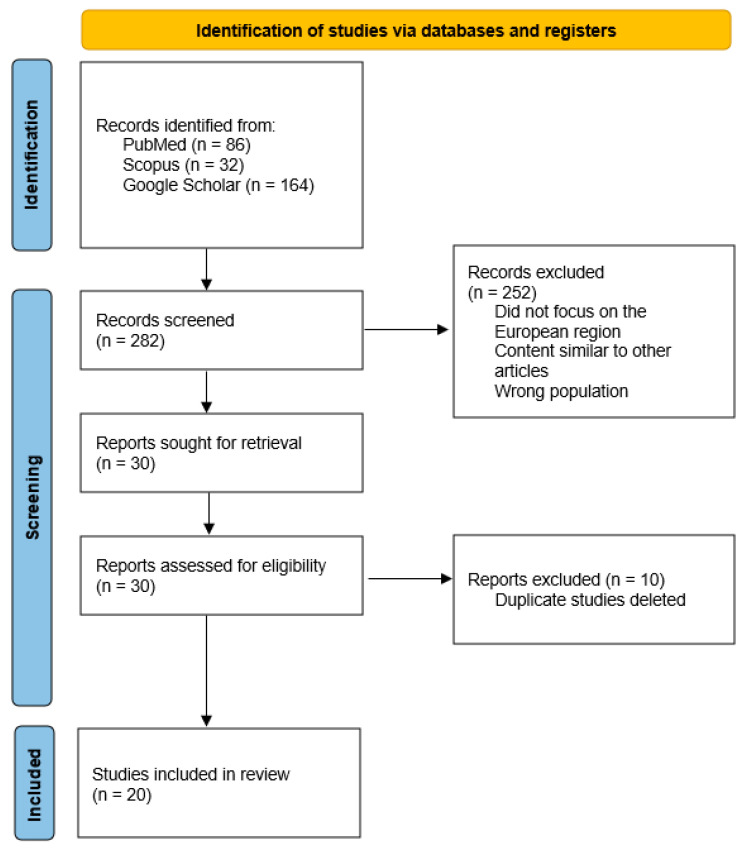 Figure 3
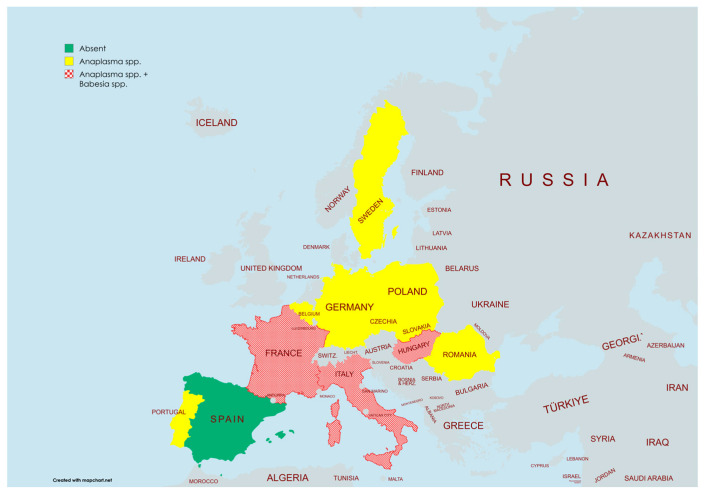 Figure 4
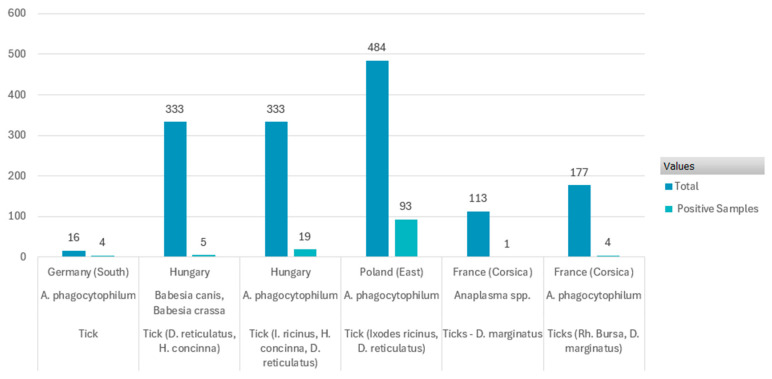 Figure 5
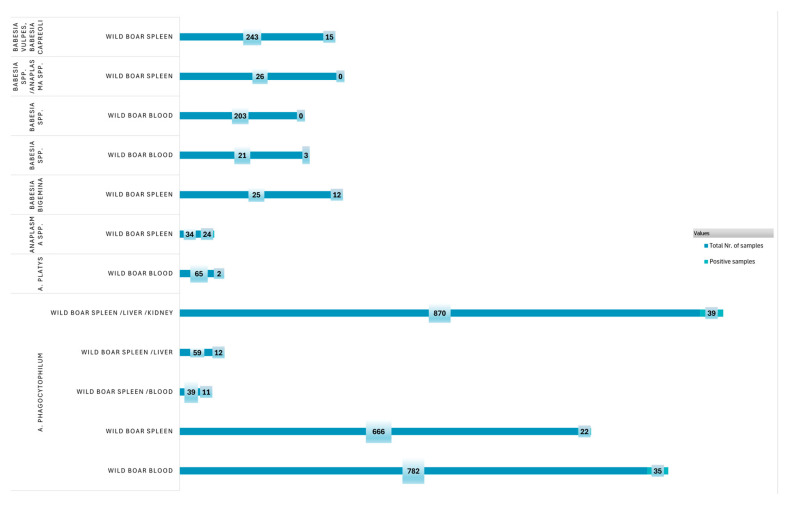 Figure 6
Peer Reviews
No public reviews on file for this paper yet. If you reviewed it on a platform where reviews are public (OpenReview, ICLR, NeurIPS, ICML), you can paste yours below so the community can read it here.
Videos
No videos yet. Explain this paper in a talk, walkthrough, or lecture? Add one.
Taxonomy
TopicsVector-borne infectious diseases · Viral Infections and Vectors · Vector-Borne Animal Diseases