Monitoring of Vitamin C Plasma Levels in a Reversible Model of Malabsorption Generated in Mice by Ebulin-f
Daniel Arranz-Paraiso, M. Angeles Rojo, Cristina Martin-Sabroso, Manuel Cordoba-Diaz, Tomás Girbés, Manuel Garrosa, Damian Cordoba-Diaz

TL;DR
Researchers developed a reversible mouse model of intestinal malabsorption using ebulin-f and used vitamin C plasma levels to monitor absorption changes over time.
Contribution
A novel reversible model of intestinal malabsorption using sublethal ebulin-f doses in mice is introduced and validated.
Findings
Ebulin-f caused reversible intestinal damage in mice, with peak damage on day 3 and regeneration by day 22.
Vitamin C absorption increased significantly on days 1 and 3 post-treatment compared to controls.
The model shows potential for studying inflammatory bowel disease and reducing animal use in research.
Abstract
The development of reversible animal models for the study of intestinal pathologies is essential to reduce the number of animals used in research and to better understand disease mechanisms. In this study, we present a reversible model of intestinal malabsorption through the administration of sublethal doses of ebulin-f, a ribosome-inactivating protein, and validate its usefulness by monitoring vitamin C absorption. The scientific community increasingly recognizes the importance of rationalizing experimental designs, optimizing treatment protocols, and minimizing the use of animals in research models. Thus, new methodologies are needed to minimize invasive sampling and to develop reversible animal models that recover physiologically post-study. Such models are essential for in vivo studies of human pathologies. Sublethal doses of ebulin-f (2.5 mg/kg) administered intraperitoneally to…
Genes, proteins, chemicals, diseases, species, mutations and cell lines named across the full text — each resolved to its canonical identifier and authoritative record.
Click any figure to enlarge with its caption.
 Figure 1
 Figure 2
 Figure 3
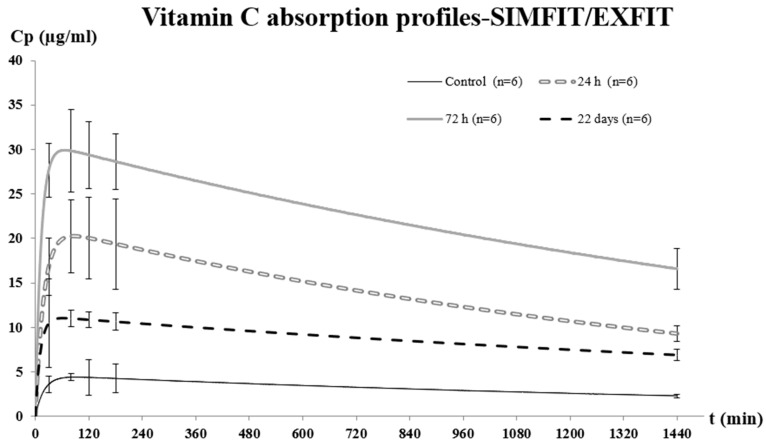 Figure 4
Peer Reviews
No public reviews on file for this paper yet. If you reviewed it on a platform where reviews are public (OpenReview, ICLR, NeurIPS, ICML), you can paste yours below so the community can read it here.
Videos
No videos yet. Explain this paper in a talk, walkthrough, or lecture? Add one.
Taxonomy
TopicsVitamin C and Antioxidants Research · Vitamin D Research Studies · Intestinal and Peritoneal Adhesions