Adrenomedullin Therapy for Moderate-to-Severe COVID-19 Pneumonia: Double-Blind Placebo-Controlled Phase 2a Trial
Toshihiro Kita, Norio Ohmagari, Sho Saito, Hiroshi Mukae, Takahiro Takazono, Taka-Aki Nakada, Tadanaga Shimada, Yuji Hirai, Yuichiro Shindo, Kosaku Komiya, Atsushi Saito, Masaya Yamato, Koichiro Homma, Masaki Okamoto, Yoshihiro Yamamoto, Yoshikazu Mutoh, Chihiro Hasegawa

TL;DR
A clinical trial tested adrenomedullin for treating moderate-to-severe COVID-19 pneumonia but found no significant benefits compared to a placebo.
Contribution
This study provides new clinical evidence on the efficacy and safety of adrenomedullin in treating moderate-to-severe COVID-19 pneumonia.
Findings
No significant differences were observed in primary or secondary endpoints between the adrenomedullin and placebo groups.
Mild adverse events were noted, but the safety of adrenomedullin was confirmed.
Respiratory function in the moderate pneumonia group tended to be better in the placebo group, though not statistically significant.
Abstract
Adrenomedullin (AM) is a bioactive peptide that is strongly induced during severe inflammation, including pneumonia and sepsis, and serves as an organ-protective factor. The plasma concentration of AM is markedly increased in the novel coronavirus disease COVID-19 and is closely related to the severity of the disease and prognosis of patients. We performed two investigator-initiated trials to evaluate the efficacy and safety of AM in patients with moderate-to-severe COVID-19. This multicenter, double-blind, placebo-controlled phase-2a trial evaluated COVID-19 patients with severe (n = 33) and moderate (n = 31) pneumonia in Japan. Patients were randomly assigned to receive either 15 ng/kg/min AM or placebo. The primary endpoint was the duration of mechanical ventilation (MV) for severe pneumonia and oxygen support for moderate pneumonia. The main secondary endpoint was clinical status up…
Genes, proteins, chemicals, diseases, species, mutations and cell lines named across the full text — each resolved to its canonical identifier and authoritative record.
Click any figure to enlarge with its caption.
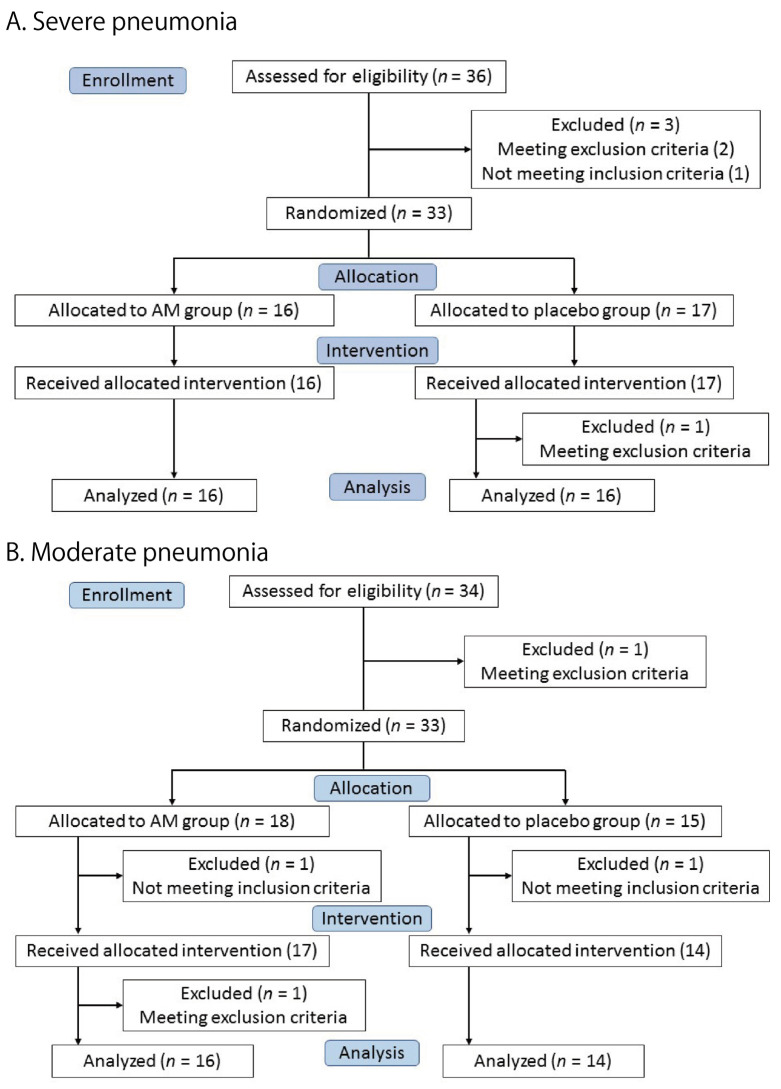 Figure 1
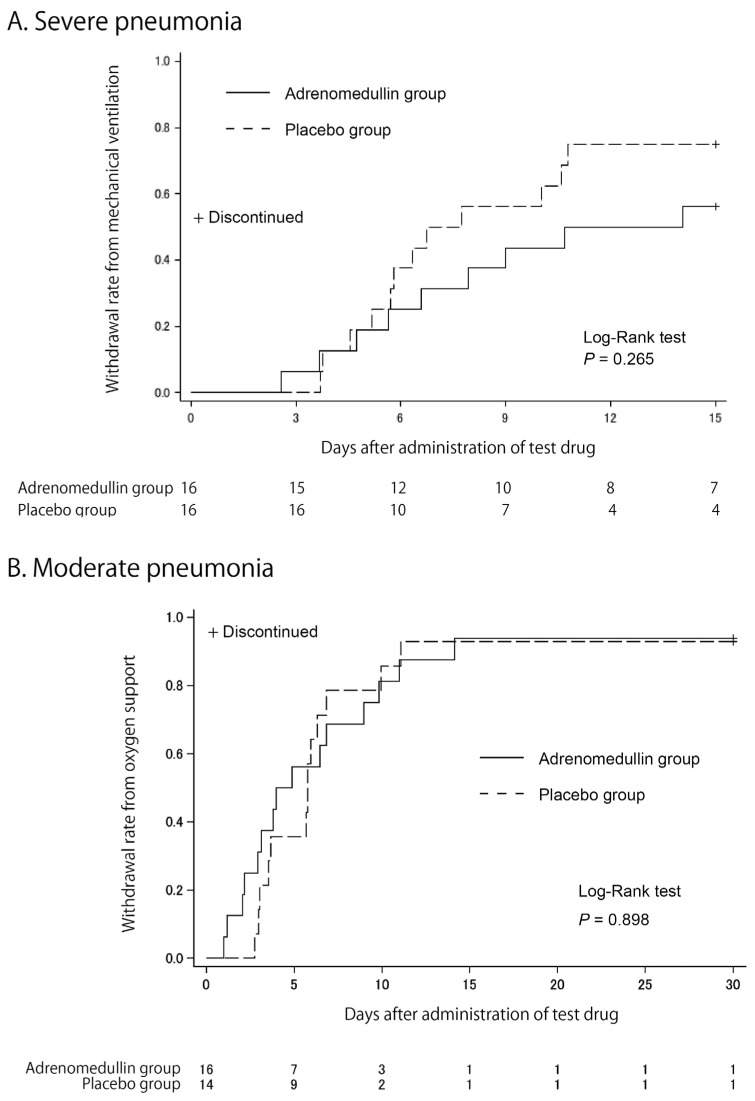 Figure 2
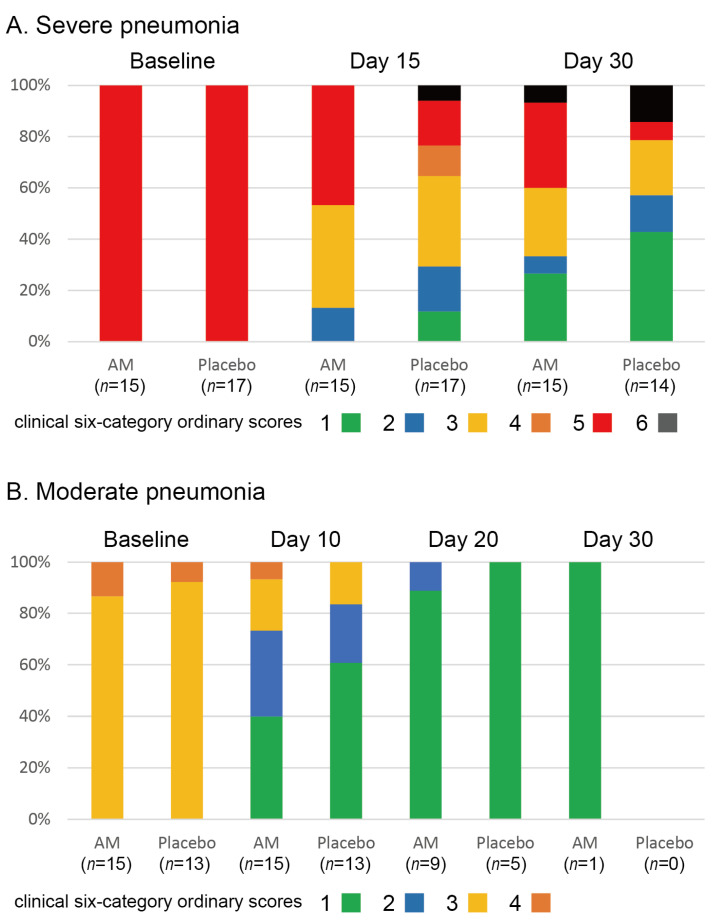 Figure 3
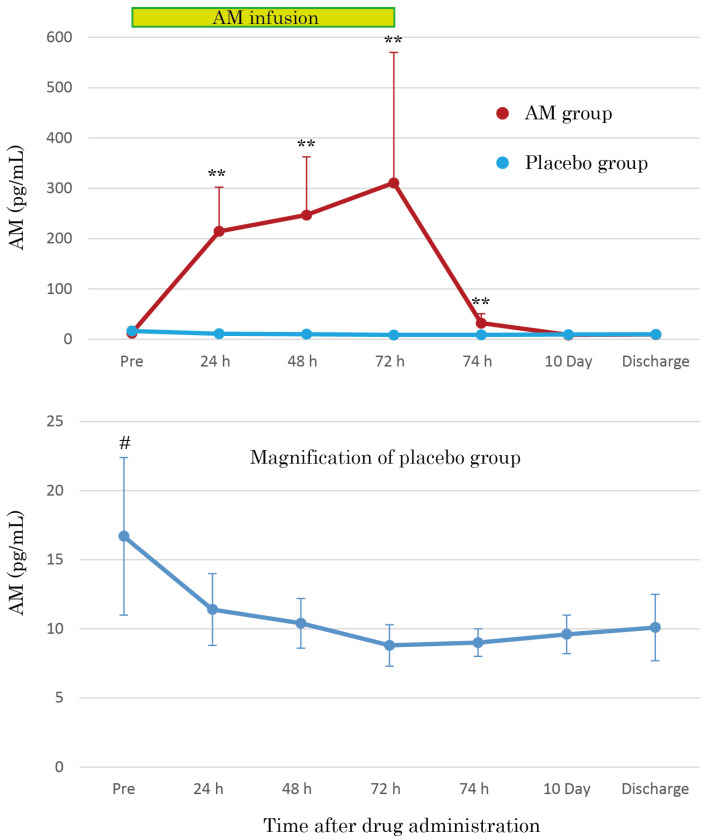 Figure 4
Peer Reviews
No public reviews on file for this paper yet. If you reviewed it on a platform where reviews are public (OpenReview, ICLR, NeurIPS, ICML), you can paste yours below so the community can read it here.
Videos
No videos yet. Explain this paper in a talk, walkthrough, or lecture? Add one.
Taxonomy
TopicsNeuropeptides and Animal Physiology · Pediatric Pain Management Techniques · Intensive Care Unit Cognitive Disorders