Impact of Thermal Variation on Egg Hatching and the Life Cycle of Aedes (Protomacleaya) terrens (Diptera: Culicidae) in a Laboratory Environment
Rayane Dias, Manuella Pereira Cerqueira Leite, Guilherme Sanches Corrêa-do-Nascimento, Gabriel Silva Santos, Cecilia Ferreira de Mello, Nathália Menezes de Almeida, Jeronimo Alencar

TL;DR
This study examines how different temperatures affect the hatching and development of Aedes terrens mosquitoes, which can transmit the chikungunya virus.
Contribution
The study identifies optimal temperatures for egg hatching and development stages of Ae. terrens, highlighting temperature's role in vector biology.
Findings
The highest hatching rate occurred at 25 °C, with an optimal point around 27 °C.
Temperature significantly reduced the duration of each developmental stage, with the fastest cycle at 30 °C.
Temperature variations influence the development, survival, and virus transmission potential of Ae. terrens.
Abstract
Evaluating the development process of mosquito species under the influence of temperature is essential for understanding their ecology and geographical distribution, as well as assessing their potential as vectors of pathogens. Aedes (Protomacleaya) terrens, a species recognized for its susceptibility and competence in transmitting the chikungunya virus, serves as a relevant model for research in this context. This study aimed to analyze the influence of temperature on egg hatching and the development cycle of this species to expand knowledge on its biology and implications for public health. During the experiment, 800 eggs were used, collected through 10 ovitraps in a forest remnant located in Uruaçu, Goiás, Brazil. The total number of eggs was divided into four groups, exposed to constant temperatures of 15 ± 2 °C, 20 ± 2 °C, 25 ± 2 °C, and 30 ± 2 °C. After hatching, first-instar…
Genes, proteins, chemicals, diseases, species, mutations and cell lines named across the full text — each resolved to its canonical identifier and authoritative record.
Click any figure to enlarge with its caption.
 Figure 1
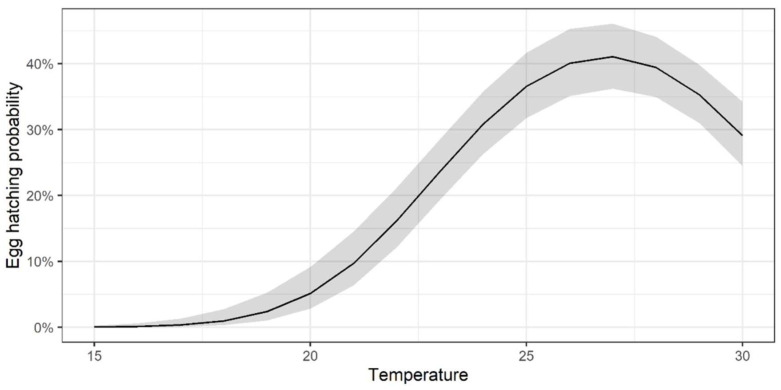 Figure 2
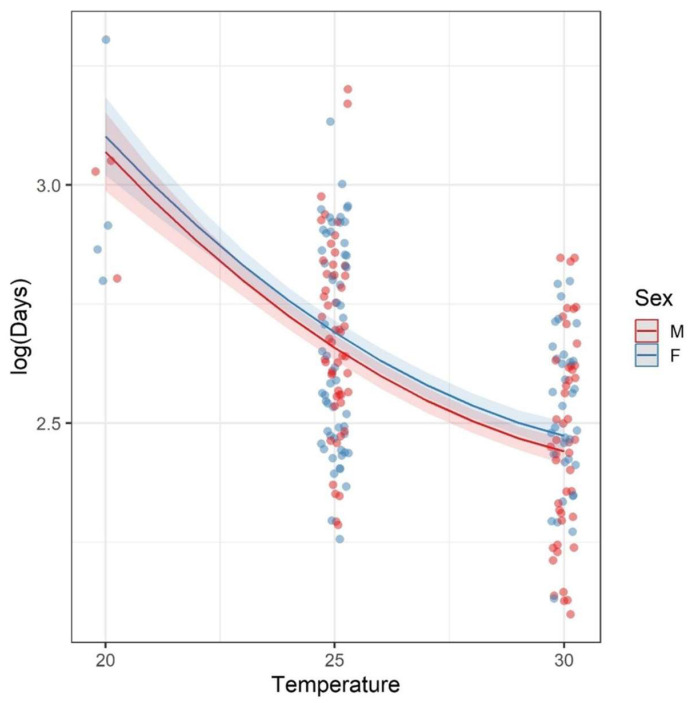 Figure 3
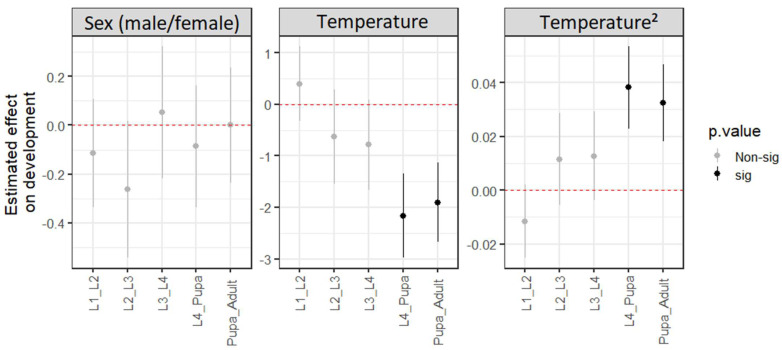 Figure 4
Peer Reviews
No public reviews on file for this paper yet. If you reviewed it on a platform where reviews are public (OpenReview, ICLR, NeurIPS, ICML), you can paste yours below so the community can read it here.
Videos
No videos yet. Explain this paper in a talk, walkthrough, or lecture? Add one.
Taxonomy
TopicsMosquito-borne diseases and control · Malaria Research and Control · Insect Pest Control Strategies