Chiari-like Malformation and Syringomyelia in Pomeranians: A Longitudinal Study
Mees R. Jansma, Marieke van den Heuvel, Kenny Bossens, Erik Noorman, Michelle Hermans, Paul J. J. Mandigers

TL;DR
This study shows that syringomyelia in Pomeranians often worsens over time, and furosemide treatment may help slow its progression.
Contribution
The study provides longitudinal MRI evidence of syringomyelia progression and evaluates the effect of furosemide treatment in Pomeranians.
Findings
Almost 40% of dogs developed or worsened syringomyelia between two MRI scans.
Furosemide treatment was associated with slower syrinx progression compared to untreated dogs.
Syrinx size measurements increased significantly over time in most dogs.
Abstract
Chiari-like malformation (CM) and syringomyelia (SM) are two common health problems in the Pomeranian dog breed that can affect the dog’s quality of life. To prevent these issues in future generations, it is essential to ensure that only healthy dogs are used for breeding. However, it is not yet clear how these two conditions change over time, which can make breeding selection challenging. Dogs that seem healthy can still develop conditions later in life. This study looked at how CM and SM develop over time using repeated MRI scans. We studied Pomeranians that had two MRI scans between 2015 and 2025. We checked the CM/SM status and measured the size of the fluid-filled cavity (syrinx) in their spinal cord. By the time of the second MRI scan, almost 40% of the dogs had either developed SM or seen their condition worsen. The syrinxes got noticeably larger over time. We concluded that the…
Genes, proteins, chemicals, diseases, species, mutations and cell lines named across the full text — each resolved to its canonical identifier and authoritative record.
Click any figure to enlarge with its caption.
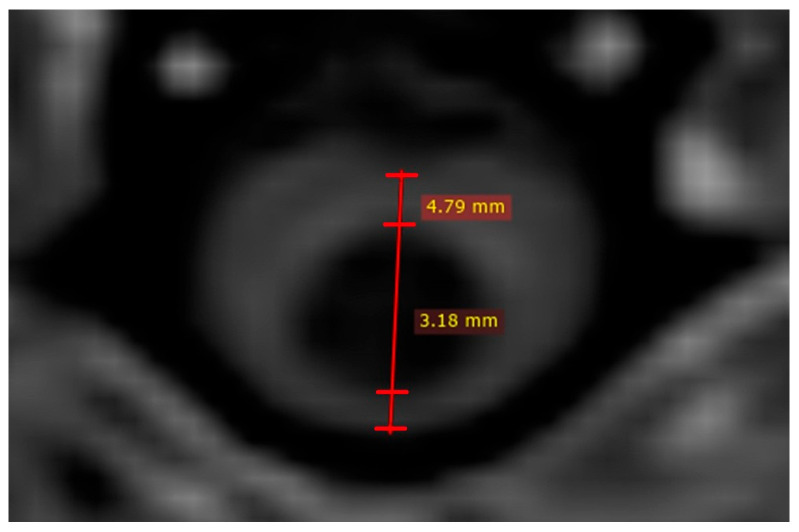 Figure 1
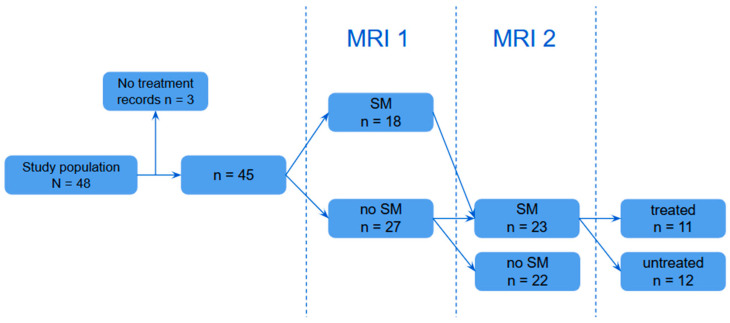 Figure 2
Peer Reviews
No public reviews on file for this paper yet. If you reviewed it on a platform where reviews are public (OpenReview, ICLR, NeurIPS, ICML), you can paste yours below so the community can read it here.
Videos
No videos yet. Explain this paper in a talk, walkthrough, or lecture? Add one.
Taxonomy
TopicsSpinal Dysraphism and Malformations · Congenital Anomalies and Fetal Surgery · Cerebrospinal fluid and hydrocephalus