Transmission Dynamics of Trichomonas tenax: Host and Site Specificity, Zoonotic Potential, and Environmental Factors
Maurice Matthew, Jennifer Ketzis, Samson Mukaratirwa, Chaoqun Yao

TL;DR
This paper explores how Trichomonas tenax spreads, focusing on host and environmental factors, and highlights the need for more research to control its transmission.
Contribution
The paper identifies key knowledge gaps in T. tenax transmission and advocates for a One Health approach to address them.
Findings
T. tenax is found in multiple hosts and body sites, suggesting potential zoonotic transmission.
Environmental and socioeconomic factors influence T. tenax transmission dynamics.
More research is needed to confirm transmission through fomites or contaminated water.
Abstract
Trichomonas tenax is an anaerobic flagellate usually found in the oral cavity of humans and domestic animals. It is very likely to be transmitted through kissing, sharing saliva, contaminated utensils, and water. However, research on its transmission dynamics is scarce. Hence, there is a need to identify potential knowledge gaps in T. tenax transmission for future research and emphasize the importance of the One Health approach in controlling the spread of this flagellar protozoan. Trichomonas tenax has been found in humans, dogs, cats, horses, and birds at various body sites, including the lungs and the urogenital tract, in addition to the oral cavity. Its transmission is influenced by environmental factors such as temperature and socioeconomic factors such as age, income, smoking, and public awareness, along with poor oral hygiene and systemic diseases. Direct host-to-host…
Genes, proteins, chemicals, diseases, species, mutations and cell lines named across the full text — each resolved to its canonical identifier and authoritative record.
Click any figure to enlarge with its caption.
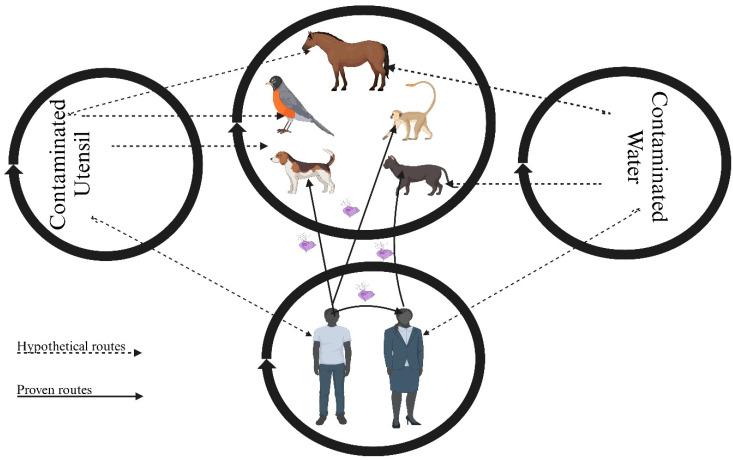 Figure 1
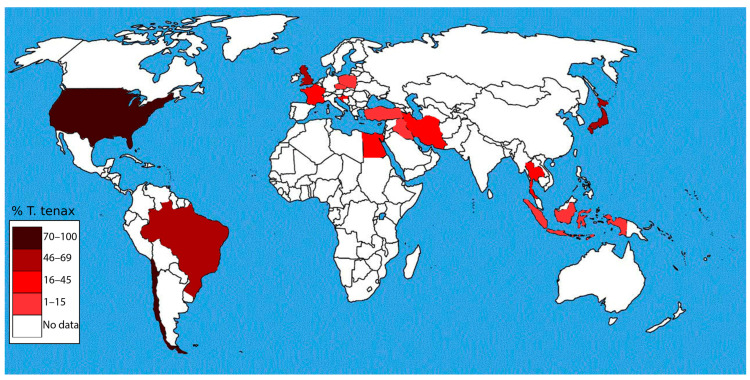 Figure 2
- —Ross University School of Veterinary Medicine
Peer Reviews
No public reviews on file for this paper yet. If you reviewed it on a platform where reviews are public (OpenReview, ICLR, NeurIPS, ICML), you can paste yours below so the community can read it here.
Videos
No videos yet. Explain this paper in a talk, walkthrough, or lecture? Add one.
Taxonomy
TopicsReproductive tract infections research · Clostridium difficile and Clostridium perfringens research · Streptococcal Infections and Treatments
1. Introduction
Trichomonas tenax, an aerobic protozoan, is commonly found in the oral cavities of humans and animals with inadequate oral hygiene and advanced periodontal disease, respectively [1,2]. This mitochondrion-lacking protist, which is closely related to Trichomonas vaginalis, is an ovoid or ellipsoidal flagellate measuring 5–16 × 2–15 µm in size [3,4]. Its prevalence ranges from 1 to 90% in humans and 8 to 96% in dogs [5]. Over the years, T. tenax has been strongly associated with periodontal disease [6,7,8]. This is one of the most common inflammatory diseases and public health issues in humans and animals worldwide [9]. The disease may lead to tooth loss and disability, negatively affect chewing function and aesthetics, and impair the quality of life [10]. Furthermore, T. tenax exhibits parasite-like behavior akin to T. vaginalis, so it should be considered a parasite rather than a commensal [11]. Moreover, T. tenax has been shown to release virulent proteinases, such as cysteine protease, further supporting its potential pathogenicity [12,13,14]. These proteases play a vital role in biological processes, including the nutrient absorption, invasion, virulence, and immune evasion of parasitic organisms [15].
While various transmission routes for T. tenax have been proposed, such as via saliva droplets, drinking water, kissing, or the use of contaminated dishes, there are still no definitive reports confirming these modes of transmission [16,17,18,19]. Recent advances in sensitive methods for the detection of T. tenax (e.g., PCR and LAMP) could enable better determination of transmission modes and prevalence [20,21,22].
A systematic review and meta-analysis found that the global pooled prevalence of T. tenax in humans is 17% (95% Confidence Interval 14–22%) [23]. Despite a well-established association between T. tenax and periodontal disease, the parasite remains greatly neglected in research and clinical attention [5,23]. To identify research gaps and future research directions, this article mainly addresses the transmission dynamics of T. tenax, including hosts, sites of infection, and factors that might contribute to its transmission. The specific questions included are as follows: (1) What are the known host species and predilection site(s) for T. tenax? (2) What factors contribute to its host specificity? (3) Are there documented cases of zoonotic transmission of T. tenax? (4) What environmental factors are associated with the transmission of T. tenax? (5) What gaps exist in the current understanding of T. tenax transmission dynamics? (6) What future research directions should be prioritized to address these gaps?
2. Hosts
2.1. Host and Site Specificity
Trichomonads exhibit a preference for specific hosts and sites. Trichomonas tenax is noted for the diversity of aberrant sites beyond the predilection site of the oral cavity and accidental infections in humans and other animals (Table 1) [24]. Trichomonas tenax was first reported in humans in the oral cavity by Muller in 1773 from aqueous solutions of tartar [25,26]. While humans and the oral cavity are considered the preferred host and site of infection, T. tenax has also been identified in the lungs of humans, causing pulmonary trichomoniasis [27,28,29,30,31], as well as the submaxillary gland [32]. In one case study, T. tenax was isolated from an 82-year-old patient with asthenia, showing a co-infection with Mycobacterium tuberculosis, after the lymph node was dissected and cultured [33]. Additionally, studies have unequivocally reported T. tenax in the urogenital tract of humans, suggesting its ability to invade this site along with its close relative, T. vaginalis [34,35]. In addition to diverse sites of infection in humans, T. tenax has been observed to infect diverse hosts. It has been found in the oral cavity of dogs, cats, and horses, with dogs being the most identified non-human host. It is unclear whether the higher prevalence in dogs is due to host characteristics or the number of studies with dog hosts compared to other potential non-human hosts [1,8,36,37]. In dogs, T. tenax has been found not only in the mouth but also, in one study, in the mandibular gland of a 13-year-old dog that had a swelling of the left submandibular region. After aspiration from the gland was examined, numerous numbers of T. tenax were discovered [38]. An additional trichomonad species T. brixi was found in dogs and cats in the Czech Republic, with a prevalence of 30.6% (34/111) and 6.6% (8/122), respectively. This was higher than the prevalence of T. tenax among these two hosts, which was 8.1% (9/111) and 4.1% (5/122) [37]. In regard to other aberrant infections, several studies have reported the presence of T. tenax in the cloaca of different types of birds along with Trichomonas gallinae [39,40,41]. This broad host range along with its ability to establish outside of the oral cavity suggests that T. tenax is potentially zoonotic and has been greatly overlooked.
The factors contributing to the host and oral cavity preference of T. tenax are not completely understood. However, potential influences such as the oral environment in which it thrives, host-specific receptors, and the immune response may play a pivotal role. In vitro culturing studies with T. tenax show that it thrives in an environment at a temperature of approximately 35 °C and in a pH range of 6.5–7.0. For a successful culture, it often requires serum (in most cases, horse serum, but bovine serum can be used as well) [20,47,48]. In terms of host-specific receptors, there is a strong possibility that there are specific receptors or surface molecules within the different hosts that T. tenax can adhere to and colonize like T. vaginalis. However, there have been no reported studies on the possibilities of this phenomenon to date. The immune response of the host species could be a key player in limiting the ability of T. tenax to cause infections. Hong et al. (2023) [19] explored the cytotoxic effects and immune effects of T. tenax on gum epithelial and pulmonary cell lines in vitro. They found that T. tenax induces a cytotoxic effect on gum epithelial cells by disrupting cellular junctions. However, it imposes little damage on pulmonary cells. T. tenax induces the production of IL-6 at a low multiplicity of infection in both cells [19]. The differences between host immune responses and cytotoxic effects with affinity to gum epithelial cells can give possible insights into host and site specificity.
2.2. Zoonotic Potential
Trichomonas tenax is not typically considered a zoonotic or anthropozoonotic pathogen; however, there have been some reports in the literature that support the potential of T. tenax to be passed to and from dogs and humans [1,37]. The first recorded report of T. tenax anthropozoonotic potential was in 1928 by H. Hinshaw, who tried to infect dogs with both Entamoeba gingivalis and T. tenax cultured from a human patient with periodontitis. Dogs with normal gingiva inoculated via direct contact did not become infected; however, human-isolated T. tenax and E. ginigvalis did establish in an old dog with advanced gingivitis. Furthermore, the pathological findings in the oral cavity were similar to those in human periodontitis at 14.5 months post-inoculation during necropsy after the dog was euthanized [49]. This experimental infection, although suboptimal in design, indicates that it takes many months from establishing infection by both protozoa to inducing pathological changes in the mouths of dogs. Nevertheless, the study was unable to show that the pathological changes were due to T. tenax infection alone. In a review on zoonotic trichomonads, Maritz et al. (2014) highlighted the wide host range of T. tenax as a concern that should be taken seriously and further investigated to assess its risk to human health [50]. Additionally, a study conducted in Poland identifying T. tenax in domesticated animals using PCR reported that for three dogs that were positive for T. tenax, their owners were also positive for T. tenax, therefore illustrating the possibility that oral trichomoniasis can spread between humans and domestic dogs [1]. Moreover, sequencing and phylogenetic analyses have been used to detect T. tenax in oral samples from dogs and cats, further proving that this parasite infecting the human oral cavity is capable of infecting dogs and cats and could possibly be transmitted between different species of hosts [37,38,51]. Other studies, with birds, have identified the presence of T. tenax by sequencing and phylogenetics. Together, these studies, in dogs, cats, and birds, strongly indicate zoonotic or anthropozoonotic potential and suggest that more attention on this neglected protozoan is needed by both medical and veterinary professionals [35,39,41].
3. Factors Affecting Transmission and Prevalence
3.1. Factors Affecting Transmission
Various factors can impact the transmission and prevalence of T. tenax, including environmental conditions such as temperature, pH levels, urban or rural environments, oral hygiene practices, the oral cavity micro-environment, and geographical distribution (Table 2) [20]. However, there is limited research on the effects of environmental factors on the transmission and prevalence of this oral flagellate. It is noteworthy that geographical distribution has no impact on the transmission or prevalence of T. tenax, as was demonstrated in two studies that examined the global prevalence and distribution of T. tenax. These reports revealed that T. tenax is found on all continents except Australia, with varying prevalence across Africa, America, Asia, and Europe [5,52]. Its presence or lack thereof in Australia is unclear due to the limited number of studies conducted. In general, the prevalence of T. tenax has not differed between rural and urban areas, with both types of areas having high and low prevalence of T. tenax, depending on the population assessed [2,42,43,53,54]. The results of one study, which did report a difference in rural and urban populations (18.9% vs. 81.2%), might have been influenced by differences in oral hygiene in these populations [44].
The primary factors that affect the presence and transmission of T. tenax are poor oral hygiene and changes in oral micro-environments [27,45], consequently resulting in a strong association with periodontal disease in both humans and animals [2,6,8,16]. Additionally, research has demonstrated how certain systemic diseases, such as Down syndrome, renal failure, and diabetes, impact the oral cavity and, in turn, influence both the prevalence and transmission of T. tenax [18,46,58]. Temperature and pH are also environmental factors that impact both the survival and prevalence of T. tenax. Studies have illustrated that the oral flagellate has an optimal temperature ranging from 35 to 37 °C and pH between 6.5 and 7 [20,47,48]. Similarly, the closely related T. vaginalis and T. gallinae are also affected by temperatures between 35 and 37 °C and pH ranging between 6 and 7 [59,60]. Although these flagellates reside inside the body of their host, changes in the internal environment of the host due to temperature or pH can significantly impact their growth and survival. Other factors, such as socioeconomic factors (age, sex, income, and smoking) and public awareness, can also influence the transmission and prevalence of T. tenax. A study conducted in Iraq on 230 individuals reported that smoker patients showed statistical significance for the presence of T. tenax compared to non-smokers, and patients 30 years and older showed a higher rate of infection than younger ones [44]. Another study involving 310 patients with periodontal disease and 310 healthy controls revealed that the age group between the ages 41 and 50 years exhibited a higher prevalence of T. tenax than any of the younger age groups, as well as that males showed a higher incidence (24.7%) than females (16.8%) [55]. In Poland, researchers conducted a study on awareness of periodontal disease, risk factors, and the connection between periodontal disease and general health. They found that patients having an insufficient level of knowledge was related to risk factors as well as the prevention of periodontal disease [57]. Nazir et al. 2020 evaluated global data on patients with periodontal disease in low-, middle-, and high-income countries and discovered that the distribution of periodontitis differed significantly in lower- (28.7%), lower-middle- (10%), upper-middle- (42.5%), and high-income countries (43.7%) (p = 0.04) [56]. Trichomonas vaginalis prevalence and transmission have also been linked to socioeconomic factors; studies have shown that individuals living in poverty or with a low income were more likely to be infected with T. vaginalis as opposed to higher-income earners, and active smokers were more likely to be infected compared to non-smokers [61,62]. Enhancing our understanding of the environmental and socioeconomic factors influencing T. tenax prevalence and transmission is crucial for developing effective strategies to control its spread and mitigate its impact on human and animal health.
3.2. Transmission
Transmission is defined as the passing of an infectious agent from one host to another. Direct transmission routes include physical contact, contact with a contaminated environment or surface, airborne transmission, and fecal–oral transmission. Indirect transmission routes involve another organism, such as an insect vector or intermediate host [50]. It has been postulated that T. tenax can be transmitted through kissing, saliva, droplet spray, using contaminated dishes and utensils, and drinking contaminated water [16,17,63,64,65]. However, these modes of transmission are predominately extrapolated from what is known about other Trichomonads, with fewer experimental studies confirming that these modes of transmission are similarly suitable for T. tenax. In an experimental study performed in 1928, Hinshaw was able to directly infect a dog with T. tenax, which was obtained from a human mouth with advanced periodontal disease [49]. Other researchers after him have also been successful in directly infecting the mouths of monkeys, cats, and even humans with T. tenax [66]. In one study, a researcher in the 1930s inoculated T. tenax into his mouth and was able to establish an infection for a period of 10 months [67]. Similarly, T. vaginalis is normally transmitted via direct host-to-host contact, predominantly through sexual intercourse in humans [61,68,69,70]. One study also reported that T. vaginalis has been successfully transplanted into the vagina of monkeys but not in other mammals such as cows, horses, pigs, dogs, cats, rabbits, guinea pigs, rats, and woodrats [66]. Trichomonas gallinae is mainly transmitted through direct host-to-host transmission between parents and young birds during feeding [71]. One mechanism of transmission common among T. tenax, T. vaginalis, and T. gallinae is via direct host-to-host contact, which should be taken into consideration to mitigate the spread of these parasites. In terms of transmission through contaminated utensils, also known as fomite transmission, there were no recorded scientific studies conducted on T. tenax that illustrated that the oral flagellate can be transmitted by this means. Fomite transmission of T. tenax is possibly an assumption and is still not fully understood. The same goes for both T. vaginalis and T. gallinae; most studies assume or hypothesize that there is a strong possibility that these Trichomonads can be transmitted via fomites, but this too is not fully understood [69,72,73]. It has also been hypothesized that T. tenax can be transmitted via contaminated water. However, phylogenetic analyses based on the 16S ribosomal RNA (rRNA) gene suggest that Trichomonads are ancestral eukaryotic organisms [74]. According to M. Lopez and C Hall (2020), when eukaryotic cells are placed in water or hypotonic solutions, they get swollen and then rupture, a process known as cytolysis [75]. Additionally, based on cultural studies conducted on T. tenax, it has been shown that these Trichomonads require some form of serum for growth and survival [12,20,48]. Therefore, more studies on the transmission of T. tenax via contaminated water are needed to confirm this assumption (Figure 1). A study on the survival of T. gallinae in saline, water, and both dry and moist bird seeds was conducted; the study found that T. gallinae can survive for up to 168 h in saline and moist bird seeds but did not survive in water or dry bird seeds regardless of parasite density [72]. Trichomonas vaginalis has been reported to survive outside the human body in a wet environment for more than 3 h, suggesting that it can possibly be transmitted via contaminated water [73]. However, this mechanism of transmission is still not fully understood, and more studies are needed to confirm these hypotheses. The transmission of T. tenax involves several possible mechanisms within and between host populations; understanding these mechanisms can inform disease control strategies aimed at mitigating the spread of the parasite.
The mechanism by which T. tenax is transmitted is not fully understood, although there is evidence in humans that it can be transmitted through direct host-to-host contact, for example, through kissing, and saliva droplets, as shown in previous studies [49,67]. However, transmission through contaminated water or fomites is presently a suggestion and hypothesis that needs to be scientifically proven. More studies, especially animal model studies, are needed to gain a better and clearer understanding of the pathogenicity and transmission dynamics of T. tenax. Thus far, T. tenax has been reported on every continent except for Australia (Figure 2). Geographically, it is clear that location has no direct impact on the prevalence and transmission of T. tenax; however, socioeconomic factors, such as age, sex, income, and smoking for humans, and micro-environmental factors, such as temperature and pH, at the site of predilection may influence transmission (Table 2) [48,55]. Understanding the factors that influence the transmission of T. tenax is essential for developing effective prevention and control measures. These insights can inform targeted strategies aimed at reducing the spread of the parasite between humans and animals.
Knowledge of the transmission dynamics of T. tenax can also give valuable insights to researchers, policymakers, and public health authorities to develop and implement evidence-based control and prevention measures to counter the spread of T. tenax.
4. Future Research Prospects
The transmission dynamics of T. tenax are not fully understood. Studies that investigate the different routes of transmission, including water and food, as well as fomite contamination, are needed. Large-scale epidemiological studies, which are rendered practically feasible by the recent development of the LAMP diagnostic technique without the requirement of DNA extraction [22], are required to determine the prevalence, distribution, transmission dynamics, and risk factors associated with T. tenax infection in the various hosts where the parasite has been reported. Furthermore, public health education, especially for dog owners, that raises awareness on the importance of good oral hygiene and the potential for T. tenax transmission between humans and domestic animals is recommended. Prioritizing these research and educational areas could lead to more effective control and prevention strategies for T. tenax infections in the future.
The reference list from the paper itself. Each links out to its DOI / PubMed record.
- 1Dybicz M. Perkowski K. Baltaza W. Padzik M. Sędzikowska A. Chomicz L. Molecular identification of Trichomonas tenax in the oral environment of domesticated animals in Poland–Potential effects of host diversity for human health Ann. Agric. Environ. Med.20182546446810.26444/aaem/9230930260189 · doi ↗ · pubmed ↗
- 2Bracamonte-Wolf C. Orrego P.R. Muñoz C. Herrera D. Bravo J. Gonzalez J. Varela H. Catalán A. Araya J.E. Observational cross-sectional study of Trichomonas tenax in patients with periodontal disease attending a Chilean University Dental Clinic BMC Oral Health 20191920710.1186/s 12903-019-0885-331484557 PMC 6727549 · doi ↗ · pubmed ↗
- 3Honigberg B.M. Lee J.J. Structure and division of Trichomonas tenax (O. F. Müller)Am. J. Epidemiol.19596917720110.1093/oxfordjournals.aje.a 11999413649673 · doi ↗ · pubmed ↗
- 4Nagao E. Yamamoto A. Igarashi T. Goto N. Sasa R. Two distinct hemolysins in Trichomonas tenax ATCC 30207 Oral Microbiol. Immunol.20001535535910.1034/j.1399-302x.2000.150603.x 11154431 · doi ↗ · pubmed ↗
- 5Matthew M.A. Yang N. Ketzis J. Mukaratirwa S. Yao C. Trichomonas tenax: A neglected protozoan infection in the oral cavities of humans and dogs—A scoping review Trop. Med. Infect. Dis.202386010.3390/tropicalmed 801006036668967 PMC 9863487 · doi ↗ · pubmed ↗
- 6Marty M. Lemaitre M. Kémoun P. Morrier J.J. Monsarrat P. Trichomonas tenax and periodontal diseases: A concise review Parasitology 20171441417142510.1017/S 003118201700070128583214 · doi ↗ · pubmed ↗
- 7Bisson C. Dridi S.M. Machouart M. Assessment of the role of Trichomonas tenax in the etiopathogenesis of human periodontitis: A systematic review P Lo S ONE 201914 e 022626610.1371/journal.pone.022626631846467 PMC 6917263 · doi ↗ · pubmed ↗
- 8Patel N. Colyer A. Harris S. Holcombe L. Andrew P. The prevalence of canine oral protozoa and their association with periodontal disease J. Eukaryot. Microbiol.20176428629210.1111/jeu.1235927570233 · doi ↗ · pubmed ↗