New Contributions to Deepen the Quality-Based Safety Assessment in the Consumption of Edible Nasturtium Flowers—The Role of Volatilome
Rosa Perestrelo, Maria da Graça Lopes, Alda Pereira da Silva, Maria do Céu Costa, José S. Câmara

TL;DR
This study explores the chemical composition of Nasturtium flowers and juice, identifying key compounds that support their health benefits and safety for consumption.
Contribution
The study introduces a volatilomic analysis of Tropaeolum majus and proposes a safety assessment framework aligned with EFSA guidelines.
Findings
Benzyl isothiocyanate and benzonitrile dominate the volatile profile of Nasturtium flowers and juice.
Floral tissues showed strong antioxidant activity and high phenolic content.
A conservative intake threshold of 1.5 μg/kg body weight per day is proposed for safety.
Abstract
The garden Nasturtium (Tropaeolum majus L.) is increasingly consumed worldwide due to its culinary appeal and perceived health benefits. However, the chemical markers underlying its functional properties remain insufficiently characterized. Building on evidence from a recent human pilot study confirming both high acceptability and dietary safety, we conducted a comprehensive volatilomic and phytochemical analysis of T. majus flowers and their juice. Headspace solid-phase microextraction coupled with gas chromatography–mass spectrometry (HS-SPME/GC-MS) was employed to establish the volatilomic fingerprint of floral tissues and juice. Our analysis revealed a striking dominance of benzyl isothiocyanate and benzonitrile, which together accounted for 88% of the total volatile organic metabolites (VOMs) in the juice, 67% and 21%, respectively. In the floral tissues, benzyl isothiocyanate was…
Genes, proteins, chemicals, diseases, species, mutations and cell lines named across the full text — each resolved to its canonical identifier and authoritative record.
Click any figure to enlarge with its caption.
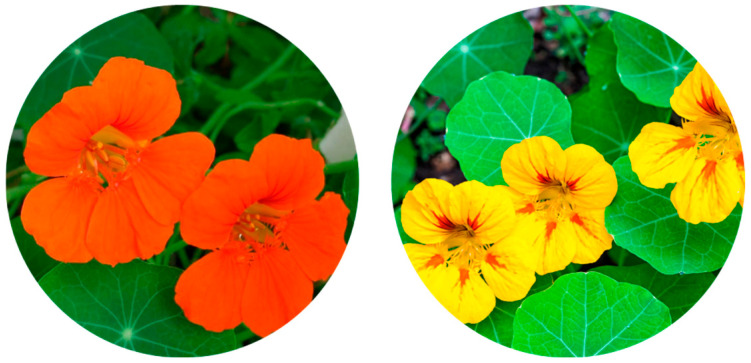 Figure 1
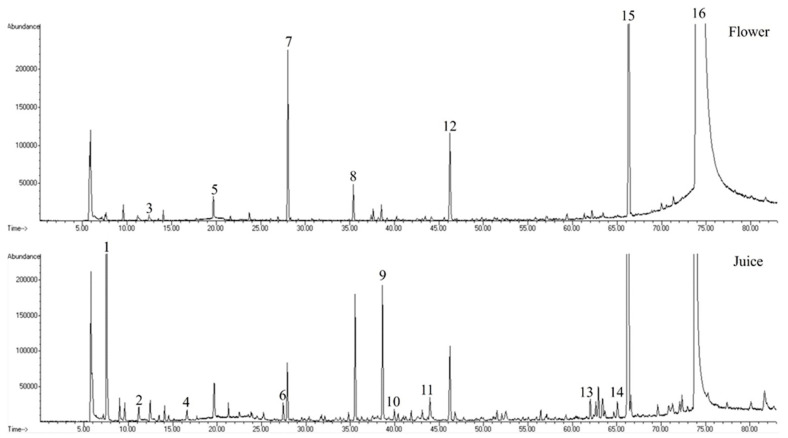 Figure 2
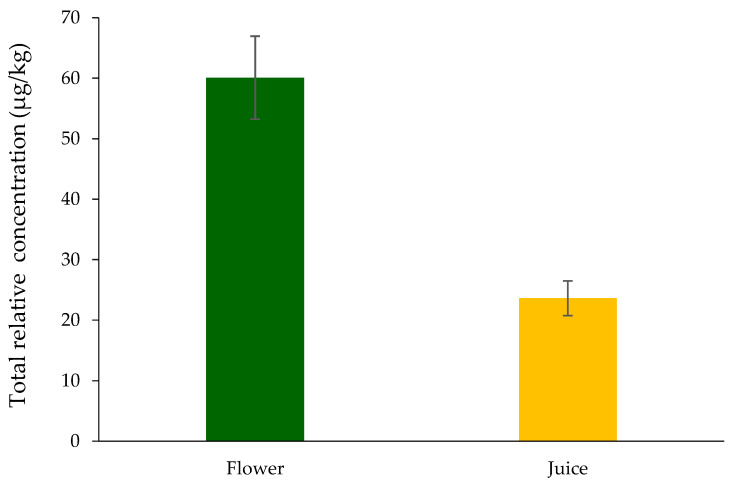 Figure 3
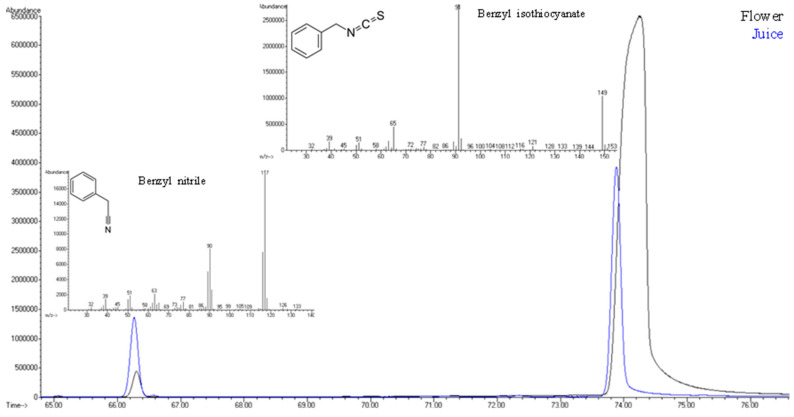 Figure 4
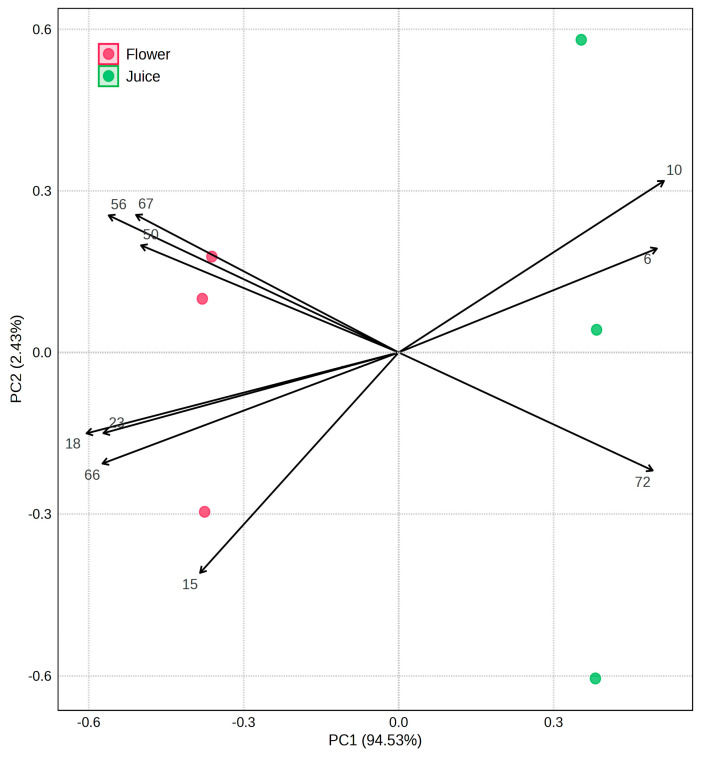 Figure 5
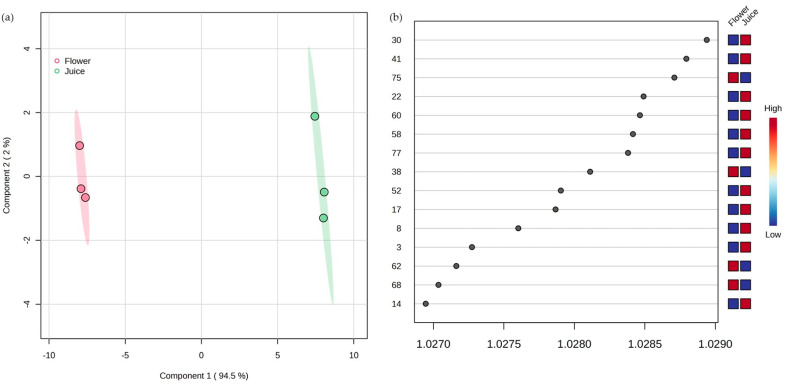 Figure 6
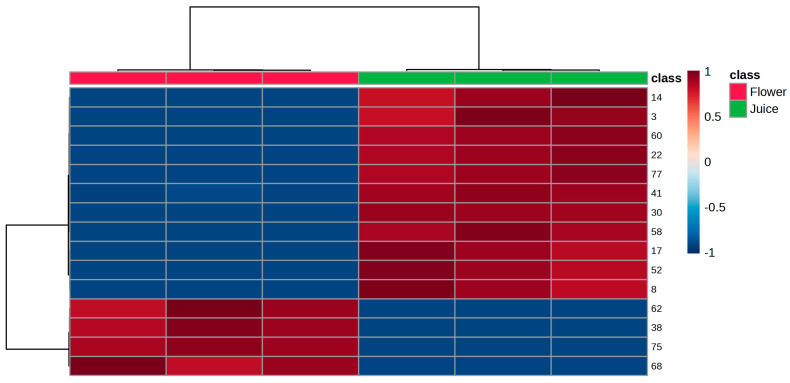 Figure 7
- —FCT—Fundação para a Ciência e a Tecnologia
- —Interreg MAC 2014–2020 Cooperación territorial
- —ARDITI-Agência Regional para o Desenvolvimento da Investigação Tecnologia e Inovação
- —FCT and Madeira 14-2020 program to the Portuguese Mass Spectrometry Network (RNEM)
- —Red 323RT0142-Red Iberoamericana de Innovación para la Sostenibilidad de la Cadena de Valor de Alimentos (ibero-circular)-CYTED-Cyted es el Programa Iberoamericano de Ciencia y Tecnología para el Desa
Peer Reviews
No public reviews on file for this paper yet. If you reviewed it on a platform where reviews are public (OpenReview, ICLR, NeurIPS, ICML), you can paste yours below so the community can read it here.
Videos
No videos yet. Explain this paper in a talk, walkthrough, or lecture? Add one.
Taxonomy
TopicsEssential Oils and Antimicrobial Activity · Phytochemicals and Antioxidant Activities · Genomics, phytochemicals, and oxidative stress
1. Introduction
Tropaeolum majus L., commonly known as garden Nasturtium, is a vibrant flowering plant native to South America and widely cultivated for its ornamental appeal and culinary applications. Beyond its aesthetic and gastronomic value, T. majus has garnered attention for its rich phytochemical composition, encompassing vitamins, minerals, and bioactive compounds with potential health-promoting properties [1]. Recent studies have highlighted the presence of glucosinolates in T. majus, which upon hydrolysis yield isothiocyanates—compounds known for their antimicrobial, anti-inflammatory, and anticancer activities. Among these, benzyl isothiocyanate (BITC) has been identified as a predominant volatile organic metabolite in T. majus flowers and juice. BITC has demonstrated the ability to induce apoptosis and autophagy in various cancer cell lines, including prostate and breast cancer cells, through mechanisms involving reactive oxygen species generation and the modulation of signaling pathways [2]. Lin et al. [3] provided evidence that BITC effectively suppressed the growth of cultured human prostate cancer cells, causing prostate cancer cell death in a way dependent on the ROS status, and clarified the mechanism underlying BITC-induced cell death, which involves the induction of ROS production, autophagy, and apoptosis, and the relationship between these three important processes. In addition to BITC, benzonitrile (BN) is another significant volatile compound found in T. majus. While BN contributes to the plant’s aroma profile, its presence raises safety considerations due to its potential cytotoxic and genotoxic effects observed in vitro. Kupke et al. [4] showed by GC-MS monitored experiments that broccoli glucosinolates mainly degrade to nitriles as breakdown products, and based on the in vitro data presented, concerning genotoxicity data, concluded that it cannot be ruled out that nitriles pose a risk under conditions relevant for food consumption. Therefore, comprehensive profiling of these compounds is essential to assess the health benefits and risks associated with T. majus consumption.
Despite the growing interest in edible flowers as functional foods, there remains a paucity of data regarding the detailed chemical characterization and safety evaluation of T. majus. This study aims to fill this gap by conducting an in-depth volatilomic and phytochemical analysis of T. majus flowers and juice, utilizing headspace solid-phase microextraction coupled with gas chromatography–mass spectrometry (HS-SPME/GC-MS). Furthermore, we assess the antioxidant activity and total phenolic content to elucidate the potential health benefits. In alignment with the European Food Safety Authority (EFSA) guidelines, a contribution to a further benefit–risk assessment is envisaged, considering the Threshold of Toxicological Concern (TTC) for compounds of interest, to inform the safe incorporation of T. majus into functional foods and nutraceuticals. If the estimated exposure to a substance is higher than the relevant TTC value, a non-TTC approach is required to conclude potential adverse health effects, a task for expert groups in the regulatory authorities [5]. With this study, we envisage setting the stage for T. majus within the broader landscape of so-called “functional foods”, bearing a function claim [6], highlighting the significance of its bioactive compounds, and underscoring the necessity for comprehensive chemical and safety evaluations. This work aims to deepen knowledge of the volatilomic and phytochemical composition of T. majus L. floral tissues and their derived juice, focusing on identifying the key bioactive markers and evaluating their relevance for functional claims and nutrient applications. This investigation is driven by increasing interest in edible flowers as sources of bioactive compounds, particularly glucosinolate-derived volatiles such as isothiocyanates, which are associated with diverse biological activities. However, limited studies have characterized the volatile organic metabolite (VOM) profile of T. majus in both its fresh and processed forms, or evaluated the chemical shifts induced by typical culinary processing methods. Furthermore, a lack of standardization in analytical approaches has hindered the establishment of the chemical fingerprints necessary for regulatory evaluation and functional claim development. By applying advanced analytical techniques and chemometric tools, this study seeks to address these gaps and provide a robust foundation for the future exploration of T. majus as a functional ingredient aligned with food safety and quality frameworks, including those defined by the European Food Safety Authority (EFSA).
2. Materials and Methods
2.1. Chemicals and Reagents
Analytical-grade chemicals and reagents were all utilized. Methanol of HPLC quality was acquired from Fischer Scientific in Loughborough, UK. Sigma-Aldrich (St. Louis, MO, USA) provided the following: gallic acid (purity > 99%), quercetin (≥98%), sodium chloride (NaCl, 99.5%), 3-octanol (internal standard, 99%), 6-hydroxy-2,5,7,8-tetramethylchromane-2-carboxylic acid (Trolox, 98.0%), and anhydrous sodium carbonate (Na_2_CO_3_, 99.8%). Purchased from Riedel-de Haën^®^ (Seelze, Germany) was aluminum chloride (AlCl_3_). The following were provided by Fluka (Buchs, Switzerland): potassium persulfate (99.0%), 1,1-diphenyl-2-picrylhydrazyl (DPPH·≈ 90%) in its free radical form, 2,2’-azinobis-(3-ethylbenzothiazoline-6-sulfonic acid) radical cation (ABTS, 98.0%), and an alkane series (C_8_ to C_20_, 40 mg/L in n-hexane). Supelco (Bellefonte, PA, USA) supplied the glass vials, SPME holder for manual sampling, and the divinylbenzene/carboxen/polydimethylsiloxane (DVB/CAR/PDMS) coated SPME fiber (50/30 µm, 1 cm). Ultrapure water (H_2_O, 18 MΩ cm) was provided by the Milli-Q water purification system (Millipore, Milford, MA, USA).
2.2. Samples and Sample Treatment
Tropaeolum majus L. flowers (Figure 1) of spontaneous growth were formerly freshly harvested in the early morning around Vila Franca (Portugal), at Latitude 132 38.955834, Longitude −8.994359, from Dr Luis César Pereira Urban Park, July 2019, Time: 2.40 p.m. The first manual harvest was carried out by Maria da Graça Patrício Serrador, and a specimen was deposited in the Herbarium LISU-Botanical Garden (Voucher no. LISU270425, 2019) [7]. Tropaeolum majus L. flowers for the present study were again harvested in the early morning on 12 July 2023, at Latitude 38.955834, Longitude −8.994359, Dr. Luis César Pereira Urban Park, Time: 9:40 a.m., to minimize diurnal variation in metabolite composition, and the plant material was immediately selected for uniformity and integrity. Within 30 min of collection, samples were placed in airtight, vacuum-sealed polyethylene bags and transferred to a −20 °C freezer to preserve their biochemical composition. Samples were stored under frozen conditions for a maximum of 20 days before analysis. To minimize loss or transformation of volatile compounds, samples were not subjected to any thawing before analysis. For volatilomic analysis, frozen flower tissues were finely ground under cooled conditions and promptly subjected to HS-SPME/GC-MS.
2.3. Total Phenolic Content
The Folin–Ciocalteu method, which was modified from Figueira et al. [8], was applied to calculate the total phenolic content (TPC) of Nasturtium flower extract. In short, 300 µL of extract was mixed with 1.5 mL of Folin–Ciocalteu solution (1:10 v/v) and 1.2 mL of 7.5% (w/v) Na_2_CO_3_ solution. After homogenizing the mixture, it was incubated at 25 ± 1 °C for 30 min in the dark. A UV-Vis spectrophotometer (Lambda 25, Perkin Elmer, Waltham, MA, USA) was used to register the absorbance at 765 nm following the incubation. A calibration curve (R^2^ = 0.992) made using gallic acid standard (15 to 76 mg/L) was used to determine the TPC, which was represented in mg of gallic acid equivalent (GAE)/100 g of dry weight (DW).
2.4. Determination of Antioxidant Properties from Nasturtium Flower Extract
2.4.1. DPPH Assay
With minor modifications, the 2,2-diphenyl-1-picrylhydrazyl (DPPH) test was performed in accordance with Figueira et al. [8] to determine the Nasturtium flower extract’s capacity to scavenge free radicals. Absorbance was determined at 515 nm after 100 µL of the extract reacted with 3.9 mL of DPPH working solution (absorbance ~0.900 ± 0.01) for 45 min at 25 ± 1 °C in the dark. A calibration curve (25–600 µg/mL Trolox, R^2^ = 0.989) was used to determine the antioxidant properties, which were evaluated in triplicate and represented as mg Trolox equivalent (TE)/100 g dry weight (DW).
2.4.2. ABTS Assay
A modified version of the Figueira et al. [8] protocol was used to measure the antioxidant activity of Nasturtium flower extract against the stable ABTS^+^ radical cation using 2,2′-azino-bis(3-ethylbenzothiazoline-6-sulfonic) acid (ABTS). After reacting ABTS (20 mM) with potassium persulfate (70 mM) and letting it sit in the dark for 16 h, ABTS·^+^ radical cations were produced. PBS was used to dilute the ABTS solution until an absorbance value of around 0.900 ± 0.01 was achieved. Then, 3 mL of the diluted ABTS solution was mixed with 12 μL of the extract. Absorbance was measured at 734 nm, and antioxidant activity was expressed as mg Trolox equivalent (TE)/100 g dry weight using a calibration curve (100–1500 µg/mL Trolox, R^2^ = 0.997), with all measurements performed in triplicate.
2.5. HS-SPME Extraction
The HS-SPME process used in the current study was adopted from Izcara et al. [9], with slight modifications. Following the manufacturer’s instructions, the SPME fiber was thermally conditioned for 10 min each day before usage to confirm there were no carryover analytes. A 10 mL amber glass vial with a stirring bar (2 × 0.5 mm, 450 rpm) was filled with 1 g of sample, 5 mL of H_2_O, 10 μL of 3-octanol (100 μg/mL), and 0.5 g of NaCl to extract VOMs from Nasturtium flower and juice. A PTFE-faced silicone septum was used to seal the vial, and the vial was placed in a thermostatic block at 45 ± 1 °C. The SPME fiber (DVB/CAR/PDMS) was inserted into the headspace sample vial for 50 min to absorb VOMs in the fiber. Finally, to thermally desorb the target analytes, the fiber was withdrawn into the holder needle, taken out of the vial, and put into the GC-MS injector at 250 °C for 6 min. All analyses were carried out in triplicate (n = 3).
2.6. GC-qMS Conditions
An Agilent Technologies 6890 N (Palo Alto, CA, USA) gas chromatography system fitted with a SUPELCOWAX^®^ 10 fused silica capillary column (60 m × 0.25 mm i.d. × 0.25 μm film thickness) supplied by Supelco (Bellefonte, PA, USA) was used to perform chromatographic separations of the VOMs from Nasturtium flowers and juice. The carrier gas was helium (Helium N60, Air Liquid, Portugal) with a flow rate of 1 mL/min and a column-head pressure of 13 psi. The following was the temperature program: 40 °C for 1 min, 220 °C with a ramp of 2.5 °C/min, and then kept isothermally at 220 °C for 10 min. MS detection was performed by an Agilent 5975 quadrupole inert mass selective detector in full scan mode. The injector and the quadrupole mass spectrometry detector had respective temperatures of 250 °C and 230 °C. A 0.75 mm i.d. insert was used in conjunction with a splitless injector to conduct the injection. The ion energy for electron impact ionization (EI) was 70 eV. The obtained mass range was between 30 and 300 m/z. By comparing the RTs, KI, and mass spectra with standards, and the mass spectra with the National Institute of Standards and Technology’s (NIST) MS 05 spectral database (Gaithersburg, MD, USA), the VOMs were inferred. The van Den Dool and Kratz (1963) equation [10] was used to determine the KI values. The KI was calculated using an n-alkane solution from the C8 to C20 series, and the results were compared, where available, to those found in online databases (Pherobase, Flavornet, PubChem) and the literature for comparable columns [11,12,13]. The relative concentration of each VOC was determined by multiplying its relative peak area (VOM peak area/ IS peak area) by the amount of 3-octanol added, and expressed as µg/kg of 3-octanol equivalent.
2.7. Statistical Analysis
The statistical analysis of the data was conducted using the MetaboAnalyst 6.0 web-based tool [14]. After removing VOMs with missing values by pre-processing, the raw GC-qMS data were normalized (data transformation using the cubic root and data scaling using autoscaling). To find significant differences, the dataset was then put through a t-test of Nasturtium flowers and juice at p < 0.05. Partial least squares-discriminant analysis (PLS-DA) and principal component analysis (PCA) were employed to identify VOMs that would indicate variations across the sample sets and shed light on the separations between the Nasturtium flowers and juice under investigation. Potential candidates for characterizing the research samples were VOMs differentially expressed in the univariate analysis and having a variable importance in the projection (VIP) score greater than 1. Using the 15 most significant with VIP > 1, as produced by Ward’s algorithm and Euclidean distance analysis, hierarchical cluster analysis (HCA) was performed to identify clustering patterns for the characterization of the Nasturtium flowers and juice under examination.
3. Results and Discussion
3.1. Volatilomic Fingerprint of Nasturtium
Chromatograms for Nasturtium flowers and juice were obtained following the HS-SPME extraction and GC-MS analysis (Figure 2).
Following the interpretation of these chromatograms, a total of 78 VOMs were identified, including 22 aldehydes, 13 esters, 11 alcohols, 7 terpenoids, 7 hydrocarbons, 6 ketones, 3 furans, 2 isothiocyanates, and others. All of the VOMs found in Nasturtium flowers and juice are shown in Table 1, along with their peak area and relative peak area.
As can be observed in Table 1, the volatilomic profile of Nasturtium varied extensively between the flower and its corresponding juice. The juice possessed a much broader and intense volatilomic profile with greater numbers of compounds identified and lower total peak areas (Figure 3). Juicing damages plant tissue mechanically, which initiates enzymatic activity (lipoxygenase, myrosinase, among others) and facilitates the release or generation of VOMs through lipid peroxidation, glycoside cleavage, and other metabolic processes.
When compared to Nasturtium flowers, aldehydes such as hexanal, (E)-2-pentenal, nonanal, and decanal have significantly highest peak areas in the juice, indicating greater lipid oxidation or amino acid breakdown during juice processing. Moreover, aldehydes such as 2-methylpropanal, (E)-2-heptenal, and (E)-2-octenal were only found in the Nasturtium juice (Table 1). The juice also contains much higher content of alcohols such as 1-hexanol, (E)-2-hexen-1-ol, and phenylethyl alcohol, which is in line with studies that alcohol levels rise during tissue rupture and fermentation-like activity. The juice primarily contained esters (e.g., ethyl acetate, ethyl octanoate, methyl benzoate) and ketones (e.g., 3-pentanone, 1-penten-3-one, 1-decen-3-one), suggesting that processing conditions favor their synthesis or release. On the other hand, the flowers exhibit an extremely high peak area for a nitrile chemical family (21.3% of total volatilomic fraction) and a lower peak area for isothiocyanate (67.1%) compared to flowers, where nitrile and isothiocyanate represent 2.2% and 94.6% of total volatilomic fraction, respectively. Figure 4 shows the overlapping of these two VOMs identified in Nasturtium flowers and juice, which is responsible for the highest contribution of nitriles and isothiocyanates to the total volatilomic fraction.
Similar to the high levels of benzyl isothiocyanate observed here, prior work has reported glucosinolate-derived VOMs as major aroma contributors in Tropaeolum and other glucosinolate-rich species [9,15,16].
3.2. Odor of Some Identified VOMs and Their Potential Bioactive Effects
Table 2 shows the most abundant VOMs identified in Nasturtium flowers and juice, as well as the respective odor of each VOM [11,12] and the beneficial potential effects reported in the literature [17,18,19,20,21,22].
The VOMs identified in Nasturtium flowers and juice contribute significantly to the overall aroma profile, with predominant odor descriptors such as fruity, citrus, green, floral, and sweet. These sensory properties are crucial for interactions between the plants and their surroundings, such as drawing pollinators and discouraging herbivores. The most common biological activity of the VOMs, aside from their aroma, is antibacterial activity. This implies use in natural food preservation and a protective function in plant physiology. Furthermore, some VOMs, such as limonene, β-myrcene, and benzyl isothiocyanate, have other bioactivities, such as chemoprotective, anti-inflammatory, antioxidant, and anticancer activities. Moreover, several studies have demonstrated that the predominant VOM identified in both samples, benzyl isothiocyanate, showed anticancer properties by inhibiting the genesis, development, and metastasis of human tumors [23]. In the same way, benzyl isothiocyanate, which was reported to demonstrate a strong bactericidal activity against oral pathogens and other Gram-negative bacteria, was shown by Sofrata et al. [24]. These findings highlight the VOMs’ dual ecological and therapeutic potential and call for further research on their beneficial uses in industrial and medical settings. The phytochemical composition and antioxidant activity of T. majus were assessed through TPC and antioxidant assays (ABTS and DPPH). The sample exhibited a TPC of 2.6 ± 0.5 mg GAE/100 g, indicative of a moderate phenolic profile when compared to other edible flowers [25]. Regarding antioxidant capacity, the ABTS assay yielded a relatively high value of 169 ± 19 mgTE/100 g DW, reflecting a broad-spectrum radical scavenging ability. Conversely, the DPPH value was 19 ± 1 mg TE/100 g DW, which is consistent with the expected lower reactivity of DPPH toward certain antioxidant compounds. These results support the potential of T. majus as a source of bioactive compounds, although further comparisons with other edible flowers and plant matrices would help contextualize its nutraceutical relevance.
3.3. Bridging Qualitative Findings with Potential Health Risks
Benzyl isothiocyanate (BITC) and benzonitrile (BN) are naturally occurring compounds found in cruciferous and glucosinolate-containing plants such as T. majus. While both have been explored for bioactive potential, including antimicrobial and chemopreventive effects, they also pose health risks that warrant careful toxicological evaluation. BITC has been shown to induce oxidative stress, genotoxicity, and cytotoxicity in various in vitro and in vivo models. For instance, it can cause DNA strand breaks and apoptosis in human liver and cancer cells at low micromolar concentrations, possibly due to its electrophilic nature and capacity to generate reactive oxygen species (ROS) [26,27]. In rodents, sub-chronic exposure has been associated with liver and kidney toxicity and altered lipid metabolism, prompting concerns about cumulative effects from dietary sources.
BN is a substance of concern primarily because of its metabolic conversion to cyanide, a potent mitochondrial toxin. BN itself exhibits low acute toxicity in animal studies but can produce adverse effects upon biotransformation, particularly under conditions that promote cyanide release [28]. In vitro assays also report that BN can induce DNA damage in human hepatic cells, suggesting potential genotoxic risk [27,29]. Both compounds are classified in Cramer Class III, indicating a higher level of toxicological concern based on structure–activity relationships. Thus, for functional foods or supplements containing high proportions of BITC and BN, such as nasturtium juice, regulatory agencies such as the EFSA recommend applying conservative exposure thresholds, such as the Threshold of Toxicological Concern (TTC) of 1.5 µg/kg bw/day, until more specific toxicokinetic and human safety data become available.
To address the derivation of a tolerable daily intake (TDI) for the BITC and BN present in nasturtium juice, it is essential to consider both the data requirements for a robust risk assessment and the limitations inherent in defining a Benchmark Dose (BMD) [30]. A first step should be a quantitative analysis of VOMs, employing solvent-based extraction methods to quantify the actual concentrations of BITC and BN in the edible parts of T. majus. This addresses the limitation of HS-SPME/GC-MS, which, while effective for profiling, does not provide absolute quantification. Then, comprehensive toxicological evaluations, including acute, sub-chronic, and chronic toxicity studies in relevant animal models, are desirable. These studies should identify critical endpoints and dose-response relationships for BITC and BN, along with pharmacokinetic data [31,32]. Additionally, estimating human exposure levels is mandatory, based on consumption patterns of nasturtium products, considering different population groups and dietary habits. The possibility of application of the BMD for dose-response modeling is preferred over the traditional NOAEL method due to its statistical robustness and ability to utilize all available data points. The BMD approach involves identifying a dose that produces a predefined change in response rate (the benchmark response) and calculating its lower confidence limit (BMDL) to serve as the reference point for risk assessment according to the most recent EFSA Guidance for foods [33].
By addressing these data requirements and acknowledging the limitations of the BMD approach, future research can enhance the risk assessment of BITC and BN in nasturtium, ultimately supporting the establishment of a TDI that ensures consumer safety.
3.4. Multivariate Statistical Analysis
A multivariate statistical analysis was performed by the MetaboAnalyst 6.0 program to obtain the principal component analysis (PCA) and partial least squares-discriminant analysis (PLS-DA), as described in Section 2.7. According to the t-test results, the VOMs with p ≥ 0.05 indicate no statistically significant difference between the flower and juice samples, namely ethyl acetate (6), toluene (10), limonene (15), ethyl dodecanoate (50), hexanoic acid (67), and methyl tetradecanoate (72). Figure 5 shows the PCA biplot, which allows visualization of the clear differentiation between the flowers and juice. The variance of the first principal component (PC1) was 94.5%, while the second (PC2) was 2.4%, so the total of both components was 96.9% of the data variability.
As shown in Figure 6a, the PLS-DA score plot shows unique volatilomic profiles and a clear distinction between flower and juice samples along the first component (Component 1, 94.5%). Key discriminant VOMs, including compounds (Z)-3-hexen-1-ol (30), 2-ethyl-1-hexanol (41), and styrene (22), are identified in the corresponding VIP score plot (Figure 6b), these VOMs being important contributors to the separation.
The PLS-DA of the VOMs with VIP values > 1 confirms each sample’s unique volatilomic fingerprint and demonstrates a strong distinction between the juice and flower samples. As can be observed in Figure 7, the heatmap shows two main clusters: one of compounds with consistently greater abundance in juices, namely 4-methyl-3-heptanone (14), 2-methylpropanal (3), 1,2-dimethoxy benzene (60), methyl hexadecanoate (77), 2-ethyl-1-hexanol (41), (Z)-3-hexen-1-ol (30), dodecanal (58), 2-pentyl furan (17), menthol (52) and 3-pentanone (8), and the other with VOMs having relatively greater or variable abundance in flowers, namely naphthalene (62), dimethyl styrene (38), 3-phenyl-2-propenal (75), and geranylacetone (68). This tendency for clustering also supports the discriminating ability of the selected VOMs in differentiating the two groups of samples.
4. Conclusions
This study establishes the first comprehensive volatilomic profile of Tropaeolum majus L. (nasturtium) floral tissue and its processed juice through advanced HS-SPME/GC-MS analysis, revealing statistically significant disparities (p < 0.05) in VOMs between matrices. Key findings demonstrate volatilomic divergence and marker identification. The floral tissue exhibited 48 unique VOMs with twice the total peak area intensity of juice (59 VOMs), indicating substantial biochemical modifications during processing. Benzyl isothiocyanate dominated both matrices (95% floral vs. 67% juice), followed by benzonitrile (21% juice), suggesting enzymatic modulation during juice extraction. Multivariate analysis (PCA, PLS-DA, HCA) identified 15 VOMs as differentiation markers, namely 4-methyl-3-heptanone (14), 2-methylpropanal (3), 1,2-dimethoxy benzene (60), methyl hexadecanoate (77), 2-ethyl-1-hexanol (41), (Z)-3-hexen-1-ol (30), dodecanal (58), 2-pentyl furan (17), menthol (52) and 3-pentanone (8), 3-phenyl-2-propenal (75), and geranylacetone (68). The prevalence of benzyl isothiocyanate—a potent chemopreventive agent with demonstrated antimicrobial and antioxidant capacities—positions nasturtium-derived products as viable candidates for natural preservatives in food systems, bioactive additives in nutrient-healthy sources targeting oxidative stress pathways, and sustainable flavor enhancers leveraging odor-active VOMs (e.g., citrus, floral). While the juice’s complex volatilome (59 VOMs) shows superior functional claim ingredient potential, critical gaps remain in vivo bioavailability of isothiocyanate metabolites, in the sensory perception thresholds of dominant VOMs in food matrices, and the toxicological risk assessment aligned with the EFSA’s scientific guidance and European parliament regulatory framework. These findings provide a chemical rationale for leveraging nasturtium in circular bioeconomy strategies, although translational success hinges on resolving pharmacokinetic and regulatory challenges through targeted preclinical studies.
The reference list from the paper itself. Each links out to its DOI / PubMed record.
- 1Jakubczyk K. Janda K. Watychowicz K. Łukasiak J. Wolska J. Garden Nasturtium (Tropaeolum majus L.)—A Source of Mineral Elements and Bioactive Compounds Rocz. Panstw. Zakl. Hig.20186911912629766690 · pubmed ↗
- 2Olayanju J.B. Bozic D. Naidoo U. Sadik O.A. A Comparative Review of Key Isothiocyanates and Their Health Benefits Nutrients 20241675710.3390/nu 1606075738542669 PMC 10974736 · doi ↗ · pubmed ↗
- 3Lin J.F. Tsai T.F. Yang S.C. Lin Y.C. Chen H.E. Chou K.Y. Hwang T.I.S. Benzyl Isothiocyanate Induces Reactive Oxygen Species-Initiated Autophagy and Apoptosis in Human Prostate Cancer Cells Oncotarget 20178202202023410.18632/oncotarget.1564328423628 PMC 5386757 · doi ↗ · pubmed ↗
- 4Kupke F. Herz C. Hanschen F.S. Platz S. Odongo G.A. Helmig S. Bartolomé Rodríguez M.M. Schreiner M. Rohn S. Lamy E. Cytotoxic and Genotoxic Potential of Food-Borne Nitriles in a Liver in vitro Model Sci. Rep.201663763110.1038/srep 3763127883018 PMC 5121622 · doi ↗ · pubmed ↗
- 5More S.J. Bampidis V. Benford D. Bragard C. Halldorsson T.I. Hernández-Jerez A.F. Hougaard Bennekou S. Koutsoumanis K.P. Machera K. Naegeli H. Guidance on the Use of the Threshold of Toxicological Concern Approach in Food Safety Assessment EFSA J.201917 e 0570810.2903/j.efsa.2019.570832626331 PMC 7009090 · doi ↗ · pubmed ↗
- 6Official Journal of the European Union European European Union Regulation (EC) No 1924/2006 of the European Parliament and of the Council of 20 December 2006 on Nutrition and Health Claims Made on Foods Official Journal of the European Union Luxembourg 200692530/12
- 7Faloni de Andrade S. da Graça Lopes Serrador M. Pereira da Silva A. Giacomelli Tavares R. Monteiro Rodrigues L. Costa M.d.C. Pilot Study of Unconventional Food Plant (UFP): Adherence to Nasturtium (Tropaeolum majus L.) in the Diet and Monitoring of Biometric and Clinical Indicators J. Biomed. Biopharm. Res.20221929931310.19277/bbr.19.2.295 · doi ↗
- 8Figueira J.A. Porto-Figueira P. Berenguer C. Pereira J.A.M. Câmara J.S. Evaluation of the Health-Promoting Properties of Selected Fruits Molecules 202126420210.3390/molecules 2614420234299476 PMC 8306905 · doi ↗ · pubmed ↗