SUMOylation Regulates Neutrophil Phagocytosis and Migration
Ran Zhang, Wanying Miao, Jin Zhang, Xinyuan Yu, Lihong Dang, Ata Ur Rehman, Feng Xu, Huaxin Sheng, G. Chad Hughes, Joseph P. Mathew, Jörn Karhausen, Wei Yang

TL;DR
This study shows that SUMOylation, a protein modification, helps neutrophils function during inflammation, and blocking it could reduce harmful inflammation.
Contribution
The study identifies SUMOylation as a novel regulatory mechanism for neutrophil behavior in inflammatory environments.
Findings
Neutrophil SUMOylation is induced by inflammatory microenvironment factors like temperature and oxidative stress.
Blocking SUMOylation with TAK-981 reduces neutrophil migration and phagocytosis but not NETosis in vitro.
TAK-981 treatment decreases neutrophil accumulation in sterile sponges in mice.
Abstract
Introduction: Accumulating evidence indicates that neutrophils undergo reprogramming of their effector functions as they migrate from the bloodstream into an inflamed tissue. Here, we examined the role of the small ubiquitin-like modifier (SUMO) conjugation in modulating neutrophil functional changes in the inflammatory microenvironment. Methods: Primary human and murine neutrophils were used to assess SUMOylation levels in vitro by Western blotting and results were validated in clinical samples from patients undergoing surgery involving hypothermic circulatory arrest. SUMOylation was inhibited with TAK-981, and its impact on neutrophil migration, NETosis, and phagocytosis was assessed in vitro. The in vivo effect of TAK-981 on neutrophil tissue infiltration was further evaluated using a sterile sponge assay in mice. Results: Our results demonstrated that neutrophil SUMOylation was…
Genes, proteins, chemicals, diseases, species, mutations and cell lines named across the full text — each resolved to its canonical identifier and authoritative record.
Click any figure to enlarge with its caption.
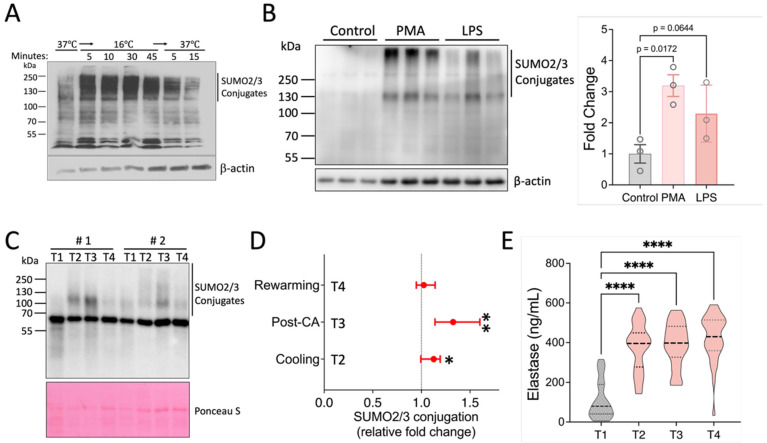 Figure 1
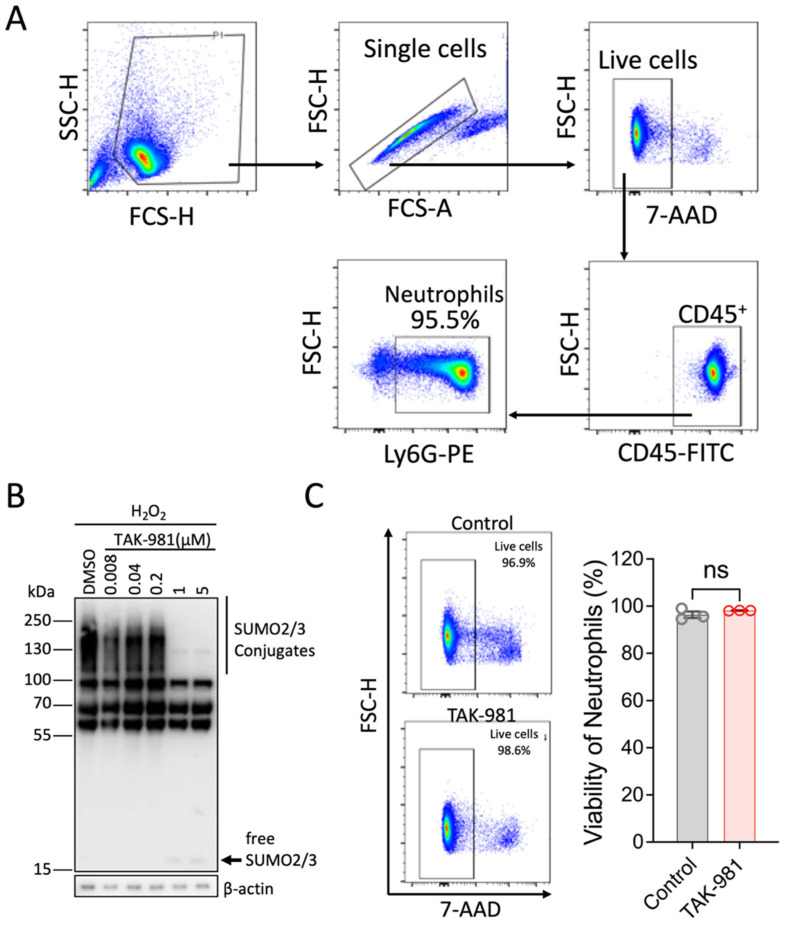 Figure 2
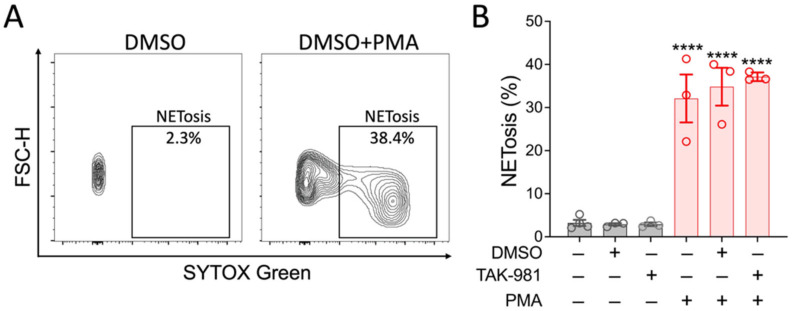 Figure 3
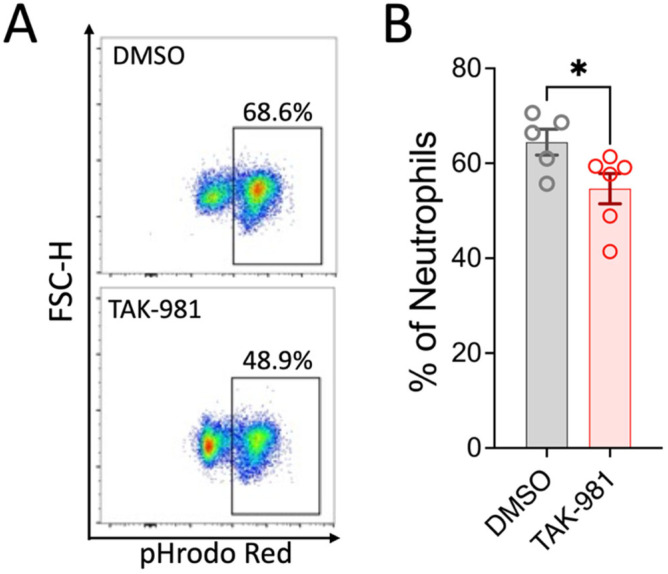 Figure 4
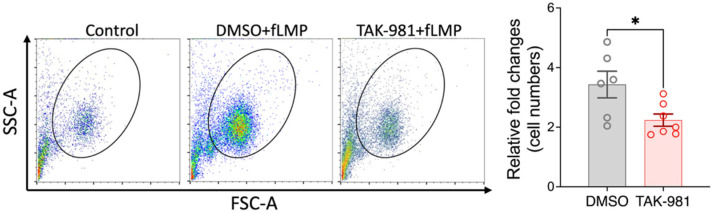 Figure 5
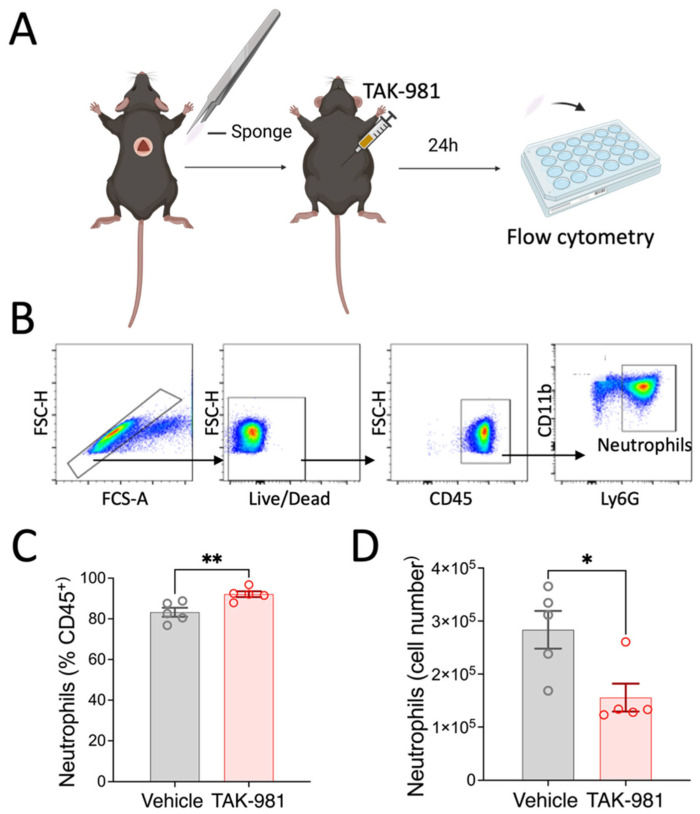 Figure 6
Peer Reviews
No public reviews on file for this paper yet. If you reviewed it on a platform where reviews are public (OpenReview, ICLR, NeurIPS, ICML), you can paste yours below so the community can read it here.
Videos
No videos yet. Explain this paper in a talk, walkthrough, or lecture? Add one.
Taxonomy
TopicsNeutrophil, Myeloperoxidase and Oxidative Mechanisms · Protease and Inhibitor Mechanisms · Ubiquitin and proteasome pathways