Comparative Evaluation of the Serological Methods and the Molecular Genetics Techniques for the Diagnosis of Encephalitozoon cuniculi in Rabbits (Oryctolagus cuniculus)
Anca-Alexandra Doboși, Anamaria Ioana Paștiu, Sanda Andrei, Dana Liana Pusta

TL;DR
This study compares serological and molecular methods for diagnosing Encephalitozoon cuniculi in rabbits from Romania, highlighting its prevalence and zoonotic risk.
Contribution
The first report of urinary bladder use in molecular diagnosis of E. cuniculi and a comparative analysis of diagnostic methods in North-Western Romania.
Findings
Seropositivity of 43.02% was detected using ELISA.
Nested PCR identified a 45.45% prevalence in samples from urine, feces, and organs.
The urinary bladder showed a 30.56% positivity rate by nested PCR for the first time.
Abstract
Encephalitozoon cuniculi is a microsporidian widely spread in rabbits (Oryctolagus cuniculus) and other species, including humans, causative of neurological disorders or remaining in a latent state in the host organism. The aim of this study was to estimate the prevalence of E. cuniculi in rabbits located in the North-Western region of Romania, and to run a comparative diagnosis for E. cuniculi by multiple methods. A total of 381 rabbits were included, originating from households, family farms and wildlife, which were subjected to serological and/or molecular genetics diagnostic methods for E. cuniculi identification. Seropositivity of 43.02% (151/351) was obtained by ELISA, together with a 45.45% (110/242) prevalence from urine, feces and organs by nested PCR. Additionally, a prevalence of 48.39% (15/31) was identified by a comparative real-time PCR (qPCR). The urinary bladder is…
Genes, proteins, chemicals, diseases, species, mutations and cell lines named across the full text — each resolved to its canonical identifier and authoritative record.
Click any figure to enlarge with its caption.
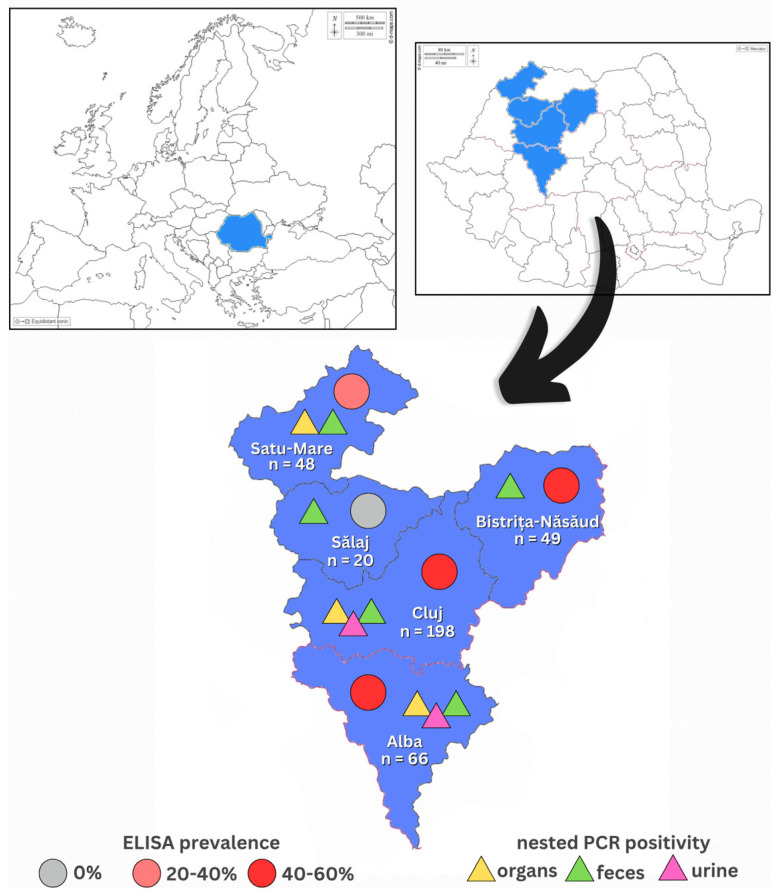 Figure 1
Peer Reviews
No public reviews on file for this paper yet. If you reviewed it on a platform where reviews are public (OpenReview, ICLR, NeurIPS, ICML), you can paste yours below so the community can read it here.
Videos
No videos yet. Explain this paper in a talk, walkthrough, or lecture? Add one.
Taxonomy
TopicsParasitic Infections and Diagnostics · Rabbits: Nutrition, Reproduction, Health · Insect and Pesticide Research