Blood Leukocyte Ratios as Predictive Markers of Chronic Enteropathy Phenotypes in Cats
Alexandros O. Konstantinidis, Katerina K. Adamama-Moraitou, Ashley Griggs, Margaret L. Musser, Ariel S. Nenninger, Nektarios Soubasis, Dimitra Pardali, Mathios E. Mylonakis, Albert E. Jergens

TL;DR
This study explores whether blood cell ratios can help identify different types of chronic intestinal diseases in cats, but finds they are not reliable enough for diagnosis.
Contribution
The study evaluates the diagnostic potential of blood leukocyte ratios in differentiating feline chronic enteropathy subtypes for the first time.
Findings
Cats with small cell lymphoma had significantly higher neutrophil-to-lymphocyte ratios compared to other groups.
Blood leukocyte ratios showed poor sensitivity and specificity for diagnosing specific chronic enteropathy subtypes.
Healthy cats had distinct blood cell ratios compared to those with chronic enteropathies.
Abstract
This retrospective study assessed whether blood leukocyte ratios could help differentiate between types of feline chronic enteropathies (CE). Absolute neutrophil-to-lymphocyte (NLR), neutrophil-to-monocyte (NMR), and lymphocyte-to-monocyte (LMR) ratios were calculated from the hematological data of 221 cats: 73 healthy controls and 148 cats diagnosed with food-responsive enteropathy (FRE), steroid-responsive enteropathy (SRE), or small cell lymphoma (SCL). Cats with SCL had significantly higher NLRs and lower LMRs compared to those with FRE and SRE. Healthy cats showed lower NLRs and higher LMRs than all CE subgroups. While these ratios differed between groups, their ability to accurately classify disease was suboptimal. NLR ≥ 11.6 distinguished SCL from SRE with 87.5% specificity but only 39.4% sensitivity. NMR ≥ 34.5 differentiated FRE from SRE with 52.5% sensitivity and 69.6%…
Genes, proteins, chemicals, diseases, species, mutations and cell lines named across the full text — each resolved to its canonical identifier and authoritative record.
Click any figure to enlarge with its caption.
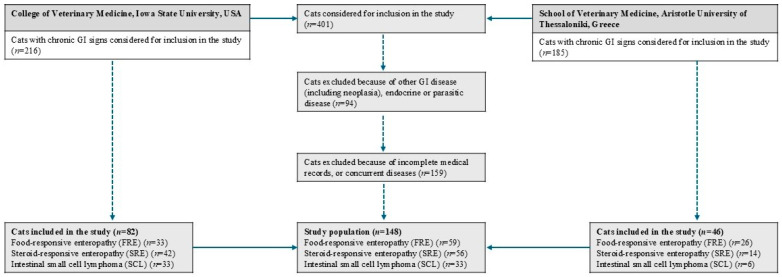 Figure 1
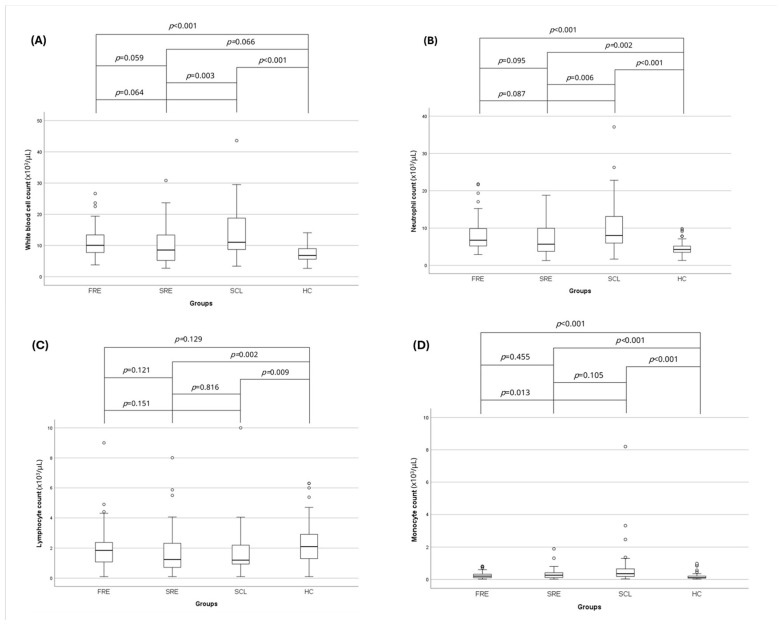 Figure 2
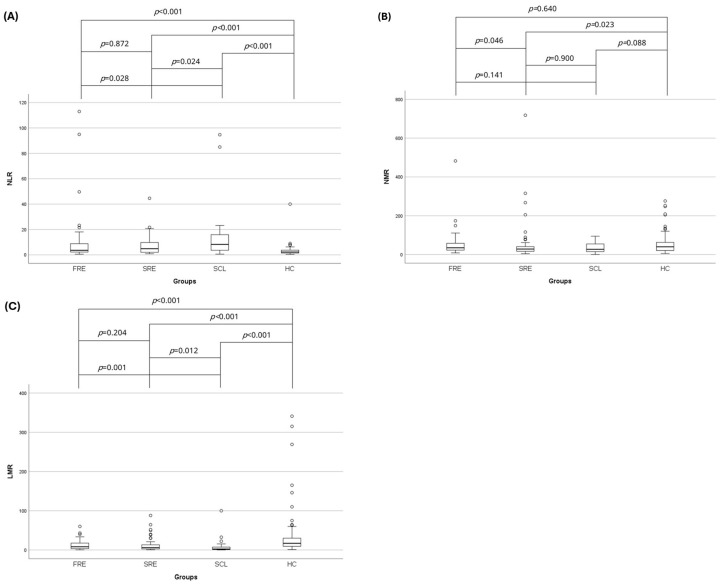 Figure 3
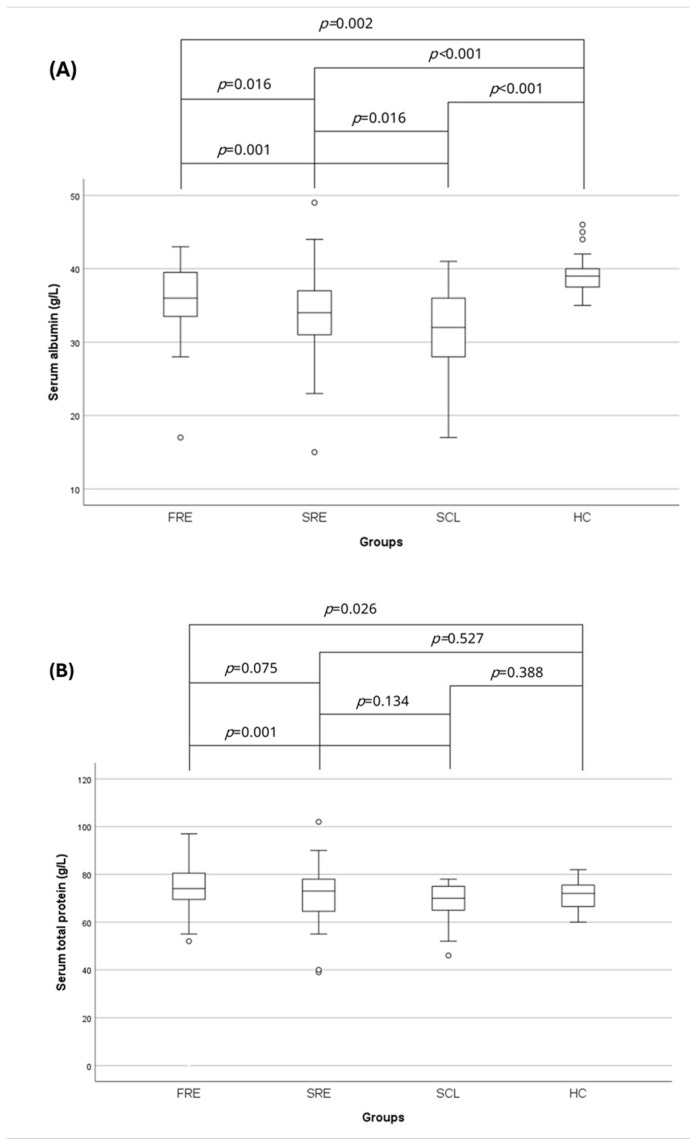 Figure 4
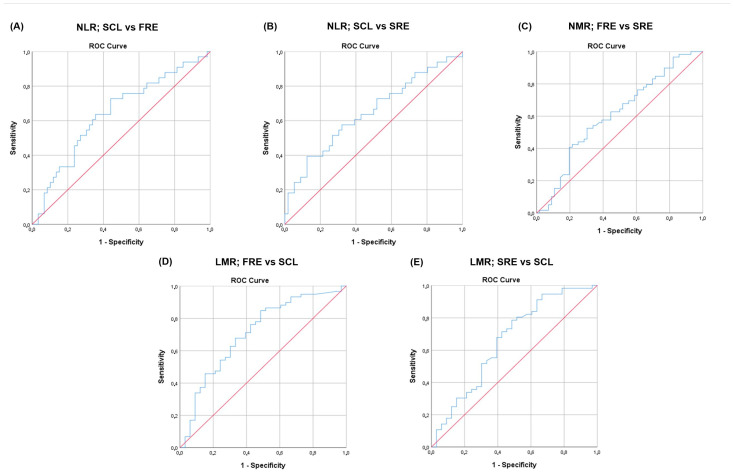 Figure 5
Peer Reviews
No public reviews on file for this paper yet. If you reviewed it on a platform where reviews are public (OpenReview, ICLR, NeurIPS, ICML), you can paste yours below so the community can read it here.
Videos
No videos yet. Explain this paper in a talk, walkthrough, or lecture? Add one.
Taxonomy
TopicsVeterinary Oncology Research · Animal health and immunology · Veterinary Equine Medical Research