Series 1: The Use of hsp65- and erm(41)-Targeted Amplicon Sequencing in the Diagnostic Workflow for Non-Tuberculous Mycobacteria
Tracy Lee, Adriana Cabrera, Kathleen Kolehmainen, Trevor Hird, Danielle Jorgensen, Alan O’Dwyer, Dan Fornika, Rupinder Kaur KhunKhun, Mabel Rodrigues, Natalie Prystajecky, John Tyson, Inna Sekirov, James E. A. Zlosnik

TL;DR
A new sequencing method helps identify non-tuberculous mycobacteria and predict drug resistance in clinical samples.
Contribution
A novel NGS assay targeting hsp65 and erm(41) genes improves species identification and resistance prediction in Mycobacterium spp.
Findings
The assay achieved 100% sensitivity and specificity for M. tuberculosis and M. abscessus complex.
It rescued 60% of primary samples previously unidentifiable with older methods.
Genotypic and phenotypic results for macrolide resistance showed 94.6% concordance.
Abstract
Evolving technologies available to clinical laboratories and laboratory-related updates to clinical guidelines both drive the need for clinical laboratories to keep their test menu updated and in line with current technological and clinical developments. Our laboratory has developed a targeted Illumina-based amplicon next-generation sequencing (NGS) assay to interrogate the hsp65 and erm(41) genes of Mycobacterium spp. for the purposes of providing species-level ± subspecies-level identification of Mycobacterium spp. organisms in clinical samples and genotypic predictions for inducible macrolide resistance (in the case of M. abscessus complex members). The developed assay demonstrated 100% sensitivity and specificity for M. tuberculosis and M. abscessus complex cultured organisms, 98% ID overall concordance relative to the available reference identification, and a nearly 60% “rescue”…
Genes, proteins, chemicals, diseases, species, mutations and cell lines named across the full text — each resolved to its canonical identifier and authoritative record.
Click any figure to enlarge with its caption.
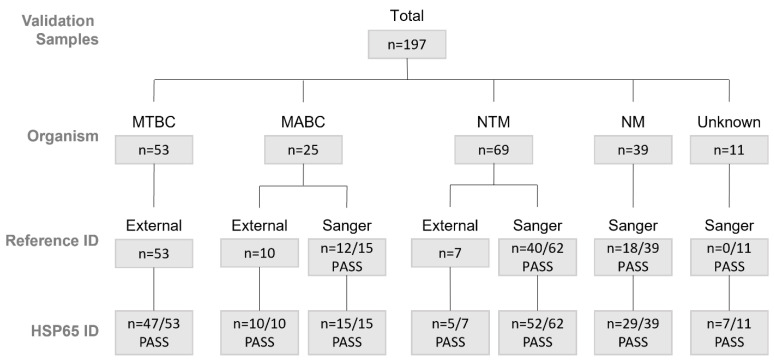 Figure 1
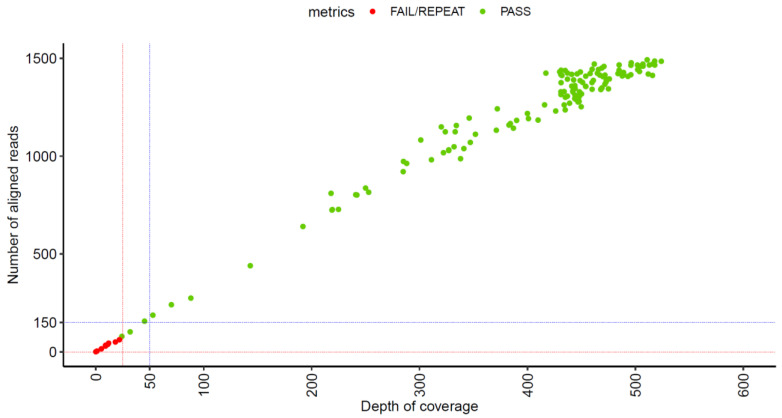 Figure 2
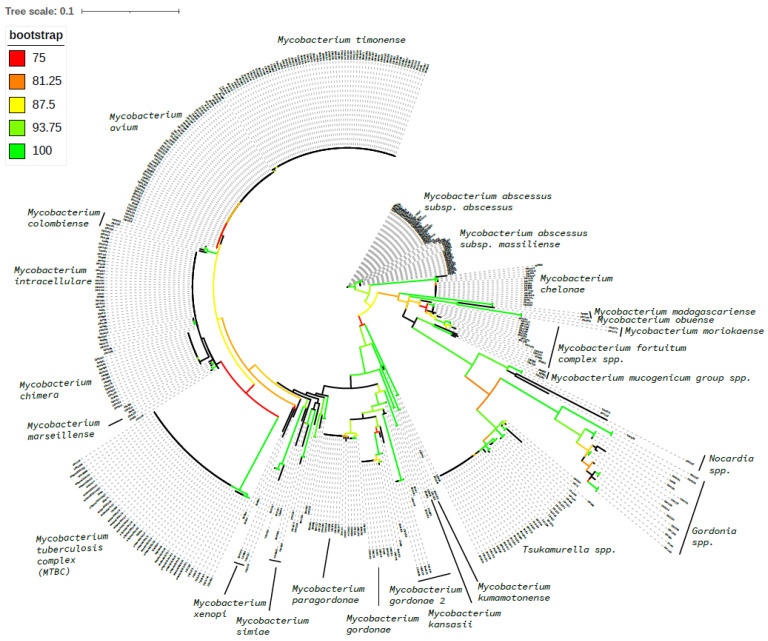 Figure 3
Peer Reviews
No public reviews on file for this paper yet. If you reviewed it on a platform where reviews are public (OpenReview, ICLR, NeurIPS, ICML), you can paste yours below so the community can read it here.
Videos
No videos yet. Explain this paper in a talk, walkthrough, or lecture? Add one.
Taxonomy
TopicsMycobacterium research and diagnosis · Infectious Diseases and Mycology · Actinomycetales infections and treatment