Comparative Metabolite Profiling of Antarctic and Korean Mosses: Insights into Adaptation Mechanisms of Antarctic Moss Species
Marufa Naznin, Raisul Awal Mahmood, Md Badrul Alam, Kil Ho Shin, Kyungwon Min, Sang-Han Lee, Hyoungseok Lee, Sunghwan Kim

TL;DR
Antarctic mosses have higher levels of stress-fighting compounds than Korean mosses, helping them survive harsh conditions and offering potential for biotech uses.
Contribution
The study reveals unique biochemical adaptations in Antarctic mosses through comparative metabolite profiling.
Findings
Antarctic mosses have significantly higher total phenolic and flavonoid content than Korean mosses.
Antarctic mosses show greater antioxidant activity and a higher diversity of metabolites, including terpenoids and flavonoids.
Adaptations in lipid composition in Antarctic mosses help maintain membrane fluidity under cold stress.
Abstract
This study investigates the relationship between secondary metabolites and stress tolerance in moss species, with a specific emphasis on comparing Antarctic and Korean mosses. Analyses of total phenolic content (TPC) and total flavonoid content (TFC) revealed that Antarctic mosses contain these compounds at significantly higher levels compared to the Korean mosses. These findings are consistent with greater antioxidant activities observed in Antarctic mosses through DPPH and ABTS•+ radical scavenging assays. In this study, a total of 620 metabolites were identified from the moss samples. The results showed that Antarctic mosses exhibited a high number and diversity of compounds including terpenoids, flavonoids, lipids, and other classes. Additionally, Antarctic mosses had fewer lipids with carbon chain lengths below 18 and a higher content of unsaturated lipids, indicating adaptations…
Genes, proteins, chemicals, diseases, species, mutations and cell lines named across the full text — each resolved to its canonical identifier and authoritative record.
Click any figure to enlarge with its caption.
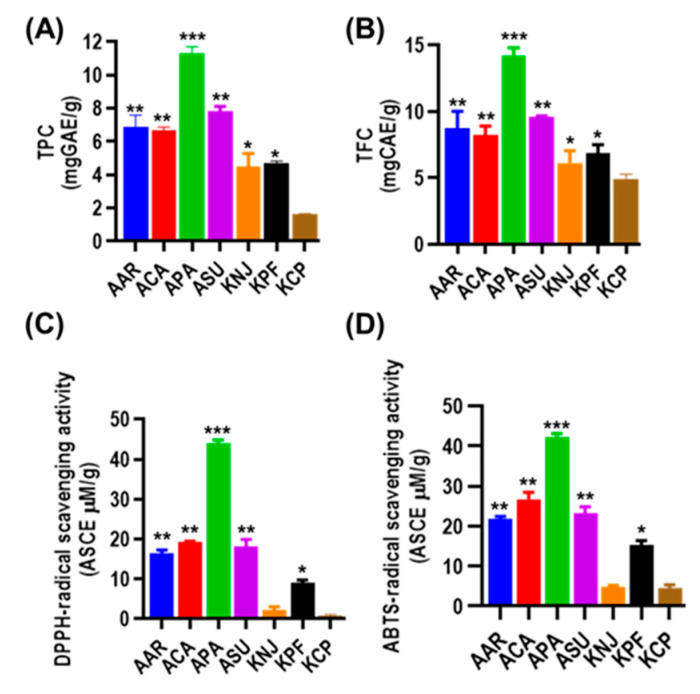 Figure 1
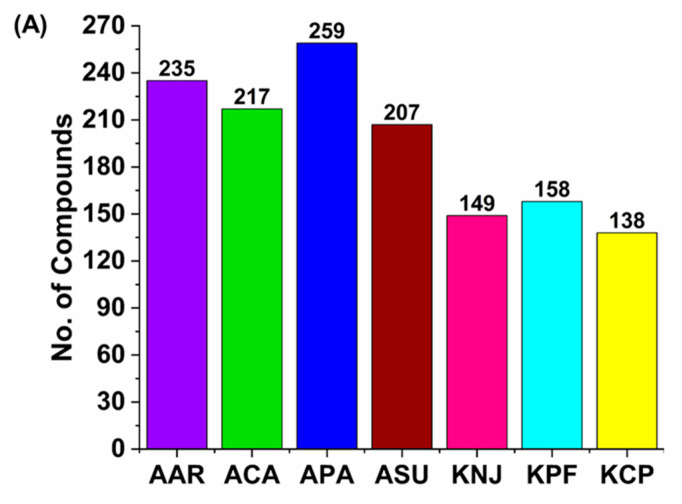 Figure 2
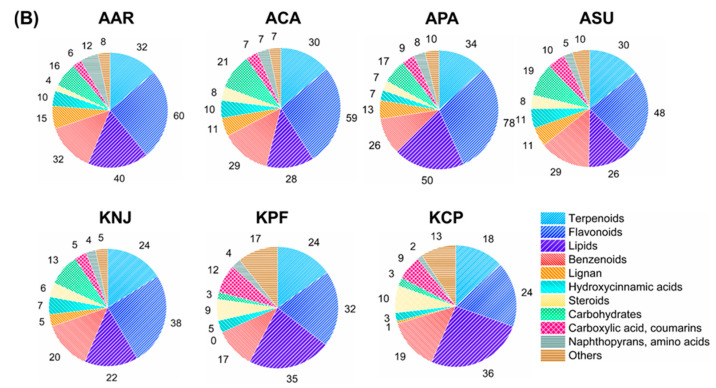 Figure 3
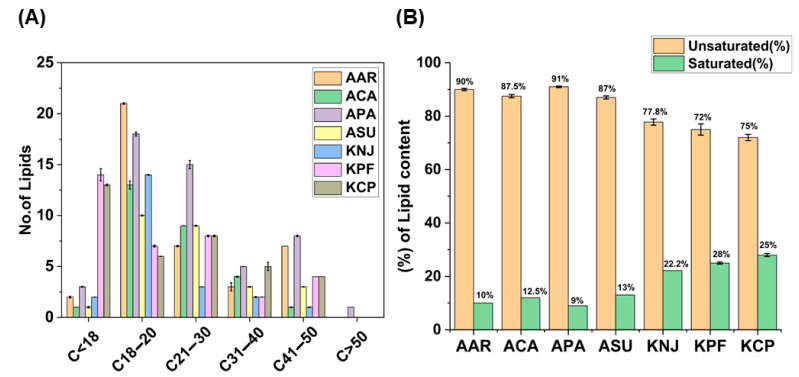 Figure 4
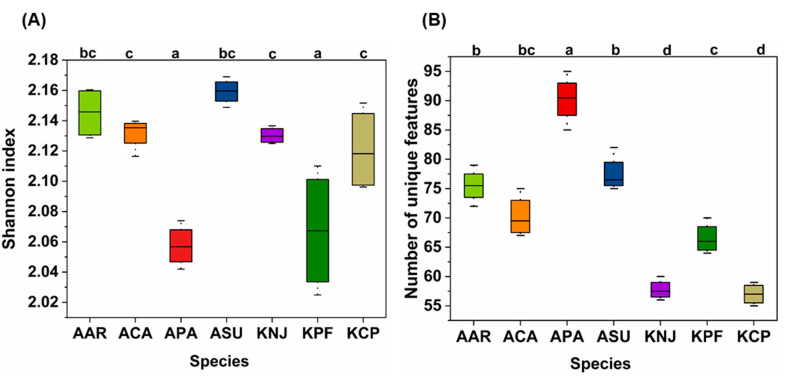 Figure 5
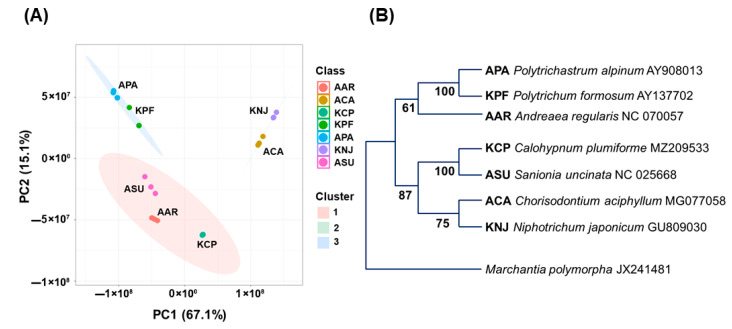 Figure 6
Peer Reviews
No public reviews on file for this paper yet. If you reviewed it on a platform where reviews are public (OpenReview, ICLR, NeurIPS, ICML), you can paste yours below so the community can read it here.
Videos
No videos yet. Explain this paper in a talk, walkthrough, or lecture? Add one.
Taxonomy
TopicsBryophyte Studies and Records · Lichen and fungal ecology · Biocrusts and Microbial Ecology