High-Density Lipoprotein Cholesterol and Cognitive Function in Older Korean Adults Without Dementia: Apolipoprotein E4 as a Moderating Factor
Young Min Choe, Hye Ji Choi, Musung Keum, Boung Chul Lee, Guk-Hee Suh, Shin Gyeom Kim, Hyun Soo Kim, Jaeuk Hwang, Dahyun Yi, Jee Wook Kim

TL;DR
Higher HDL cholesterol is linked to better cognitive function in older adults, especially those with the APOE4 gene, which is associated with increased Alzheimer's risk.
Contribution
This study identifies APOE4 as a moderating factor in the relationship between HDL-C and cognitive function in older adults.
Findings
Higher HDL-C levels were significantly associated with better episodic memory and global cognition in APOE4-positive individuals.
No significant associations were found between HDL-C and cognition in APOE4-negative participants.
The study suggests a potential protective role of HDL-C in cognitive function for those with the APOE4 gene.
Abstract
Background: High-density lipoprotein cholesterol (HDL-C) is known for its cardiovascular and neuroprotective effects, but its association with cognitive function remains unclear, particularly in relation to genetic factors such as apolipoprotein E ε4 (APOE4). We aimed to investigate the association between serum HDL-C levels and cognition and to examine the moderating effect of APOE4 on this relationship. Methods: This cross-sectional study included 196 dementia-free older adults (aged 65–90) recruited from a memory clinic and the community. Cognitive function was assessed across multiple domains using the Consortium to Establish a Registry for Alzheimer’s Disease (CERAD) battery. Serum HDL-C levels were measured, and APOE4 genotyping was performed. Multiple linear regression analyses were conducted, adjusting for age, sex, APOE4 status, education, diagnosis, vascular risk, nutritional…
Genes, proteins, chemicals, diseases, species, mutations and cell lines named across the full text — each resolved to its canonical identifier and authoritative record.
Click any figure to enlarge with its caption.
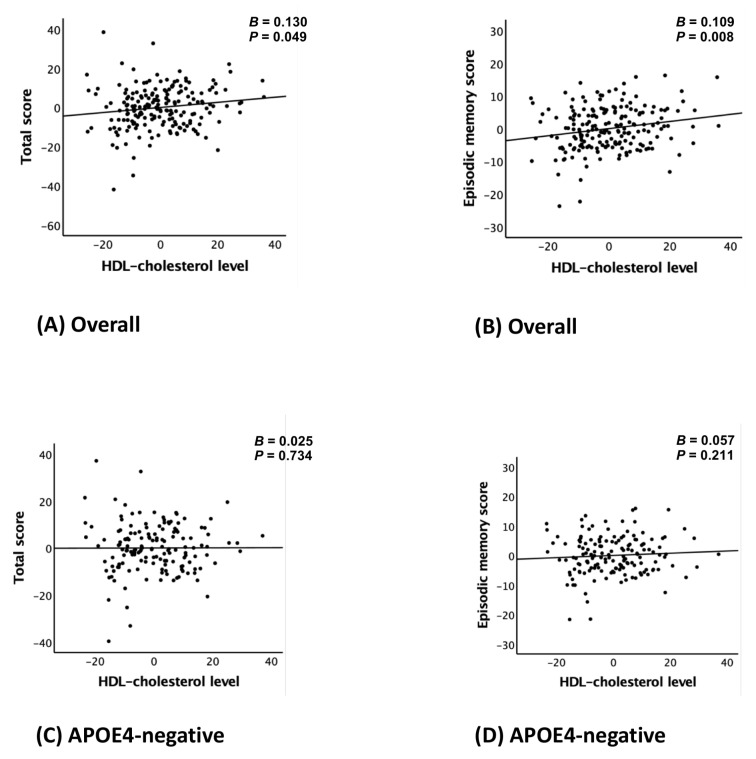 Figure 1
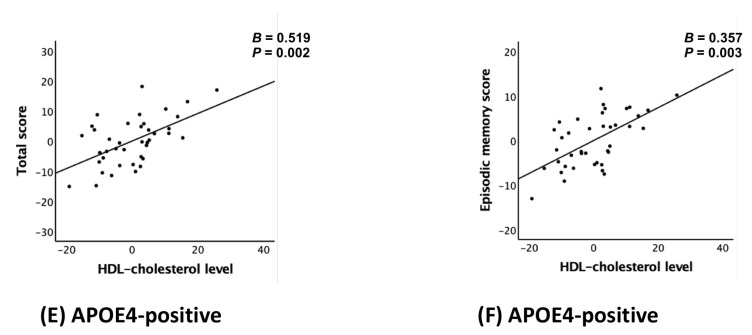 Figure 2
Peer Reviews
No public reviews on file for this paper yet. If you reviewed it on a platform where reviews are public (OpenReview, ICLR, NeurIPS, ICML), you can paste yours below so the community can read it here.
Videos
No videos yet. Explain this paper in a talk, walkthrough, or lecture? Add one.
Taxonomy
TopicsNutritional Studies and Diet · Diabetes, Cardiovascular Risks, and Lipoproteins · Lipoproteins and Cardiovascular Health