Neural Pathways of Visual Face Recognition Immediately After Birth
Carlo Lai, Chiara Ciacchella, Daniela Altavilla, Giorgio Veneziani, Giuseppe Marano, Gaia Romana Pellicano, Giacomo Della Marca, Federico Tonioni, Paola Aceto, Marco Cecchini, Eugenio Maria Mercuri, Luigi Janiri, Marianna Mazza

TL;DR
Newborn infants can distinguish between familiar and novel faces immediately after birth, suggesting early-developed neural pathways for face recognition.
Contribution
This study identifies specific electrophysiological correlates of face recognition in newborns within the first hours of life.
Findings
Newborns showed a greater negative amplitude of the N290 component for familiar faces compared to novel ones in the left hemisphere.
The latency of the N290 was shorter for familiar faces and longer for novel faces compared to objects like chessboards.
These results indicate that newborns can differentiate faces from objects and recognize familiar faces shortly after birth.
Abstract
The present study aimed to investigate the electrophysiological correlates of face-identity recognition in newborn infants immediately after birth. Electroencephalographic acquisition was continuously recorded in 23 newborn infants (3 < age < 24 h of life) during the following visual task: presentation of a woman’s face for 60 s (“known face”); random presentation of 50 known faces, 50 novel women’s faces, and 50 chessboards (for 2 s each). The final sample included in ERP analyses was composed of 11 newborn infants (male/female: 6/5; age: 5 h 16′ ± 3 h 51′). A greater negative amplitude of the N290 and smaller P400 and LC2 were found in response to the known face compared with the novel one in the left hemisphere. A shorter N290 latency was detected during the known face presentation compared with the novel one, and a longer latency of the same component was observed during novel face…
Genes, proteins, chemicals, diseases, species, mutations and cell lines named across the full text — each resolved to its canonical identifier and authoritative record.
Click any figure to enlarge with its caption.
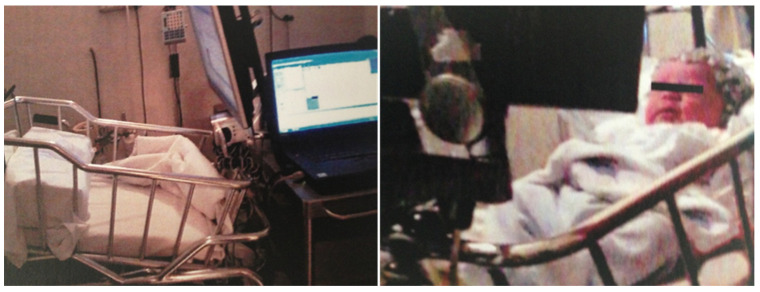 Figure 1
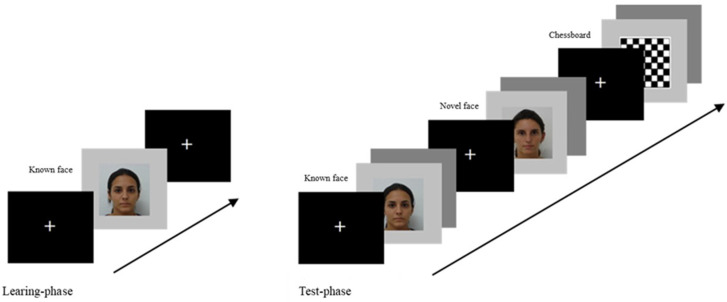 Figure 2
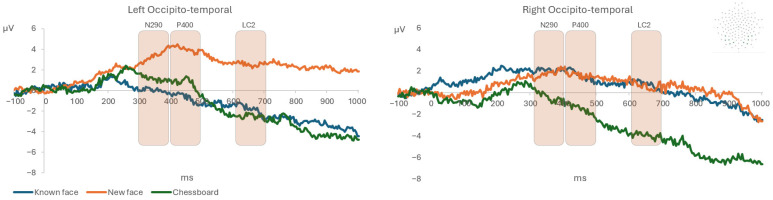 Figure 3
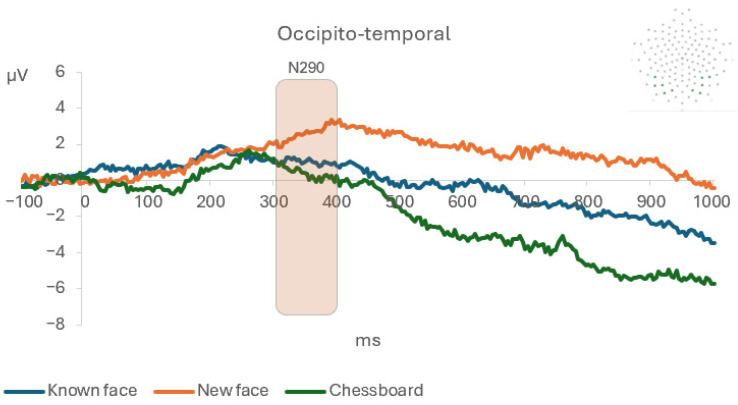 Figure 4
Peer Reviews
No public reviews on file for this paper yet. If you reviewed it on a platform where reviews are public (OpenReview, ICLR, NeurIPS, ICML), you can paste yours below so the community can read it here.
Videos
No videos yet. Explain this paper in a talk, walkthrough, or lecture? Add one.
Taxonomy
TopicsFace Recognition and Perception · Memory and Neural Mechanisms · Neuroendocrine regulation and behavior