Cyclin dependent kinase 9 inhibitor induces transcription-replication conflicts and DNA damage accumulation in breast cancer
Minyoung Lee, Kyung-Hun Lee, Ahrum Min, So Hyeon Kim, Sujin Ham, Hae Min Hwang, Youlim Noh, Yu-Jin Kim, Dae-Won Lee, Jiwon Koh, Seock-Ah Im

TL;DR
This study shows that a CDK9 inhibitor causes DNA damage in breast cancer cells by creating conflicts between transcription and replication, and identifies a protein that helps resolve these conflicts.
Contribution
The study reveals a novel mechanism of CDK9 inhibition-induced DNA damage and identifies DDX25 as a key mediator in resolving transcription-replication conflicts.
Findings
AZD4573 induces T-R conflicts and DNA damage during S-phase, leading to apoptosis in breast cancer cells.
DDX25 helicase resolves T-R conflicts and reduces sensitivity to AZD4573.
CDK9 inhibition causes replication stress and DNA strand breaks in breast cancer cells.
Abstract
Cyclin-dependent kinase 9 (CDK9) is a crucial regulator of transcriptional progression of RNA polymerase-II (RNAP2). RNA polymerases trapped in DNA can be a source of transcription-replication conflict (T-R conflict), which is a common source of replication stress. AZD4573, a highly selective CDK9 inhibitor, has been shown to induce apoptosis in leukemia cell lines, while its anti-tumor potential in breast cancer has yet to be elucidated. To evaluate the cytotoxicity of AZD4573 in vitro, MTT assays were performed. The expression of signal transduction molecules was determined using Western blotting, immunoprecipitation, and immunofluorescence. Apoptotic cell death was verified by the annexin-V assay. DNA strand breaks and repair efficacy were evaluated through the alkaline comet assay. The siRNA knock-down system was used to confirm the action mechanism. AZD4573 induced T-R conflicts…
Genes, proteins, chemicals, diseases, species, mutations and cell lines named across the full text — each resolved to its canonical identifier and authoritative record.
Click any figure to enlarge with its caption.
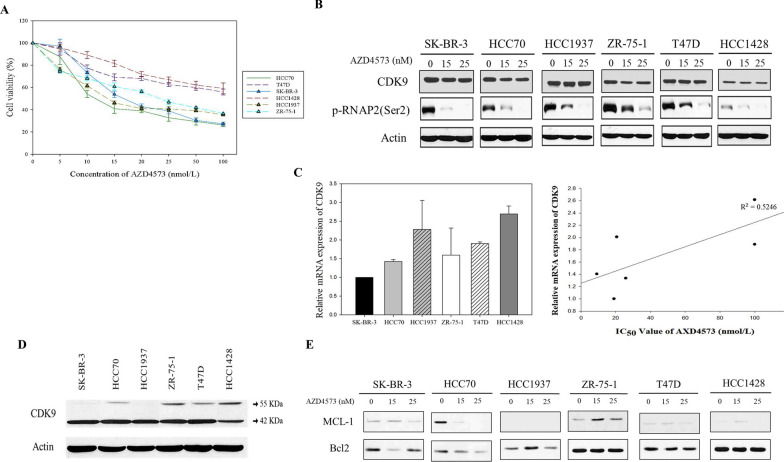 Figure 1
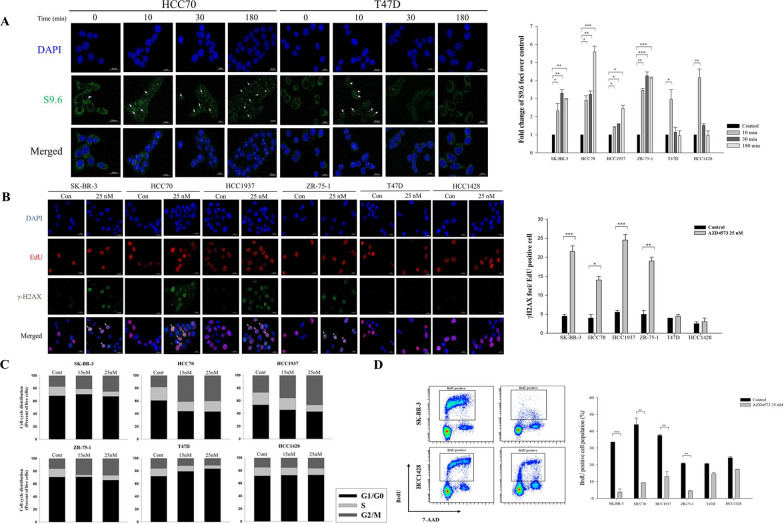 Figure 2
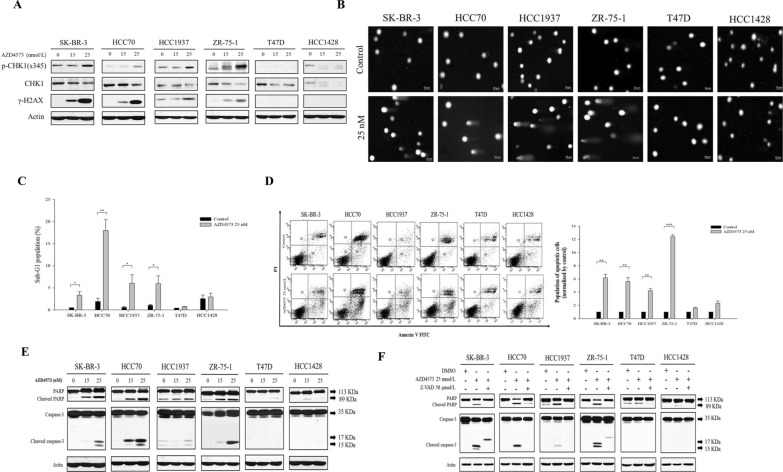 Figure 3
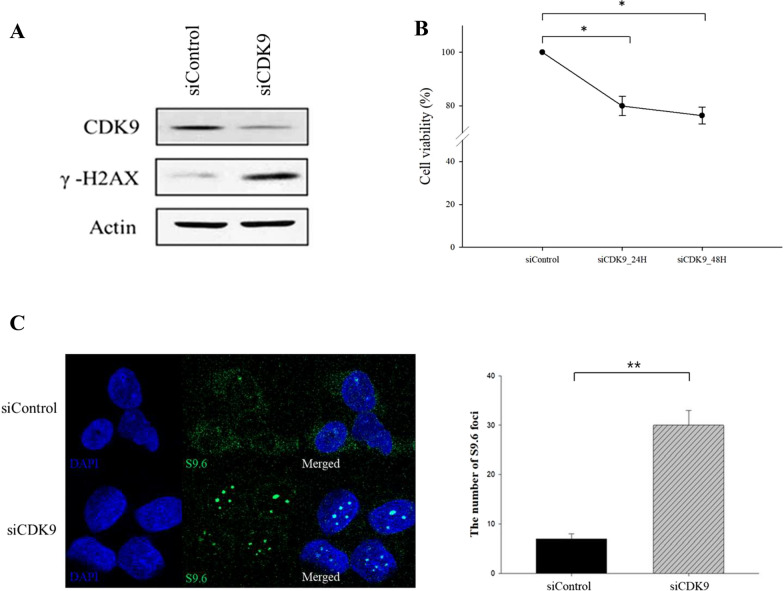 Figure 4
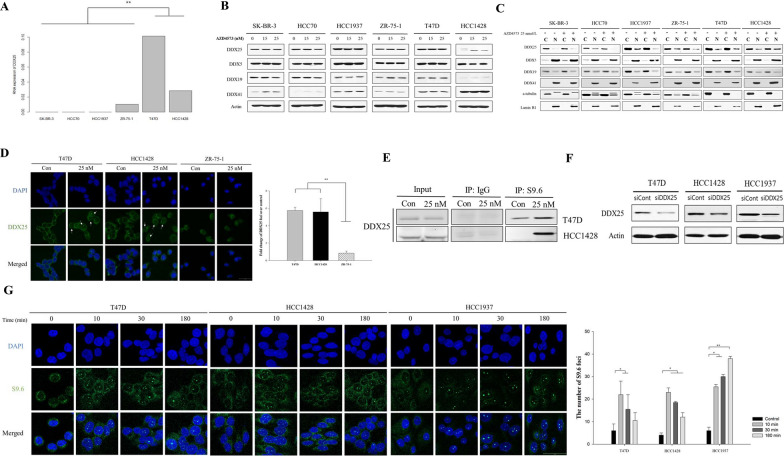 Figure 5
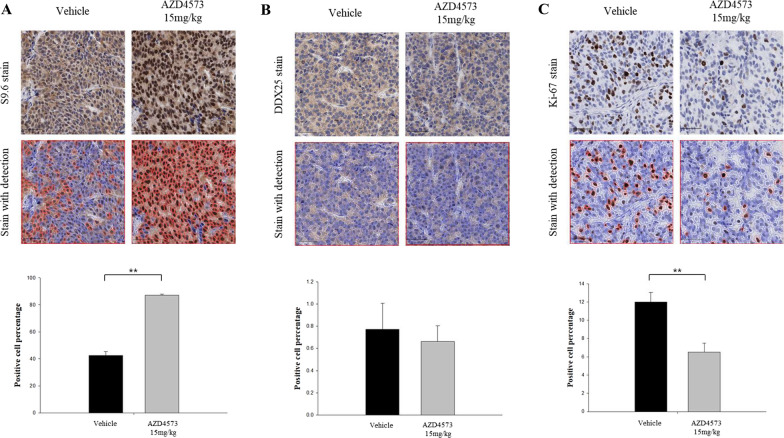 Figure 6
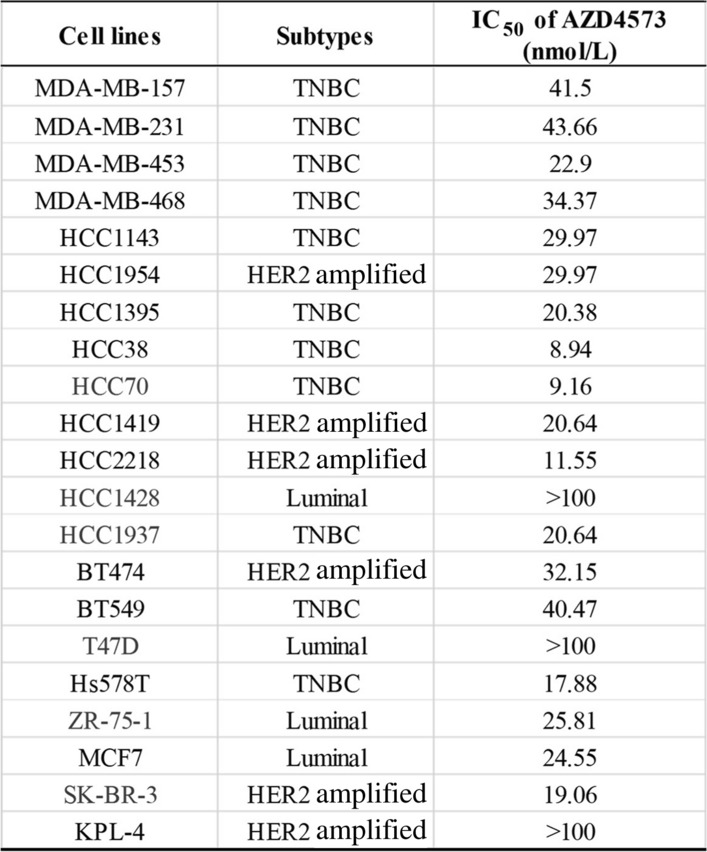 Figure 7
Peer Reviews
No public reviews on file for this paper yet. If you reviewed it on a platform where reviews are public (OpenReview, ICLR, NeurIPS, ICML), you can paste yours below so the community can read it here.
Videos
No videos yet. Explain this paper in a talk, walkthrough, or lecture? Add one.
Taxonomy
TopicsDNA Repair Mechanisms · Cancer-related Molecular Pathways · Genomics and Chromatin Dynamics