GWAS combined with transcriptomics revealed key regulatory genes for inflorescence traits and fruit set rate in Litchi (Litchi chinensis Sonn.)
Fachao Shi, Kan Huang, Yonghua Jiang, Hailun Liu, Yingjie Wen, Qian Yan

TL;DR
This study identifies key genes linked to litchi inflorescence traits and fruit set rate using genetic and transcriptomic data, offering insights for improving litchi breeding.
Contribution
The study combines GWAS and transcriptomics to reveal novel regulatory genes influencing litchi inflorescence and fruit set.
Findings
High fruit set rate litchi varieties show lower trait expressions in inflorescence length and number of female flowers.
GWAS identified significant SNPs for NSLI and NFFI, with associated genes validated through transcriptome and qRT-PCR analyses.
Key genes like LITCHI016073 and LITCHI019855 are linked to inflorescence development and fruit set regulation.
Abstract
As an important tropical and subtropical fruit, litchi’s inflorescence size and the number of florets per inflorescence are crucial factors affecting fruit set rate and yield. This study extensively collected a total of 219 litchi germplasm resources, including those from China and 11 other countries worldwide, systematically evaluating eight core phenotypic traits: inflorescence length (IL), inflorescence width (IW), number of secondary lateral inflorescences (NSLI), number of inflorescence internodes (NII), base to main axis length (BMAL), inverted 5th internode length (I5IL), number of female flowers per inflorescence (NFFI), and fertilization rate (FR). The research findings indicated significant correlations between these agronomic traits and fruit set rate, particularly with high fruit set rate litchi varieties showing notably lower trait expressions in IL, NSLI, NFFI, and NII…
Genes, proteins, chemicals, diseases, species, mutations and cell lines named across the full text — each resolved to its canonical identifier and authoritative record.
Click any figure to enlarge with its caption.
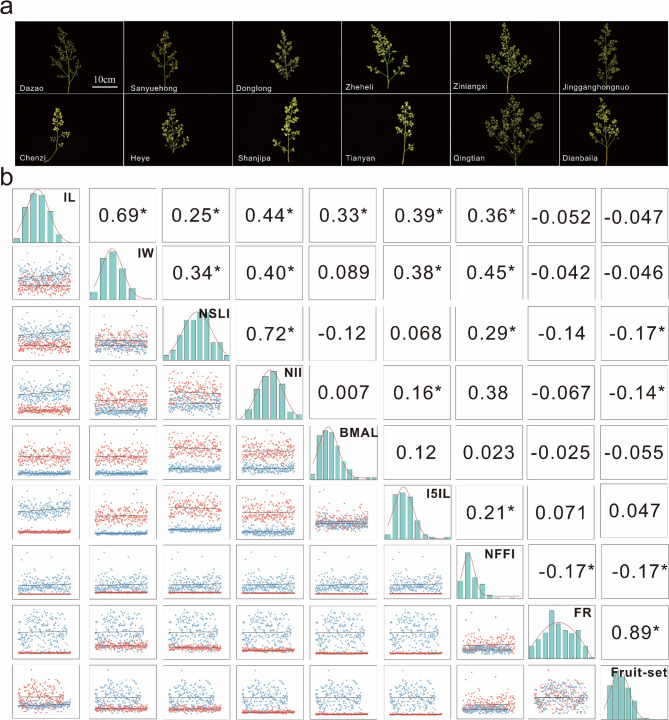 Figure 1
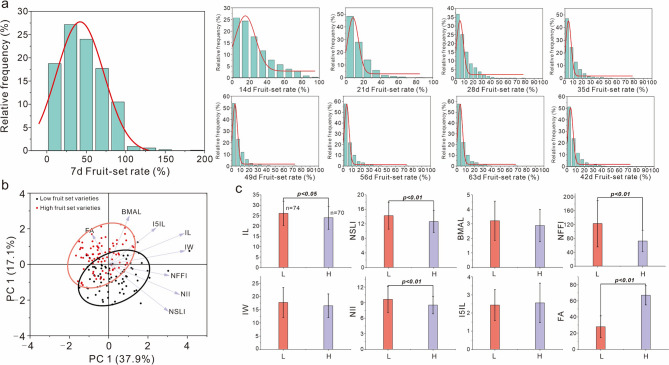 Figure 2
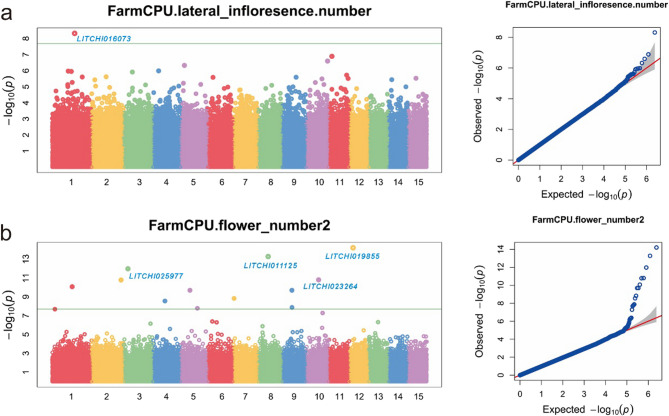 Figure 3
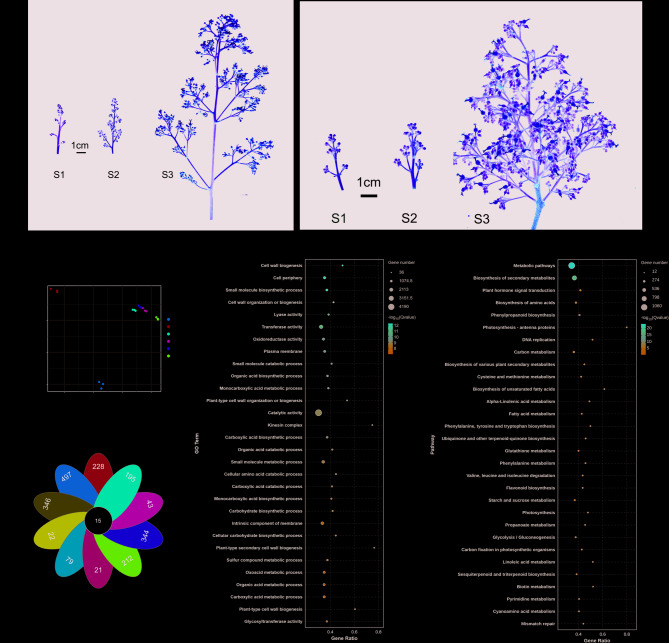 Figure 4
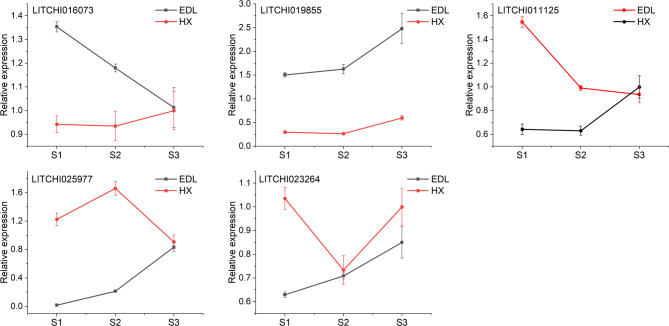 Figure 5
Peer Reviews
No public reviews on file for this paper yet. If you reviewed it on a platform where reviews are public (OpenReview, ICLR, NeurIPS, ICML), you can paste yours below so the community can read it here.
Videos
No videos yet. Explain this paper in a talk, walkthrough, or lecture? Add one.
Taxonomy
TopicsPlant Physiology and Cultivation Studies · Horticultural and Viticultural Research · Plant Reproductive Biology