Finite element analysis of anterior spanning attachment devices for supporting biomechanical stability in diaphyseal femoral periprosthetic fracture fixation
Markus Heinecke, Stefan Schwan, Immanuel Ries, Ram Kumar Jayakumar, Filippo Migliorini, Thomas Mendel

TL;DR
This paper uses finite element analysis to evaluate new plate designs for stabilizing femoral periprosthetic fractures, aiming to improve healing and reduce tissue trauma.
Contribution
The study introduces and evaluates novel anterior spanning plate designs for periprosthetic femur fractures using finite element modeling.
Findings
Alternative plate designs with anterior frames (V3 and V4) showed reduced deformation and improved fixation stability.
Double plate osteosynthesis (V2) was the most stable but did not allow adequate vibration behavior for healing.
New designs (V3 and V4) demonstrated optimal strain behavior in the fracture gap, promoting callus healing.
Abstract
The incidence of periprosthetic femoral fractures has increased in recent years. Osteosynthetic stabilisation is challenging, particularly for UCS IV.3-C fractures. Lateral plate osteosynthesis is the gold standard; however, it allows excessive vibration, leading to plate breakage. Orthogonal double plate osteosynthesis has been established but requires considerable intraoperative dissection of the anterior extensor muscle. This work aims to analyse newly developed plate designs that demonstrate adequate vibration behaviour, which, in turn, promotes callus healing and causes less soft tissue trauma than the plate constructs used to date. A hip prosthesis geometry and a parameterised volume geometry of a UCS IV.3-C type periprosthetic femur fracture were simulated to generate a finite element model. Additionally, three alternative design studies were developed to optimise an LCP®, and…
Genes, proteins, chemicals, diseases, species, mutations and cell lines named across the full text — each resolved to its canonical identifier and authoritative record.
Click any figure to enlarge with its caption.
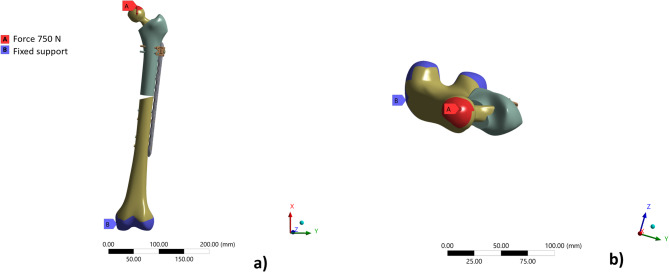 Figure 1
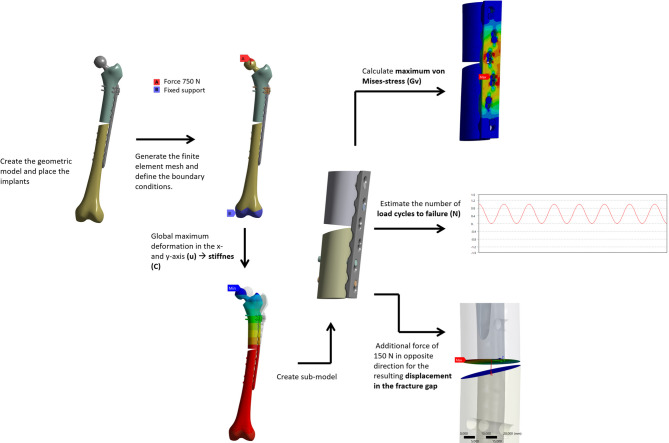 Figure 2
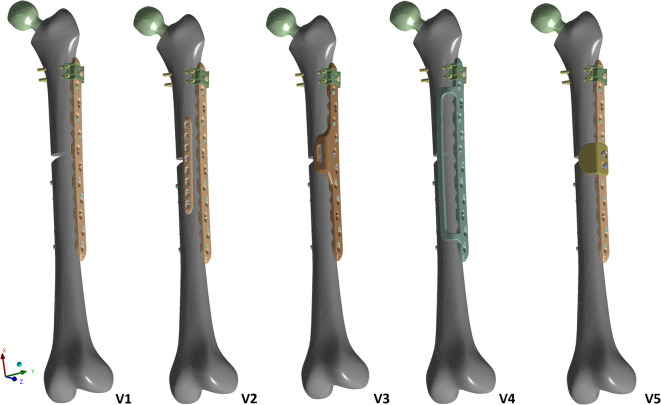 Figure 3
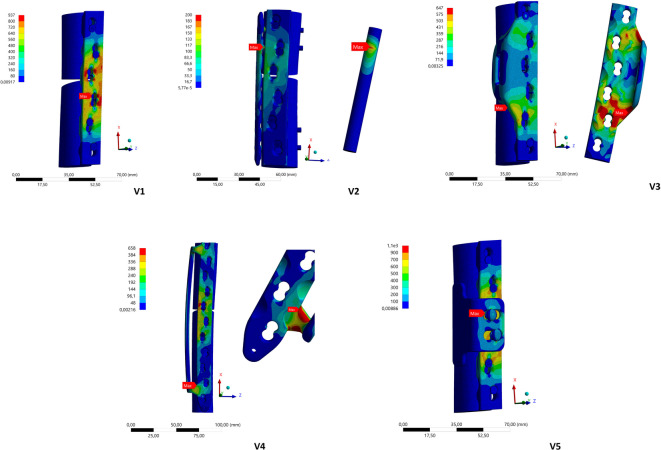 Figure 4
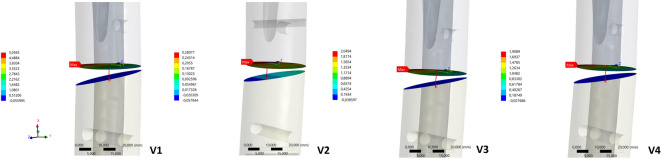 Figure 5
Peer Reviews
No public reviews on file for this paper yet. If you reviewed it on a platform where reviews are public (OpenReview, ICLR, NeurIPS, ICML), you can paste yours below so the community can read it here.
Videos
No videos yet. Explain this paper in a talk, walkthrough, or lecture? Add one.
Taxonomy
TopicsOrthopaedic implants and arthroplasty · Orthopedic Infections and Treatments · Bone fractures and treatments