Molecular networking derived from untargeted LC-MS/MS analysis to discover inhibitors of RANKL-induced osteoclastogenesis from Egyptian marine sponge-associated fungi
Abdelhalim A. Elgahamy, Ahmed H. El-Desoky, Asmaa M. Otify, Ahlam M. El Fishawy, Ahmed A. El-Beih

TL;DR
Researchers discovered two natural compounds from marine sponge fungi that inhibit bone breakdown, offering potential for osteoporosis treatments.
Contribution
The study introduces two new natural compounds with anti-osteoclastogenic activity from Egyptian marine fungi.
Findings
Compound 1 and altenuene (8) inhibited RANKL-induced osteoclast formation without cytotoxicity.
Compound 8 showed better solubility and lower toxicity compared to compound 1.
Molecular networking identified eight new and thirteen known compounds from fungal extracts.
Abstract
In continuous search for RANKL induced osteoclastogenesis inhibitors, twenty-six fungal isolates were obtained from ten Red Sea marine sponges collected from Egypt and the ethyl acetate fractions of their cultures’ methanol extracts were assessed in RAW264 macrophages. Active fractions were profiled via LC-MS/MS, followed by untargeted molecular networking, leading to the tentative identification of eight unreported compounds (1, A2, C1, C2, C4-C7), and thirteen known compounds. The two active fungi were identified and deposited in GenBank with accession numbers PQ423742 and PQ423748 for Aspergillus flavus and Cladosporium colombiae, respectively. Bioassay-guided isolation afforded two bisphenol diglycidic ethers, 1 and 2, and two diketopiperazines, 3 and 4 from A. flavus, while C. colombiae yielded cinnamic acid (5), two diketopiperazines (6 and 7), and altenuene (8). Structures were…
Genes, proteins, chemicals, diseases, species, mutations and cell lines named across the full text — each resolved to its canonical identifier and authoritative record.
Click any figure to enlarge with its caption.
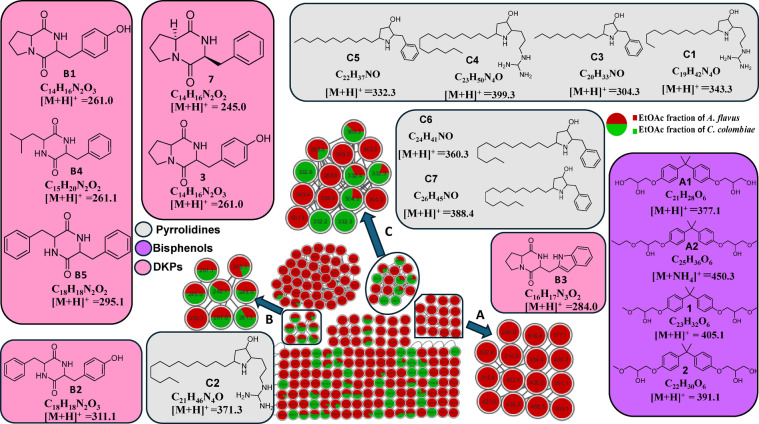 Figure 1
 Figure 2
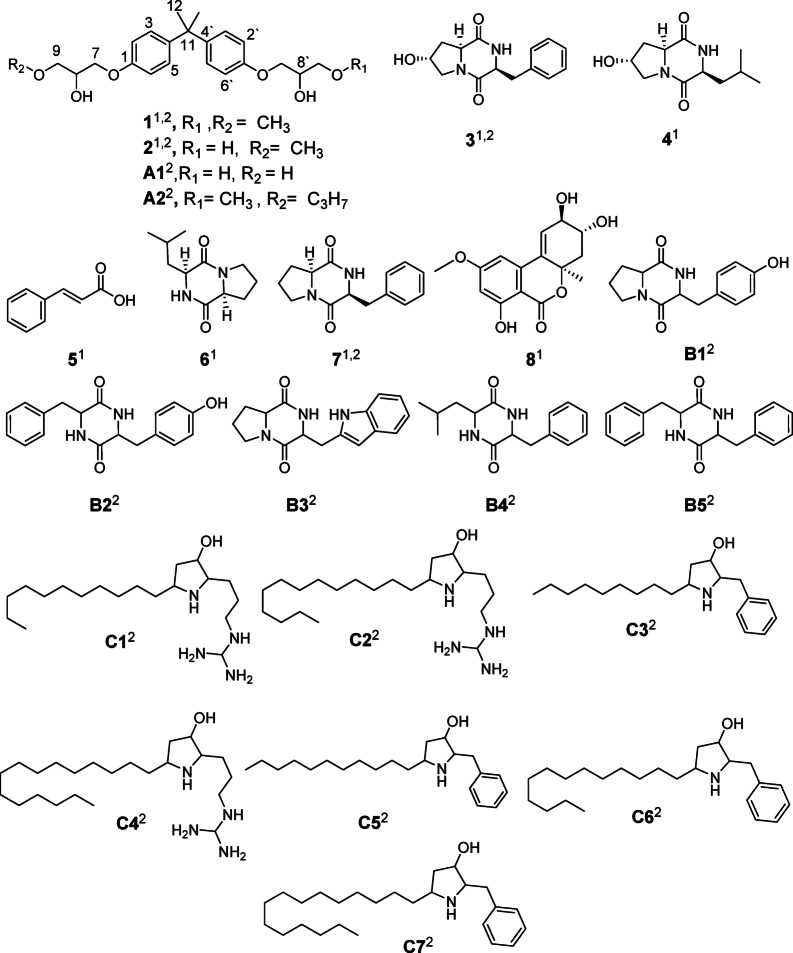 Figure 3
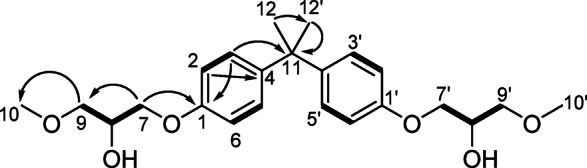 Figure 4
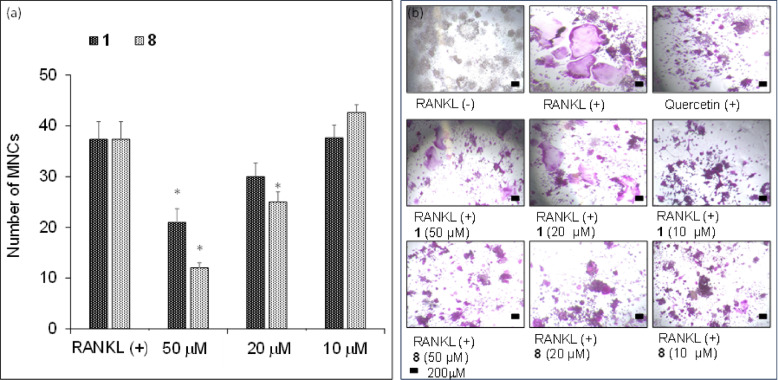 Figure 5
Peer Reviews
No public reviews on file for this paper yet. If you reviewed it on a platform where reviews are public (OpenReview, ICLR, NeurIPS, ICML), you can paste yours below so the community can read it here.
Videos
No videos yet. Explain this paper in a talk, walkthrough, or lecture? Add one.
Taxonomy
TopicsBone Metabolism and Diseases · Inflammatory mediators and NSAID effects · Microbial Natural Products and Biosynthesis