Phase 1 study evaluating safety and pharmacokinetics of tusamitamab ravtansine monotherapy in Japanese patients with advanced malignant solid tumors
Kei Muro, Kentaro Yamazaki, Shigenori Kadowaki, Saori Mishima, Takeshi Kawakami, Tomoyuki Tanaka, Keisuke Tada, Nathalie Fagniez, Shinobu Ohshima, Takayuki Yoshino

TL;DR
This study evaluated the safety and drug levels of tusamitamab ravtansine in Japanese patients with advanced solid tumors, finding it generally well-tolerated with no severe dose-limiting side effects.
Contribution
The study provides new safety and pharmacokinetic data for tusamitamab ravtansine in Japanese patients with advanced solid tumors.
Findings
Tusamitamab ravtansine showed a manageable safety profile with no dose-limiting toxicities in most patients.
Drug exposure increased proportionally with dose in the range of 80–170 mg/m².
The best overall response was stable disease, with no confirmed tumor shrinkage observed.
Abstract
Tusamitamab ravtansine (SAR408701) is an immunoconjugate that binds carcinoembryonic antigen-related cell adhesion molecule 5 (CEACAM5) and delivers its cytotoxic payload to target cells. Here, we report findings from three dosing regimens of tusamitamab ravtansine administration in Japanese adults with advanced malignant solid tumors. Japanese adults (aged ≥ 20 years) with CEACAM5-expressing malignant solid tumors were enrolled in this Phase 1, open-label, non-randomized, dose-escalation evaluation of tusamitamab ravtansine in three parts: (i) main dose-escalation part with every two weeks (Q2W) administration, (ii) loading dose (LD) part with Q2W administration with a LD at Cycle 1 (C1) only, and (iii) dose-escalation every three weeks (Q3W) part. Primary objectives were to evaluate the tolerability and safety of tusamitamab ravtansine. Nine patients were enrolled in the main…
Genes, proteins, chemicals, diseases, species, mutations and cell lines named across the full text — each resolved to its canonical identifier and authoritative record.
Click any figure to enlarge with its caption.
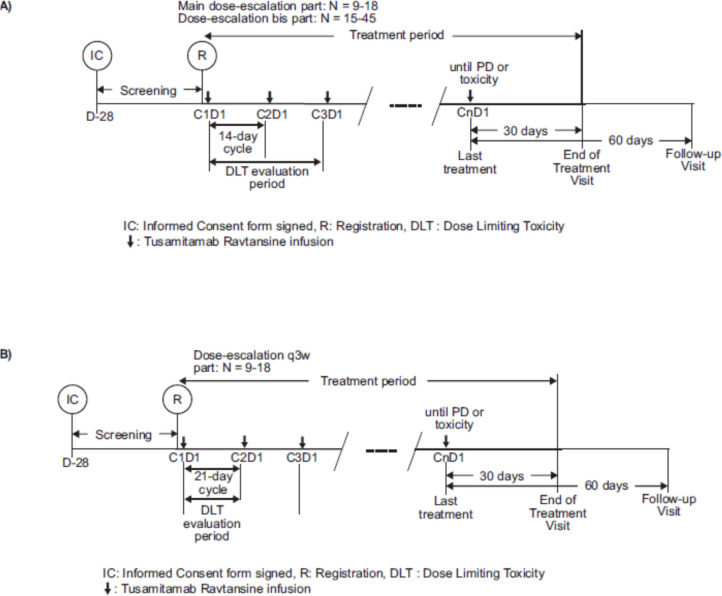 Figure 1
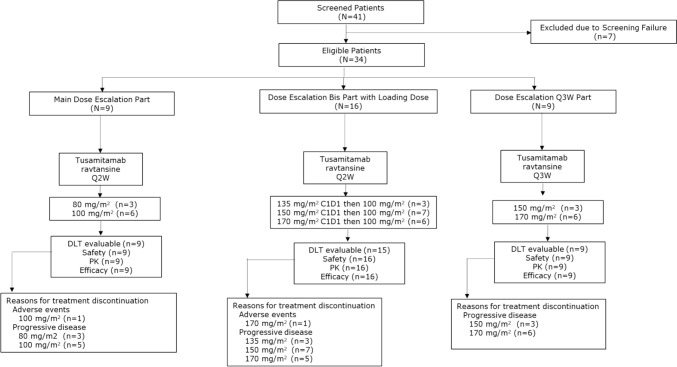 Figure 2
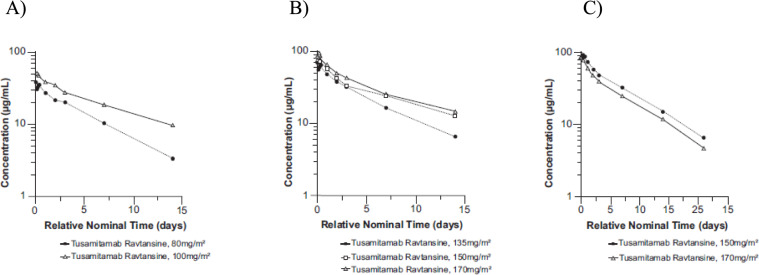 Figure 3
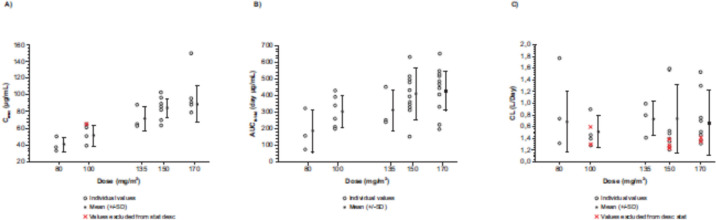 Figure 4
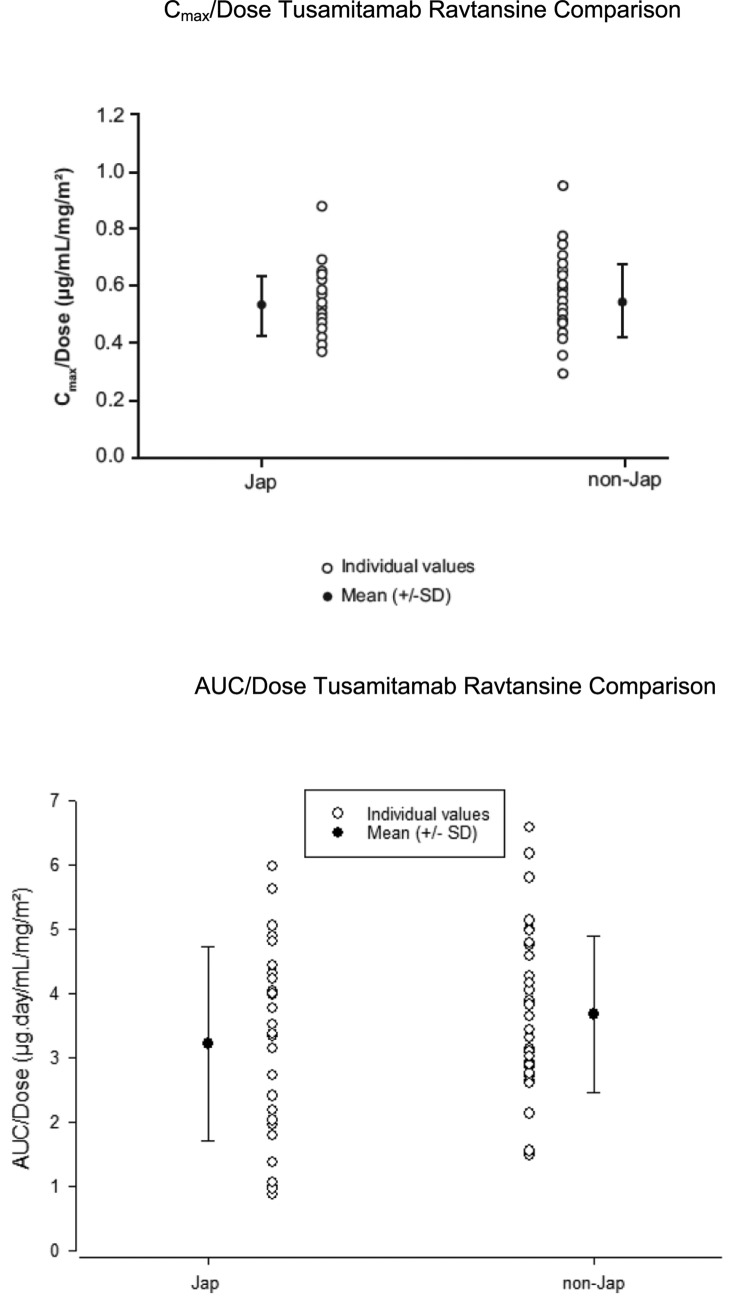 Figure 5
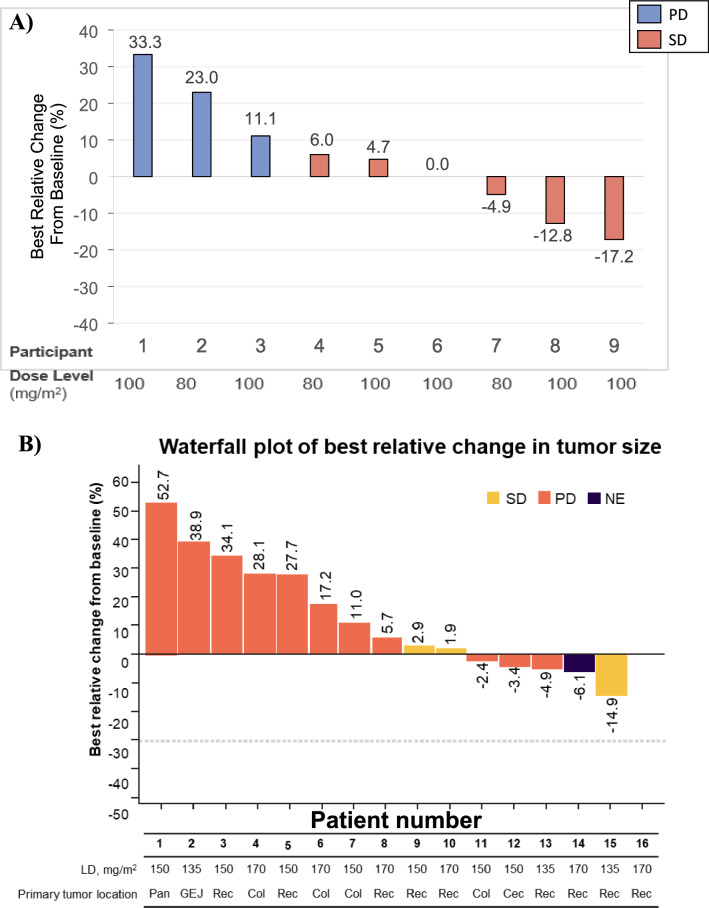 Figure 6
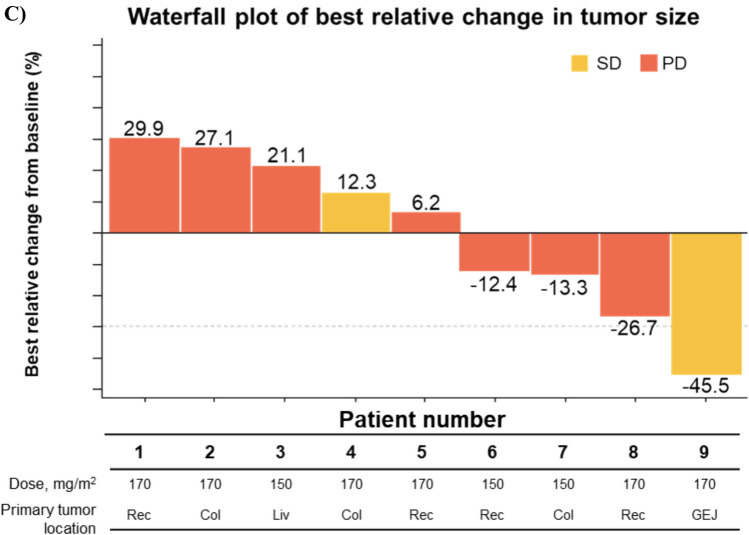 Figure 6
Peer Reviews
No public reviews on file for this paper yet. If you reviewed it on a platform where reviews are public (OpenReview, ICLR, NeurIPS, ICML), you can paste yours below so the community can read it here.
Videos
No videos yet. Explain this paper in a talk, walkthrough, or lecture? Add one.
Taxonomy
TopicsHER2/EGFR in Cancer Research · Monoclonal and Polyclonal Antibodies Research · Radiopharmaceutical Chemistry and Applications