Comprehensive observations and multidisciplinary approaches (COMA) in the management of unconscious patients: a prospective high fidelity simulation study
Nüesch Liliane, Kai Tisljar, Sebastian Berger, Gian Marco De Marchis, Tolga D. Dittrich, Stefano Bassetti, Roland Bingisser, Sabina Hunziker, Stephan Marsch, Raoul Sutter

TL;DR
This study examines how doctors from different specialties manage unconscious patients in a simulated setting, revealing gaps in care and adherence to guidelines.
Contribution
The study introduces a high-fidelity simulation approach to evaluate real-time decision-making in coma management across specialties.
Findings
Physicians showed inconsistent adherence to recommended assessments like Glasgow Coma Scale and ABCDE evaluations.
Specialty-specific differences were observed in airway management and diagnostic test ordering.
Prior simulator training improved some practices, but overall confidence and consistency remained low.
Abstract
Managing patients with coma of unknown etiology presents a challenge requiring rapid, structured assessment. We aimed to examine how physicians from different specialties manage patients with coma of unknown etiology and adhere to recommendations in a highly standardized scenario. Prospective high-fidelity simulation study conducted at an academic simulation center involving 50 physicians from acute care (38%), internal medicine (36%), and neurology (26%). Participants were confronted with a standardized coma scenario. Performance was assessed for adherence to expert-recommended clinical assessments (primary endpoints) and timing of interventions, such as airway protection, oxygen administration, toxicological screening, and self-evaluation (secondary endpoints). All participants recognized coma; 80% assessed the Glasgow Coma Scale, with 40% quantifying it correctly. 20% completed…
Genes, proteins, chemicals, diseases, species, mutations and cell lines named across the full text — each resolved to its canonical identifier and authoritative record.
Click any figure to enlarge with its caption.
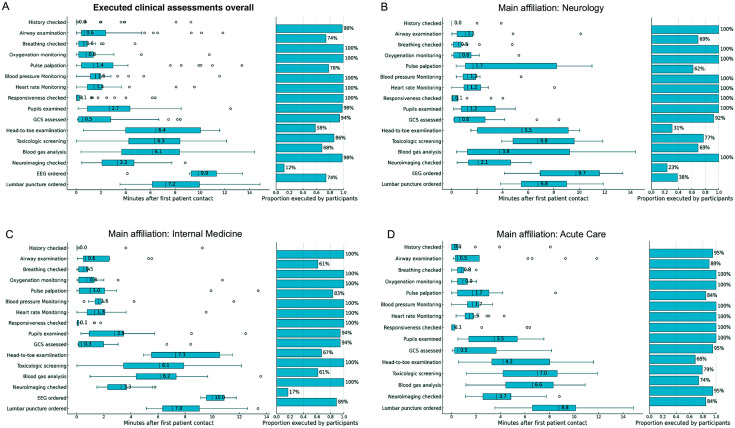 Figure 1
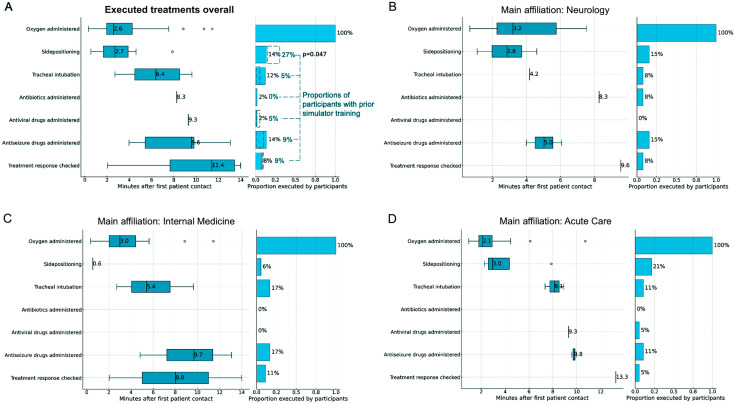 Figure 2
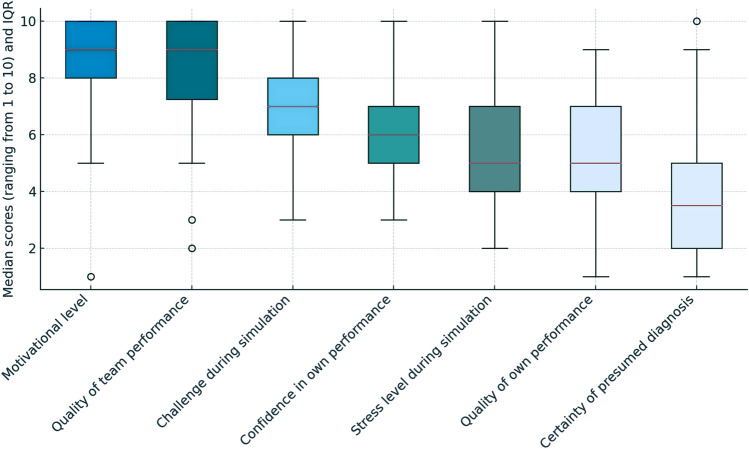 Figure 3
Peer Reviews
No public reviews on file for this paper yet. If you reviewed it on a platform where reviews are public (OpenReview, ICLR, NeurIPS, ICML), you can paste yours below so the community can read it here.
Videos
No videos yet. Explain this paper in a talk, walkthrough, or lecture? Add one.
Taxonomy
TopicsCardiac Arrest and Resuscitation · Traumatic Brain Injury and Neurovascular Disturbances · Sepsis Diagnosis and Treatment