Effects of Different Numbers of Trials on Saccadometry Test Results
Aysenur Kucuk Ceyhan, Asya Fatma Men, Zahra Polat

TL;DR
This study found that increasing the number of trials in a saccadometry test worsens antisaccade performance due to mental fatigue, while prosaccade results remain unaffected.
Contribution
The study reveals that mental fatigue affects antisaccade performance in saccadometry tests when trial numbers increase.
Findings
Increasing trials from 60 to 100 increased antisaccade latency and error rates.
Prosaccade performance remained stable regardless of trial numbers.
Mental fatigue may disrupt the inhibition process during antisaccade tasks.
Abstract
The aim of this study was to investigate the effect of the number of trials on the recording in the saccadometry test. Forty‐five healthy participants (mean age ± SD = 25.89 ± 5.2 years) (31 female and 14 male) aged 19–40 years were included in the study. Each participant underwent two saccadometry tests, first a test protocol with 100 trials and then a test protocol with 60 trials, administered by the same experienced clinician, one hour apart. All test settings remained constant between the two test sessions, with the exception of the number of trials. With 100 trials, antisaccades had a much higher mean latency (paired samples t‐test; t = 4.838; p = 0.0001 < 0.01), directional error rate (Wilcoxon signed ranks test; Z = −1.991; p = 0.047), and overall error rate (Wilcoxon signed rank test; Z = −2.207; p = 0.027) compared to the results obtained from the test protocol with 60…
Genes, proteins, chemicals, diseases, species, mutations and cell lines named across the full text — each resolved to its canonical identifier and authoritative record.
Click any figure to enlarge with its caption.
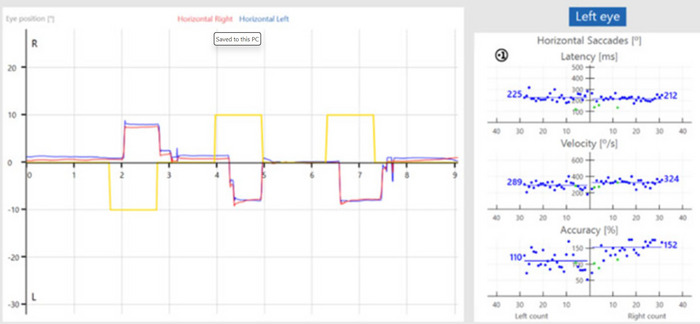 Figure 1
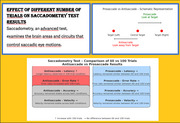 Figure 2
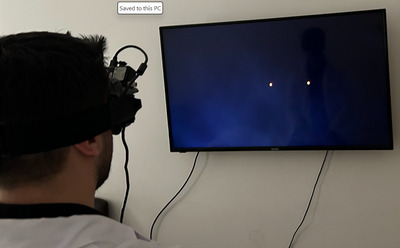 Figure 3
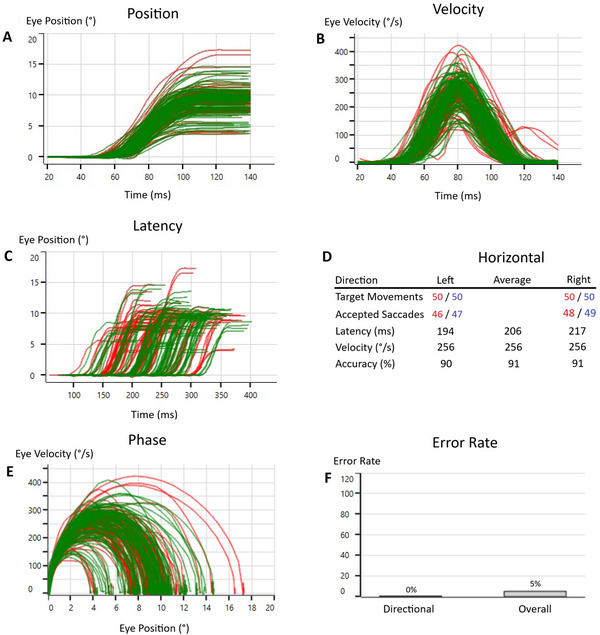 Figure 4
Peer Reviews
No public reviews on file for this paper yet. If you reviewed it on a platform where reviews are public (OpenReview, ICLR, NeurIPS, ICML), you can paste yours below so the community can read it here.
Videos
No videos yet. Explain this paper in a talk, walkthrough, or lecture? Add one.
Taxonomy
TopicsOlfactory and Sensory Function Studies · Parkinson's Disease Mechanisms and Treatments · Attention Deficit Hyperactivity Disorder