Detection Dog Survey Detects African Wild Dog Presence and a Shared Marking Site
Tim Hofmann, Stijn Verschueren, Tresia Shihepo, Bogdan Cristescu, Nicole Anderson, Nadja le Roux, Shweta Singh, Stephan Neumann, Niko Balkenhol, Laurie Marker, Anne Schmidt‐Küntzel

TL;DR
A detection dog successfully located African wild dog scats and a shared marking site, aiding in the monitoring of this endangered species.
Contribution
This is the first reported use of a detection dog to find wild dog scat and discover a shared marking site.
Findings
A detection dog located 21 African wild dog scats in 2 weeks within a 2304 km² area.
A shared marking site was identified, enabling further monitoring and collaring of two wild dogs.
The marking site yielded the highest number of individuals recorded via camera traps and genetic verification.
Abstract
African wild dog ( Lycaon pictus ) populations are difficult to assess effectively and scalable strategies for population monitoring are lacking, often because of low detection rates. Scat detection dogs ( Canis lupus familiaris ) have emerged as a suitable tool to detect the presence of wide‐ranging carnivores. In this study, we employed a detection dog to locate African wild dog scat in an unfenced, understudied region of the Kavango‐Zambezi Transfrontier Conservation Area. Over 2 weeks of fieldwork, the detection dog‐team found 21 African wild dog scats within a 2304 km2 study area. Six of those scats were detected at a marking site shared by multiple African wild dog individuals, as determined through genetic identification. The marking site discovered by the scat detection dog facilitated the collaring of two African wild dogs in close proximity, the repeat detection of wild dog…
Genes, proteins, chemicals, diseases, species, mutations and cell lines named across the full text — each resolved to its canonical identifier and authoritative record.
Click any figure to enlarge with its caption.
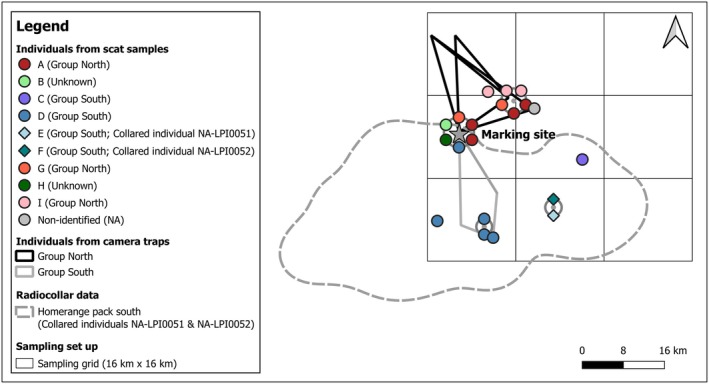 Figure 1
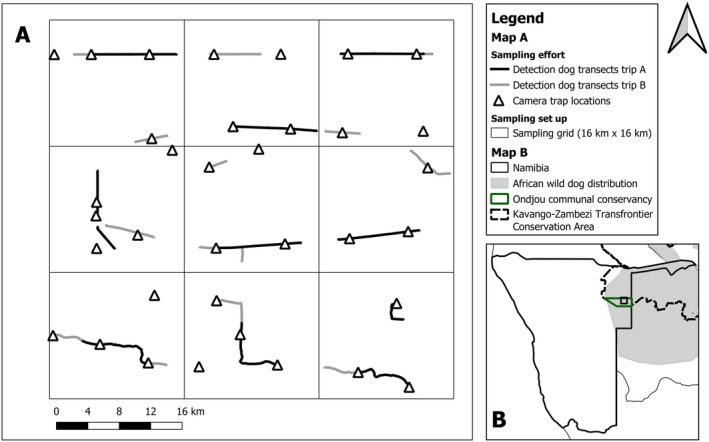 Figure 2
 Figure 3
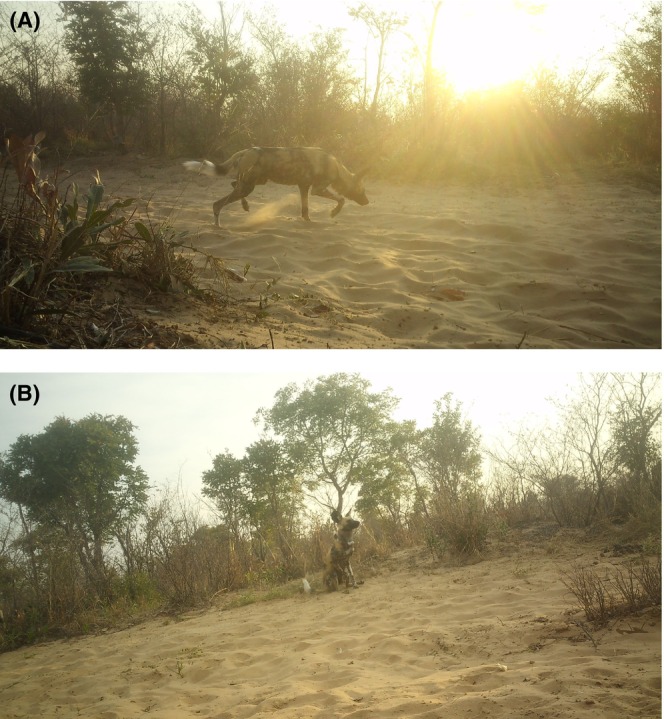 Figure 4
Peer Reviews
No public reviews on file for this paper yet. If you reviewed it on a platform where reviews are public (OpenReview, ICLR, NeurIPS, ICML), you can paste yours below so the community can read it here.
Videos
No videos yet. Explain this paper in a talk, walkthrough, or lecture? Add one.
Taxonomy
TopicsWildlife Ecology and Conservation · Human-Animal Interaction Studies · Rabies epidemiology and control