Identification and classification of Aquilaria (Thymelaeaceae): inferences from a phylogenetic study based on matK sequences
Zhaoqi Xie, Siqing Fan, Junyu Xu, Haijing Xiao, Jiaxin Yang, Min Guo, Chunsong Cheng

TL;DR
This study uses DNA markers to clarify the classification of Aquilaria species, helping resolve market uncertainties and offering insights into their evolutionary history.
Contribution
The study introduces matK molecular markers and trnL-trnF integration as a novel method for accurate Aquilaria species differentiation and classification.
Findings
matK markers with eight polymorphic loci effectively differentiate Aquilaria species based on origin.
Molecular clock analysis traces Aquilaria divergence to 6.78 million years ago and recent speciation of key commercial species.
Gyrinops walla is reclassified within Aquilaria, challenging previous taxonomic assumptions.
Abstract
In the realm of Aquilaria classification and grading, a persistent market uncertainty persists, questioning whether the basis should be geographical distribution or biological origin. In this study, the effectiveness of matK molecular markers, particularly through eight stable polymorphic loci (e.g., +249C for Chinese origin, +435G for Aquilaria sinensis), emerges as a decisive tool for differentiating Aquilaria species. The integration of matK and trnL-trnF not only validates this efficacy but also streamlines the systematic categorization of 34 agarwood products into four biogeographic pedigrees: Chinese (C1: A. sinensis; C2: A. malaccensis), Indonesian (A. cumingiana), and Indochinese (A. rugosa). Molecular clock analyses trace the genus’s divergence to 6.78 million years ago (Ma) (A. hirta), with recent speciation of commercially pivotal species (A. sinensis: 0.9 Ma; A.…
Genes, proteins, chemicals, diseases, species, mutations and cell lines named across the full text — each resolved to its canonical identifier and authoritative record.
Click any figure to enlarge with its caption.
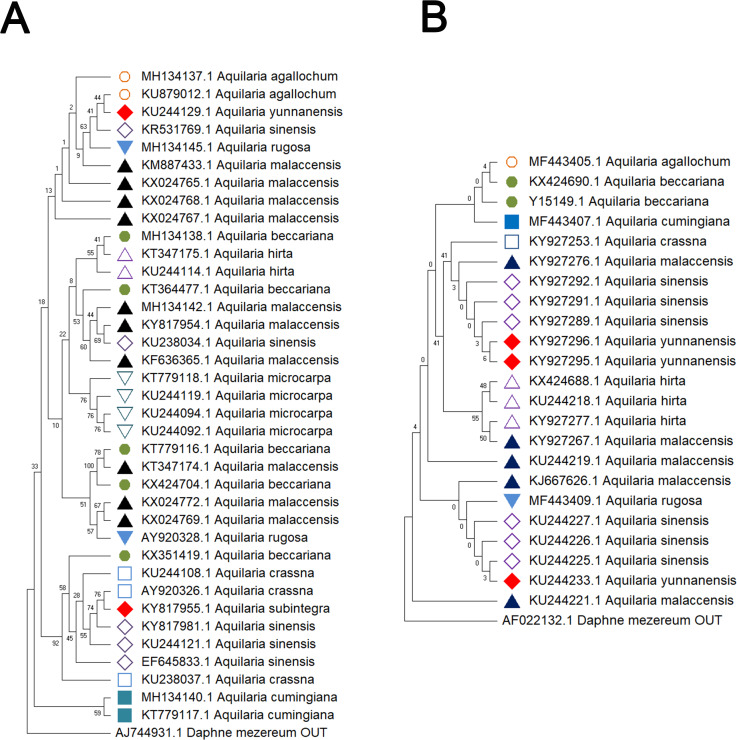 Figure 1
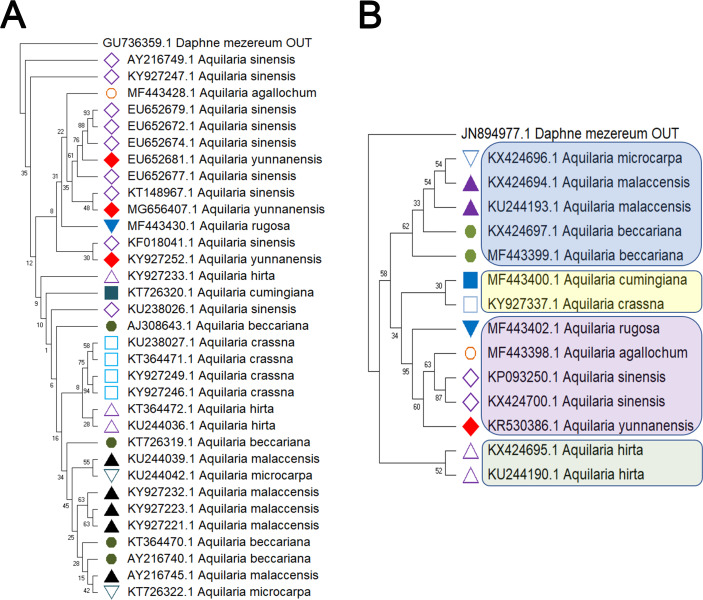 Figure 2
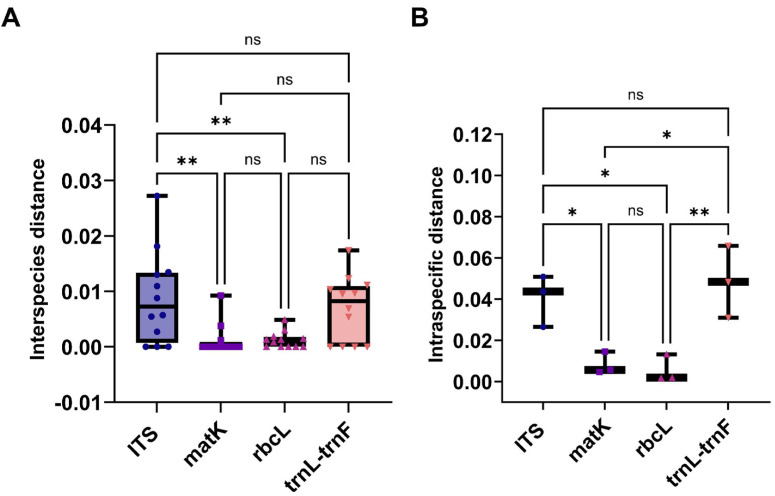 Figure 3
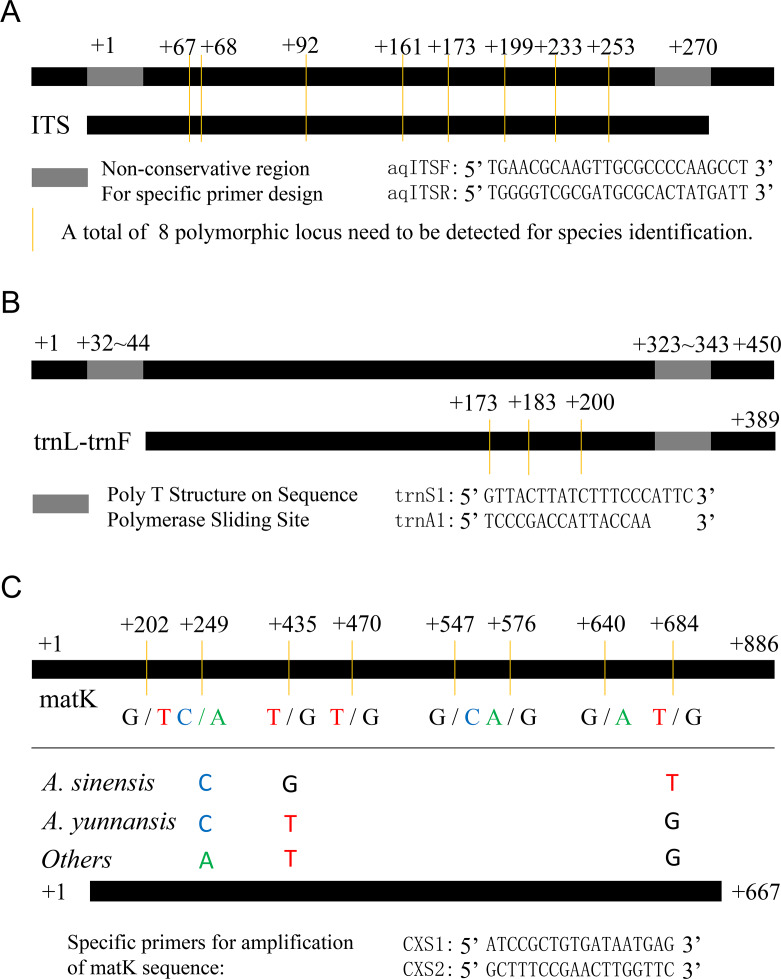 Figure 4
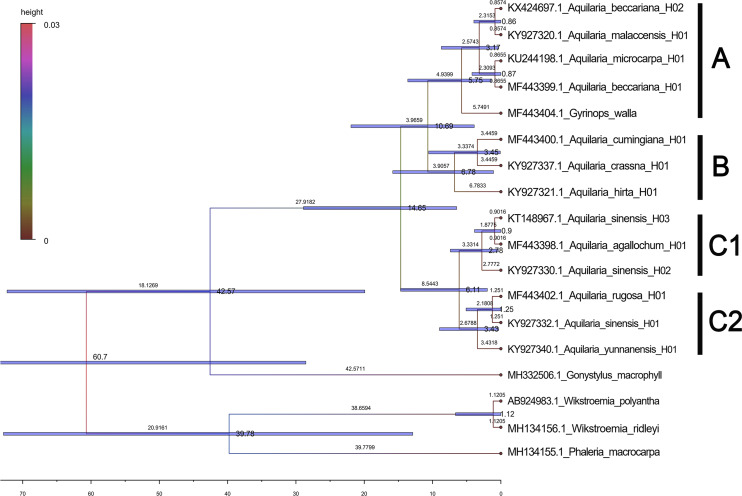 Figure 5
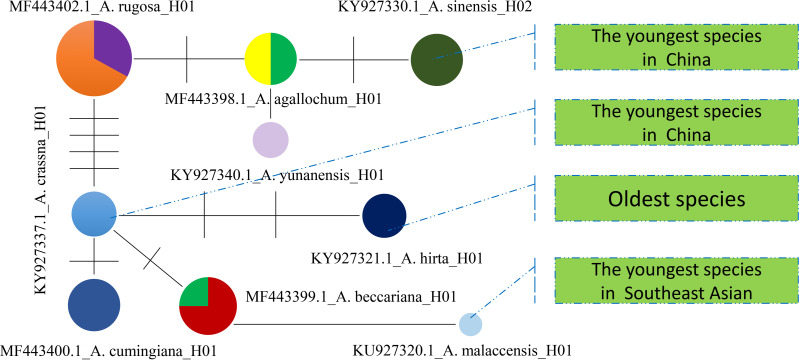 Figure 6
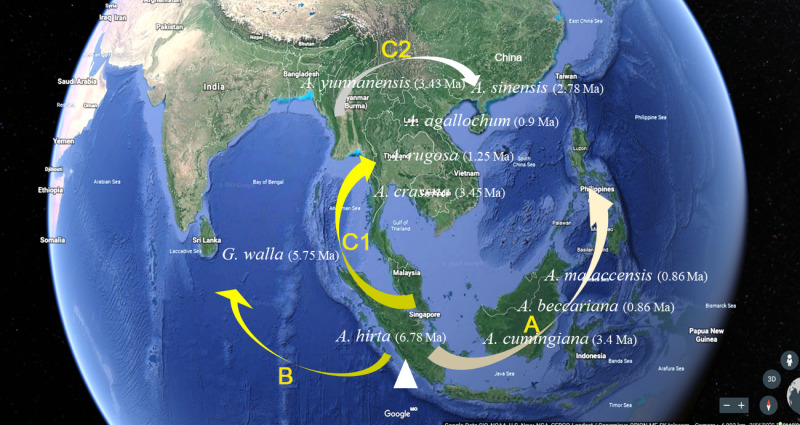 Figure 7
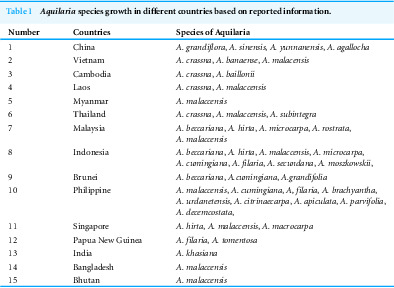 Figure 8
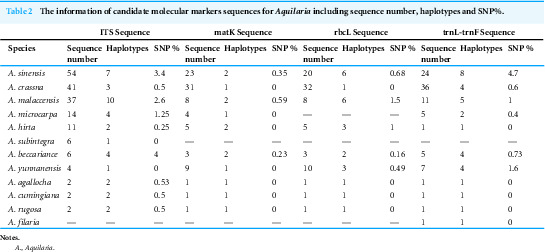 Figure 9
Peer Reviews
No public reviews on file for this paper yet. If you reviewed it on a platform where reviews are public (OpenReview, ICLR, NeurIPS, ICML), you can paste yours below so the community can read it here.
Videos
No videos yet. Explain this paper in a talk, walkthrough, or lecture? Add one.
Taxonomy
TopicsWood and Agarwood Research · Identification and Quantification in Food · Forest Ecology and Biodiversity Studies