Complete genome sequence data describing the biosynthetic potential of kanosamine and bacilysin in Bacillus subtilis AMFE023/7 from Thai fermented fish (Pla Ra)
Montri Yasawong, Thunwarat Songngamsuk, Manassanan Phatcharaharikarn, Parweenuch Santaweesuk, Prapimpun Wongchitrat, Prasit Palittapongarnpim, Wongwarut Boonyanugomol, Arunee Thong-on, Sasalux Kaewbutra, Kamolchanok Rukseree

TL;DR
This paper reports the complete genome sequence of a bacterium from Thai fermented fish, revealing genes for producing antimicrobial compounds.
Contribution
The study provides a new complete genome sequence of Bacillus subtilis AMFE023/7 with biosynthetic gene clusters for kanosamine and bacilysin.
Findings
The genome of Bacillus subtilis AMFE023/7 was assembled using Illumina and PacBio sequencing.
Gene clusters for kanosamine and bacilysin biosynthesis were identified in the genome.
The isolate showed 89.3% similarity to the reference strain B. subtilis ATCC 6051T.
Abstract
Bacillus subtilis AMFE023/7, a Gram-positive bacterium with aciditolerans and halotolerant properties, was isolated from Pla Ra, a traditional fermented fish product popular in Thai cuisine. The sample was obtained from a local morning market in Amnat Charoen, Thailand. The complete genome was assembled through the integration of complementary sequencing platforms, specifically Illumina and PacBio. The genome spans 4132,147 base pairs with a GC content of 43.87 %. Comparison with the reference strain B. subtilis ATCC 6051T using digital DNA-DNA hybridisation confirmed the identity of the isolate with 89.3 % similarity. The genome analysis revealed gene clusters responsible for producing potentially useful compounds such as kanosamine and bacilysin, which have antimicrobial properties. This genome sequence provides valuable data for researchers studying microbial communities in fermented…
Genes, proteins, chemicals, diseases, species, mutations and cell lines named across the full text — each resolved to its canonical identifier and authoritative record.
Click any figure to enlarge with its caption.
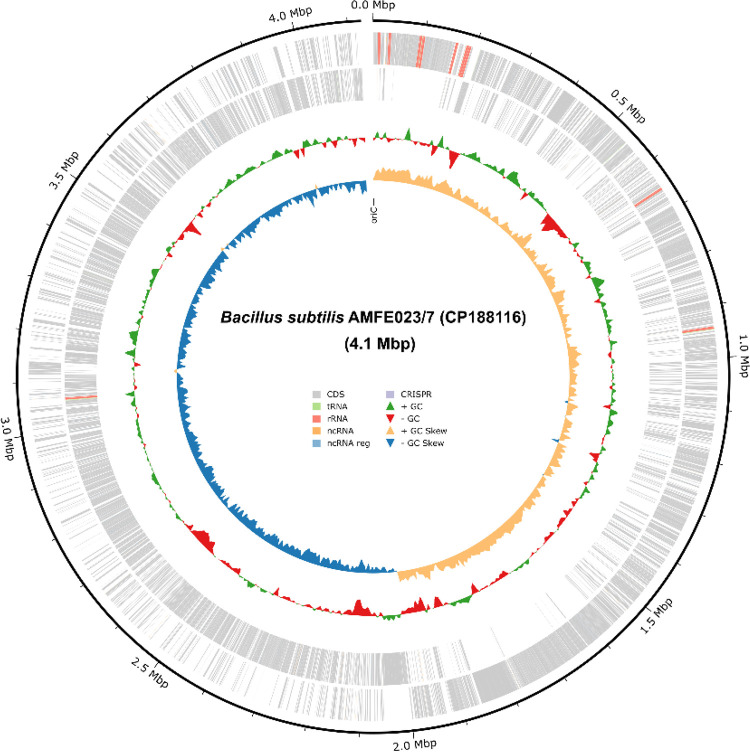 Figure 1
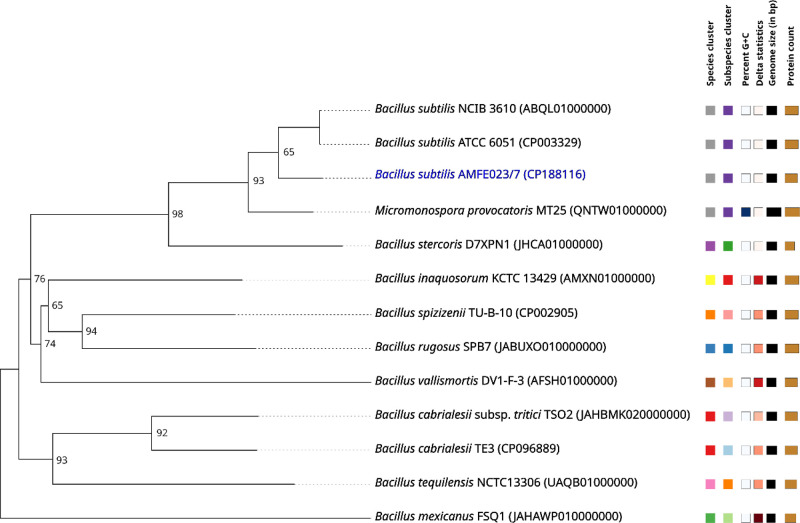 Figure 2
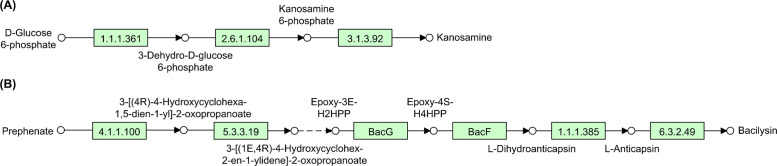 Figure 3
Peer Reviews
No public reviews on file for this paper yet. If you reviewed it on a platform where reviews are public (OpenReview, ICLR, NeurIPS, ICML), you can paste yours below so the community can read it here.
Videos
No videos yet. Explain this paper in a talk, walkthrough, or lecture? Add one.
Taxonomy
TopicsGenomics and Phylogenetic Studies · Probiotics and Fermented Foods · Vibrio bacteria research studies