Reducing redundancy and enhancing accuracy through a phylogenetically-informed microbial community metabolic modeling approach
Sepideh Mofidifar, Mojtaba Tefagh

TL;DR
This paper introduces PhyloCOBRA, a new method that improves microbial community metabolic modeling by merging related organisms, enhancing accuracy and efficiency.
Contribution
PhyloCOBRA merges related taxa based on metabolic similarity, improving community metabolic modeling accuracy and reducing redundancy.
Findings
PhyloCOBRA improved growth rate prediction accuracy compared to standard methods.
PhyloMICOM models showed greater robustness to random noise and reduced redundancy.
The approach reduced computational complexity in microbial community simulations.
Abstract
Metabolic modeling has emerged as a powerful tool for predicting community functions. However, current modeling approaches face significant challenges in balancing the metabolic trade-offs between individual and community-level growth. In this study, we investigated the effect of metabolic relatedness among taxa on growth rate calculations by merging related taxa based on their metabolic similarity, introducing this approach as PhyloCOBRA. This approach enhanced the accuracy and efficiency of microbial community simulations by combining genome-scale metabolic models (GEMs) of closely related organisms, aligning with the concepts of niche differentiation and nestedness theory. To validate our approach, we implemented PhyloCOBRA within the MICOM and OptCom package (creating PhyloMICOM and PhyloOptCom, respectively), and applied it to metagenomic data from 186 individuals and four-species…
Genes, proteins, chemicals, diseases, species, mutations and cell lines named across the full text — each resolved to its canonical identifier and authoritative record.
Click any figure to enlarge with its caption.
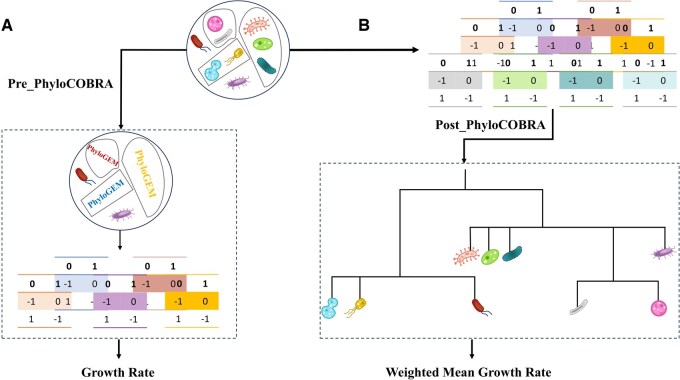 Figure 1
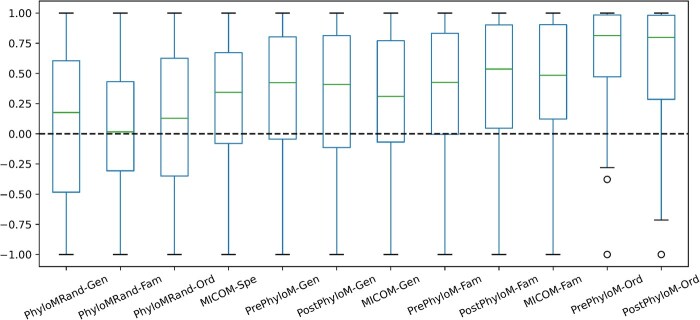 Figure 2
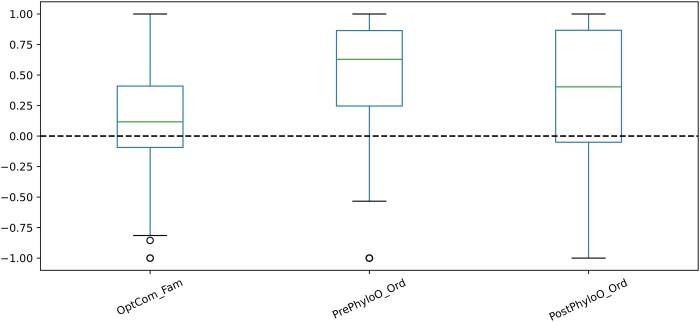 Figure 3
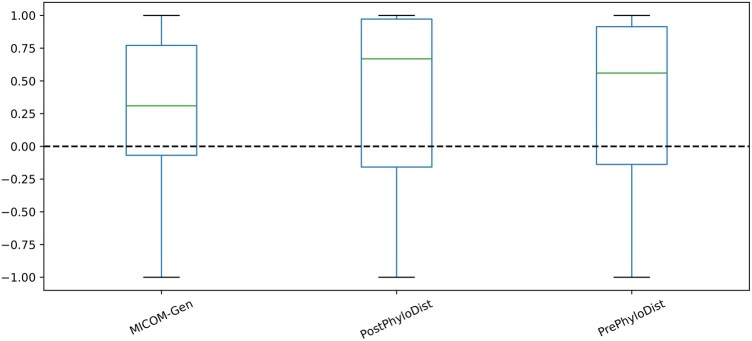 Figure 4
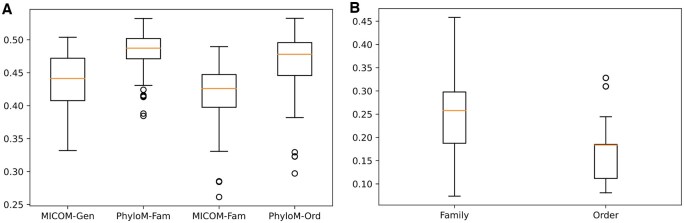 Figure 5
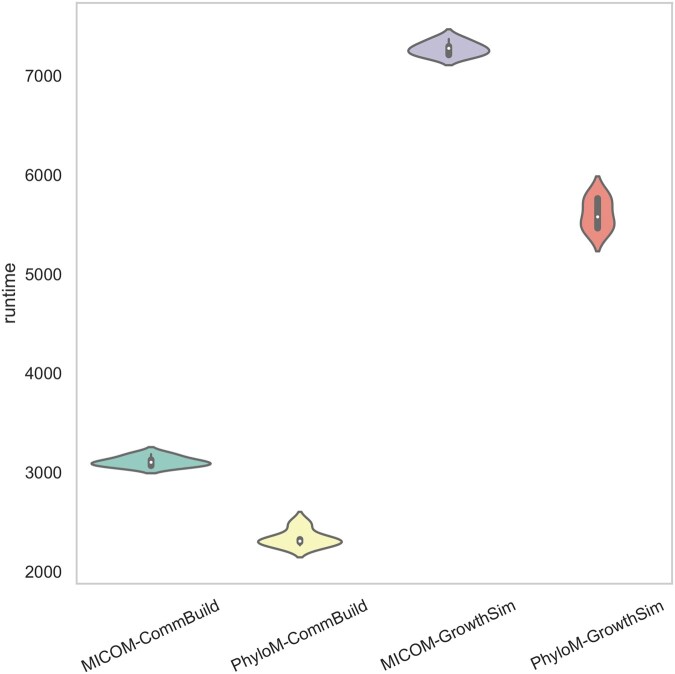 Figure 6
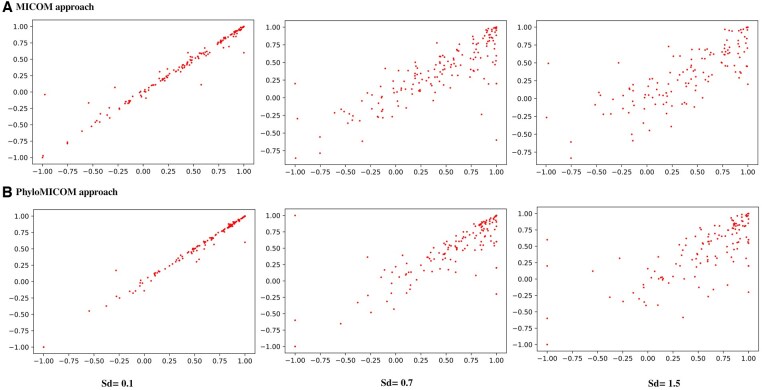 Figure 7
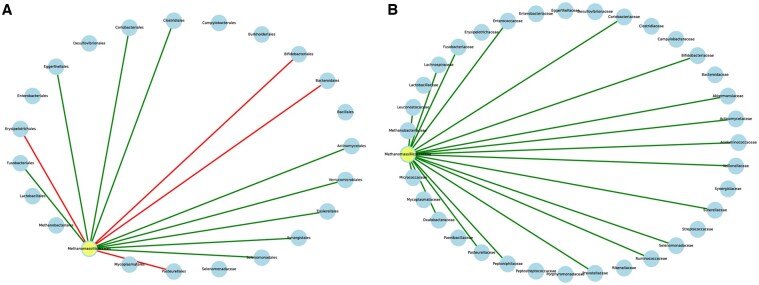 Figure 8
 Figure 9
Peer Reviews
No public reviews on file for this paper yet. If you reviewed it on a platform where reviews are public (OpenReview, ICLR, NeurIPS, ICML), you can paste yours below so the community can read it here.
Videos
No videos yet. Explain this paper in a talk, walkthrough, or lecture? Add one.
Taxonomy
TopicsBioinformatics and Genomic Networks · Metabolomics and Mass Spectrometry Studies · Gut microbiota and health