Successful Treatment of Hailey-Hailey Disease With Dupilumab
Jake Breimann, Saira N Agarwala, Shayan Waseh, Sylvia Hsu

TL;DR
A 67-year-old woman with a rare skin condition called Hailey-Hailey disease showed significant improvement after being treated with dupilumab, a drug that targets specific immune signals.
Contribution
This case report demonstrates dupilumab's potential as a novel treatment for Hailey-Hailey disease, which is typically resistant to conventional therapies.
Findings
The patient experienced significant symptomatic improvement within two months of dupilumab treatment.
Dupilumab, an IL-4/IL-13 inhibitor, may be a promising therapeutic option for refractory Hailey-Hailey disease.
Further research is needed to evaluate the long-term efficacy and safety of dupilumab in managing this condition.
Abstract
Hailey-Hailey disease (HHD) is a rare autosomal dominant genodermatosis caused by mutations in the ATP2C1 gene, leading to impaired calcium homeostasis and epidermal acantholysis. Clinically, it manifests as recurrent, painful erosions in the intertriginous areas and is often resistant to conventional treatments, such as topical corticosteroids, antibiotics, and retinoids. This report describes the case of a 67-year-old woman with refractory HHD who presented with painful, pruritic erosions affecting the axillary, inguinal, and inframammary regions. Despite prior treatment with high-potency topical corticosteroids and oral retinoids, her symptoms persisted. Given the chronic and relapsing nature of HHD, dupilumab, an IL-4/IL-13 inhibitor, was initiated. The patient experienced significant symptomatic improvement within two months of therapy. This case contributes to the growing body of…
Genes, proteins, chemicals, diseases, species, mutations and cell lines named across the full text — each resolved to its canonical identifier and authoritative record.
Click any figure to enlarge with its caption.
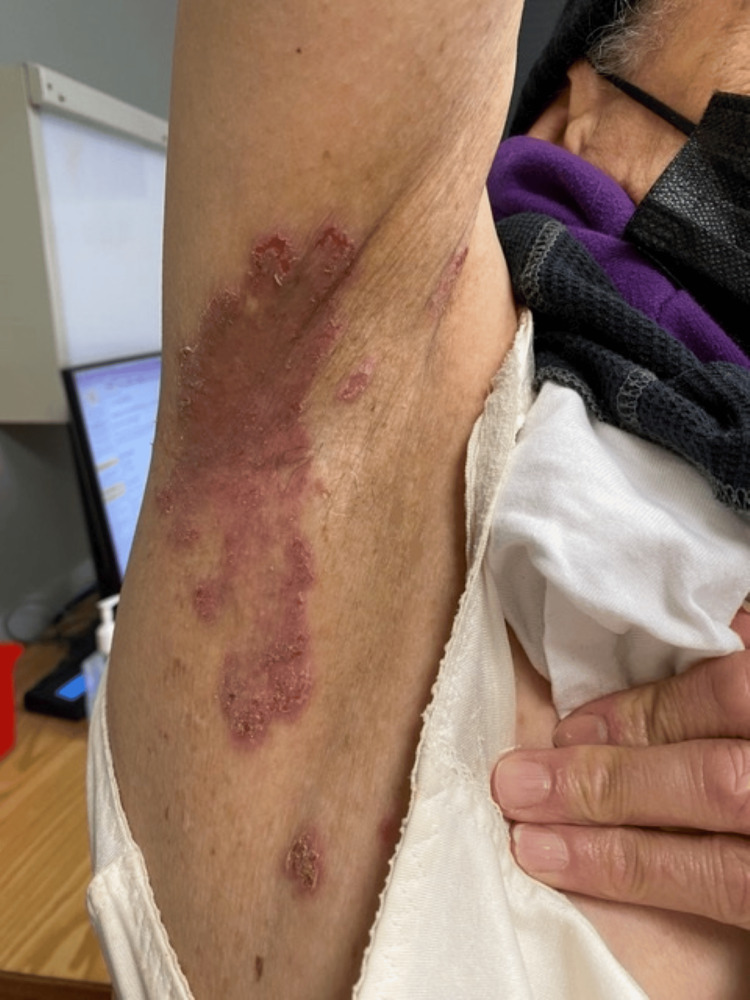 Figure 1
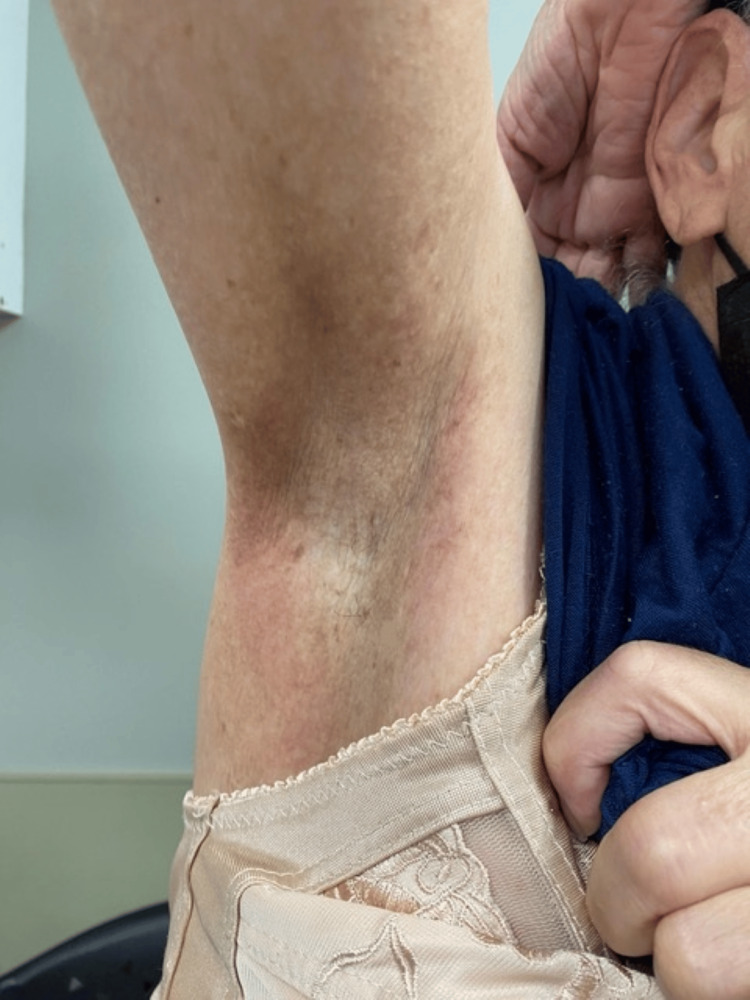 Figure 2
Peer Reviews
No public reviews on file for this paper yet. If you reviewed it on a platform where reviews are public (OpenReview, ICLR, NeurIPS, ICML), you can paste yours below so the community can read it here.
Videos
No videos yet. Explain this paper in a talk, walkthrough, or lecture? Add one.
Taxonomy
TopicsGenetic and rare skin diseases. · Cancer and Skin Lesions · Hedgehog Signaling Pathway Studies