Unmasking Acute Posterior Multifocal Placoid Pigment Epitheliopathy (APMPPE) Through Multimodal Imaging: A Case Report
Konstantinos Flindris, Chrysa Chatzipetrou, Eleni Papafotiou, Athanasios Kaliardas, Ioannis Koumpoulis, Ioannis Melissourgos

TL;DR
This case report describes a rare eye condition called APMPPE, diagnosed using advanced imaging techniques and showing spontaneous recovery without treatment.
Contribution
The paper presents a novel case of APMPPE confirmed through multimodal retinal imaging and highlights its self-limiting nature.
Findings
Multimodal imaging confirmed APMPPE features in a patient with subacute vision loss.
The patient's vision spontaneously improved over two weeks without immunosuppressive therapy.
No infectious or autoimmune causes were identified, supporting a self-limiting disease course.
Abstract
Acute posterior multifocal placoid pigment epitheliopathy (APMPPE) is a rare, immune-mediated chorioretinal inflammatory condition typically affecting healthy young adults. It often presents with acute bilateral vision loss and multiple creamy placoid lesions at the level of the retinal pigment epithelium, frequently following a flu-like or viral prodrome. We report the case of a 24-year-old male who developed bilateral subacute vision loss, three days in duration, one month after a febrile upper respiratory infection. Fundus examination revealed multiple yellow-white placoid lesions in both eyes, and multimodal retinal imaging (optical coherence tomography (OCT), fundus autofluorescence (AF), and OCT angiography (OCTA)) confirmed features consistent with APMPPE. A comprehensive infectious and autoimmune workup was negative, and neuro-imaging showed no evidence of cerebral vasculitis.…
Genes, proteins, chemicals, diseases, species, mutations and cell lines named across the full text — each resolved to its canonical identifier and authoritative record.
Click any figure to enlarge with its caption.
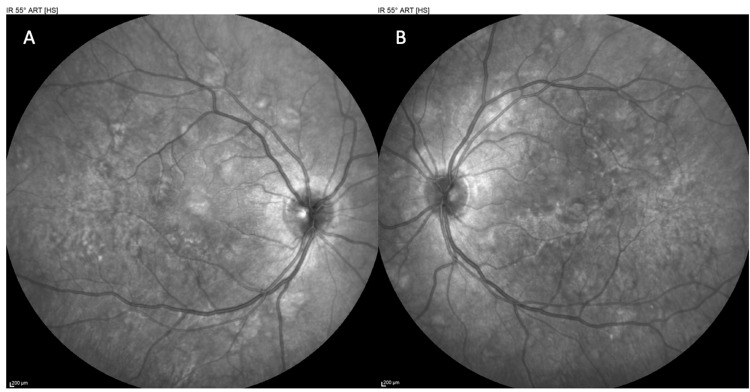 Figure 1
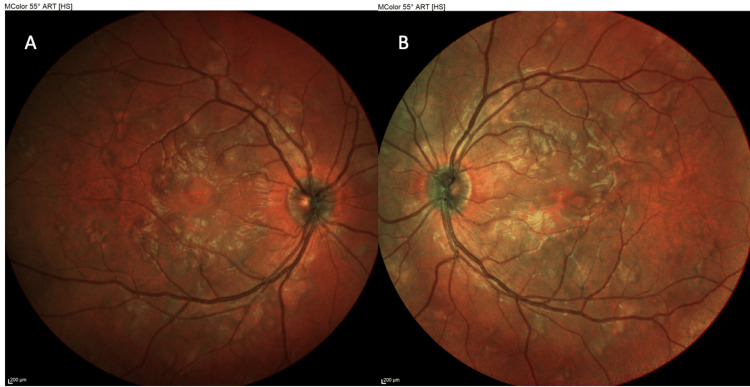 Figure 2
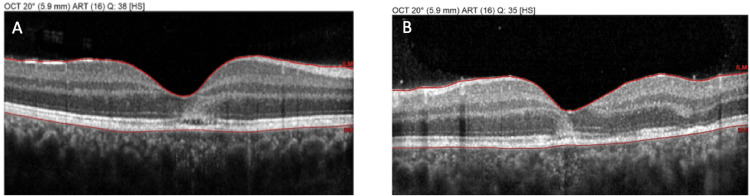 Figure 3
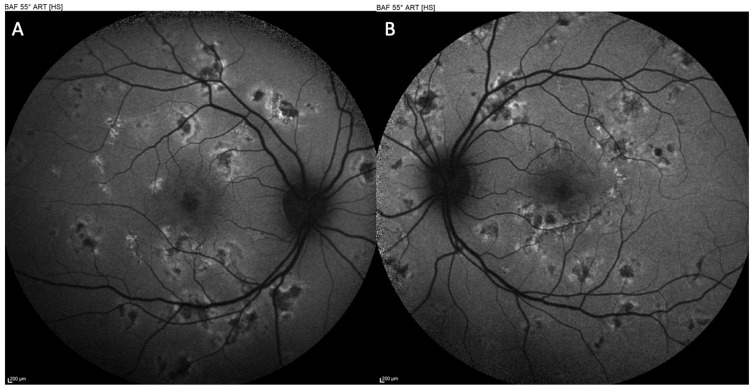 Figure 4
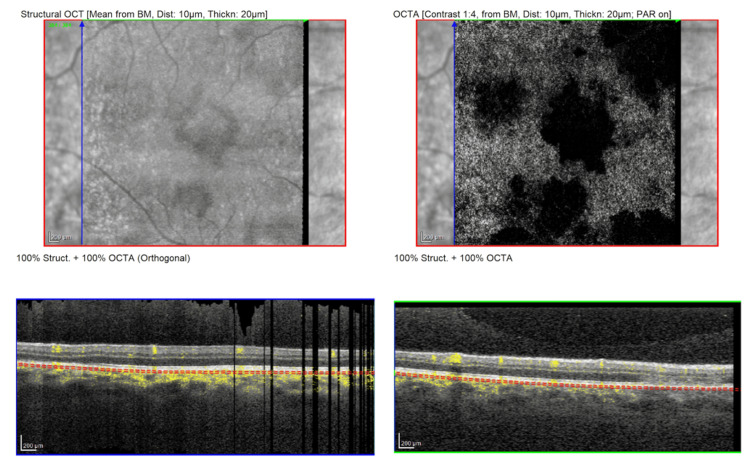 Figure 5
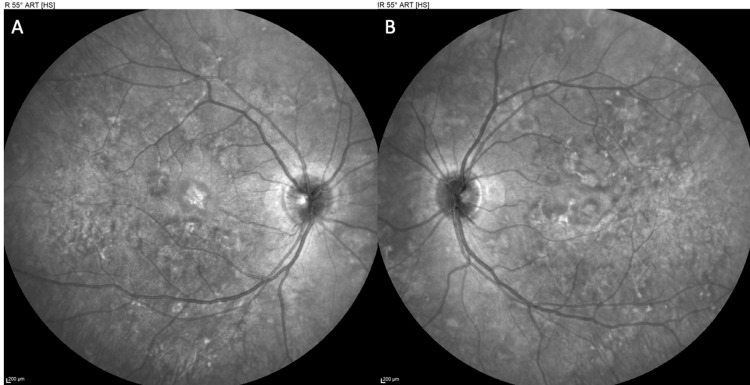 Figure 6
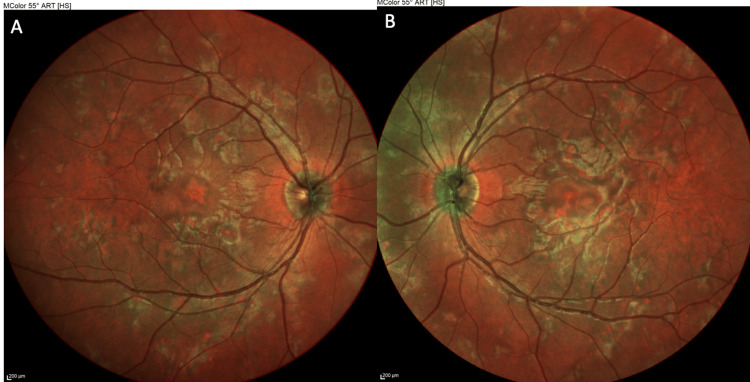 Figure 7
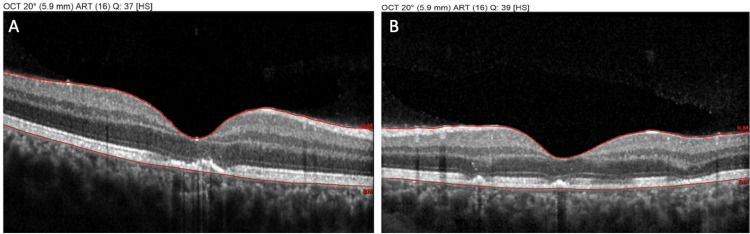 Figure 8
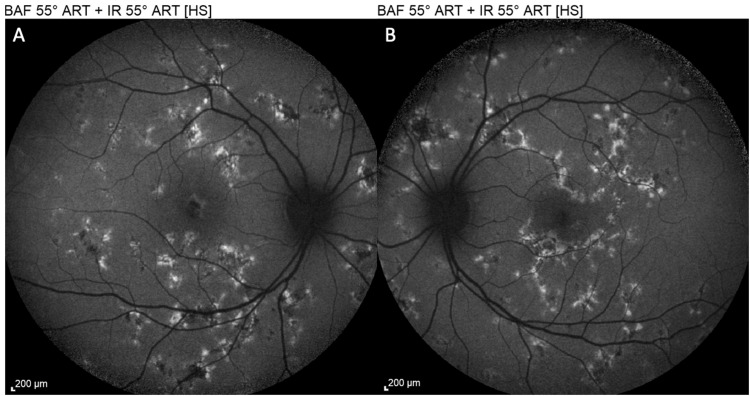 Figure 9
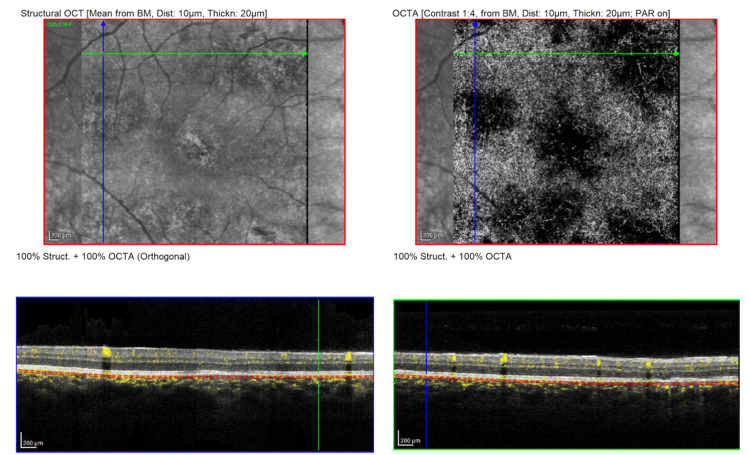 Figure 10
Peer Reviews
No public reviews on file for this paper yet. If you reviewed it on a platform where reviews are public (OpenReview, ICLR, NeurIPS, ICML), you can paste yours below so the community can read it here.
Videos
No videos yet. Explain this paper in a talk, walkthrough, or lecture? Add one.
Taxonomy
TopicsOcular Diseases and Behçet’s Syndrome · Ocular Oncology and Treatments · Herpesvirus Infections and Treatments