Clinical Significance of Initial and Converted Cardiac Rhythms in Extracorporeal Cardiopulmonary Resuscitation for Patients with Refractory Out-of-Hospital Cardiac Arrest: A Nationwide Observational Study
Sola Kim, Jae-Guk Kim, Gu-Hyun Kang, Yong-Soo Jang, Wonhee Kim, Hyun-Young Choi, Chiwon Ahn

TL;DR
This study shows that converting non-shockable rhythms to shockable rhythms before ECPR improves survival and neurological outcomes in cardiac arrest patients.
Contribution
The study identifies rhythm conversion as a novel prognostic marker and resuscitation target in ECPR for refractory OHCA.
Findings
Survival and favorable neurological outcomes were highest in patients with initial shockable rhythms.
Rhythm conversion to shockable rhythms before ECPR significantly improved neurological outcomes compared to refractory non-shockable rhythms.
Persistent non-shockable rhythms were independently linked to poor neurological outcomes.
Abstract
Background/Objectives: Initial cardiac rhythm is a known prognostic indicator in out-of-hospital cardiac arrest (OHCA). However, the impact of rhythm conversion during cardiopulmonary resuscitation (CPR) on outcomes in patients undergoing extracorporeal CPR (ECPR) remains unclear. This study evaluated the association between initial and converted cardiac rhythms and outcomes in patients with refractory OHCA treated with ECPR. Methods: This nationwide retrospective observational study analyzed data from the Out-of-Hospital Cardiac Arrest Surveillance registry in South Korea (2008–2022). Patients were categorized into three groups: initial shockable rhythm (SR), non-shockable rhythm (NSR) converted to SR, and refractory NSR. The primary outcome was survival to hospital discharge; the secondary outcome was favorable neurological status (CPC 1–2). Results: Among 681 patients, 161 had…
Genes, proteins, chemicals, diseases, species, mutations and cell lines named across the full text — each resolved to its canonical identifier and authoritative record.
Click any figure to enlarge with its caption.
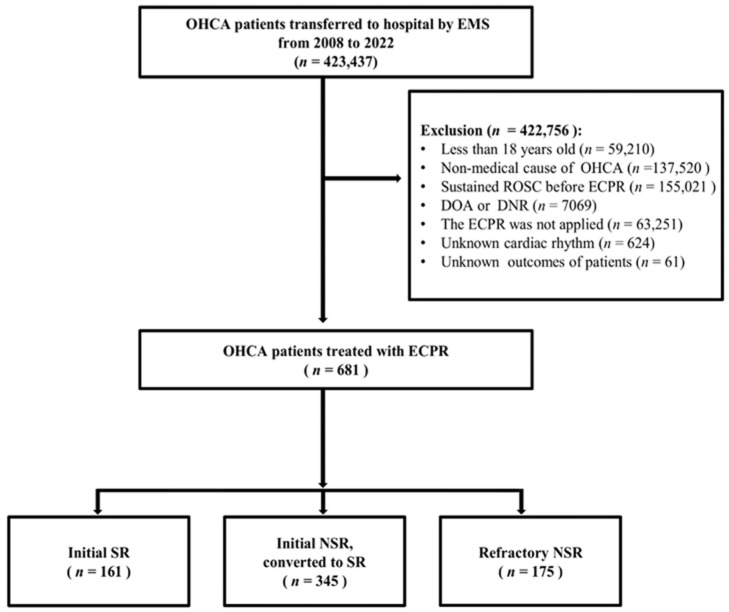 Figure 1
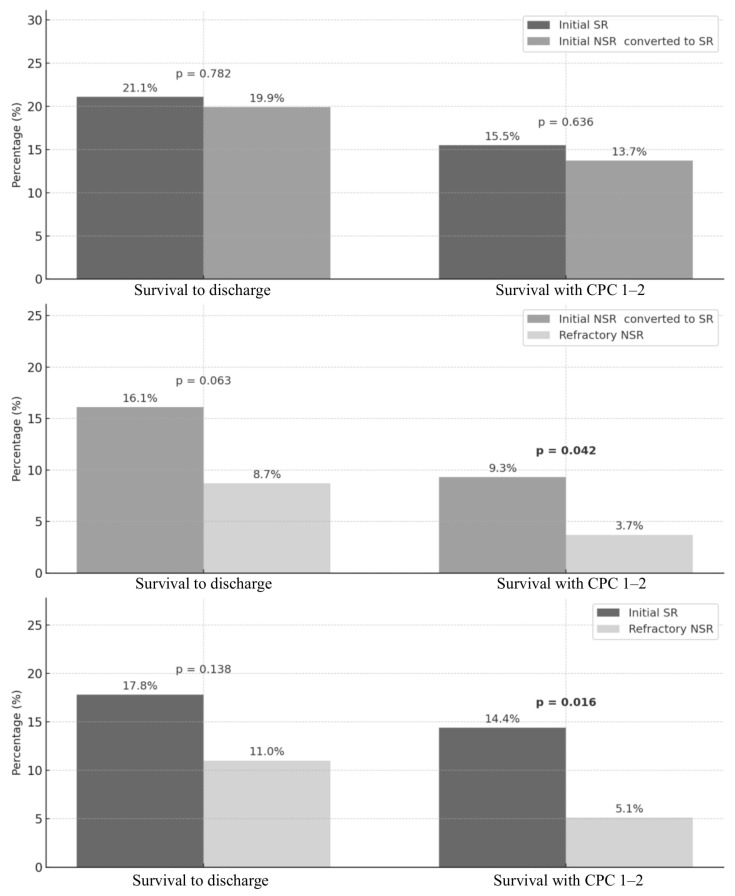 Figure 2
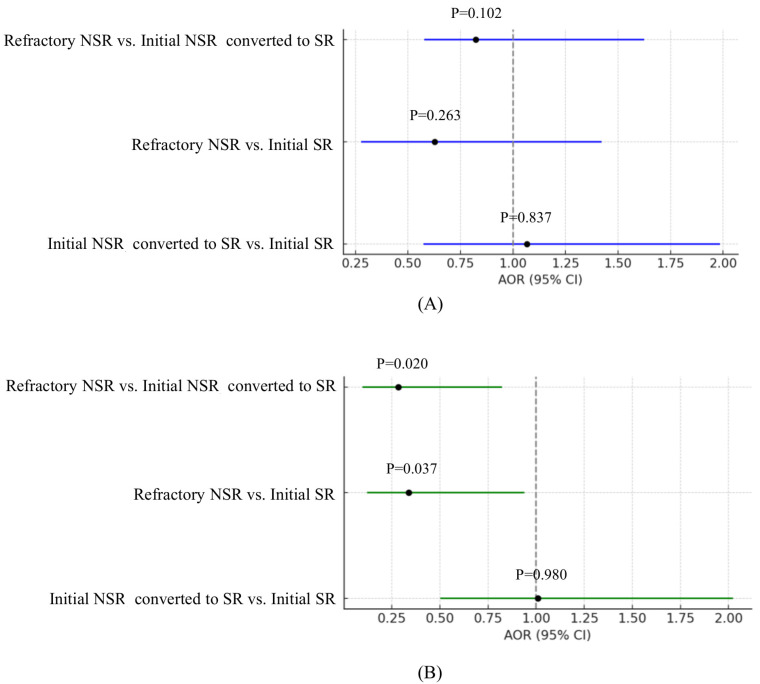 Figure 3
Peer Reviews
No public reviews on file for this paper yet. If you reviewed it on a platform where reviews are public (OpenReview, ICLR, NeurIPS, ICML), you can paste yours below so the community can read it here.
Videos
No videos yet. Explain this paper in a talk, walkthrough, or lecture? Add one.
Taxonomy
TopicsCardiac Arrest and Resuscitation · Mechanical Circulatory Support Devices · Respiratory Support and Mechanisms