Semi-Device-Independent Randomness Expansion Using n→1 Parity-Oblivious Quantum Random Access Codes
Xunan Wang, Xu Chen, Mengke Xu, Wanglei Mi, Xiao Chen

TL;DR
This paper introduces a new method for generating secure randomness using quantum mechanics, which improves upon previous techniques by certifying more randomness under the same conditions.
Contribution
The paper proposes a novel semi-device-independent randomness expansion protocol using n→1 parity-oblivious quantum random access codes.
Findings
For n=4, the protocol achieves a higher success probability than previously reported.
PO-QRAC-based protocols certify more randomness than standard QRAC-based protocols for the same quantum witness value.
The 3→1 PO-QRAC protocol provides optimal randomness expansion under parity-obliviousness constraints.
Abstract
Quantum mechanics enables the generation of genuine randomness through its intrinsic indeterminacy. In device-independent (DI) and semi-device-independent (SDI) frameworks, randomness generation protocols can further ensure that the output remains secure and unaffected by internal device imperfections, with certification grounded in violations of generalized Bell inequalities. In this work, we propose an SDI randomness expansion protocol using n→1 parity-oblivious quantum random access code (PO-QRAC), where the presence of true quantum randomness is certified through the violation of a two-dimensional quantum witness. For various values of n, we derive the corresponding maximal expected success probabilities. Notably, for n=4, the expected success probability obtained under our protocol exceeds the upper bound reported in prior work. Furthermore, we establish an analytic relationship…
Genes, proteins, chemicals, diseases, species, mutations and cell lines named across the full text — each resolved to its canonical identifier and authoritative record.
Click any figure to enlarge with its caption.
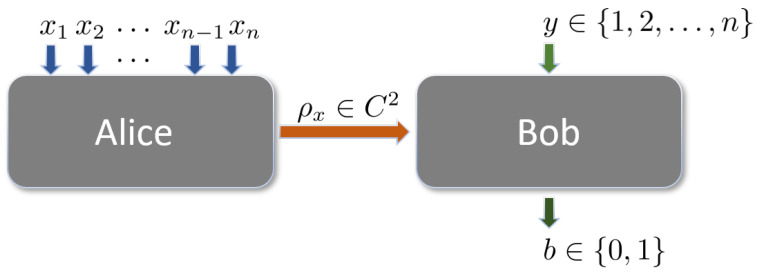 Figure 1
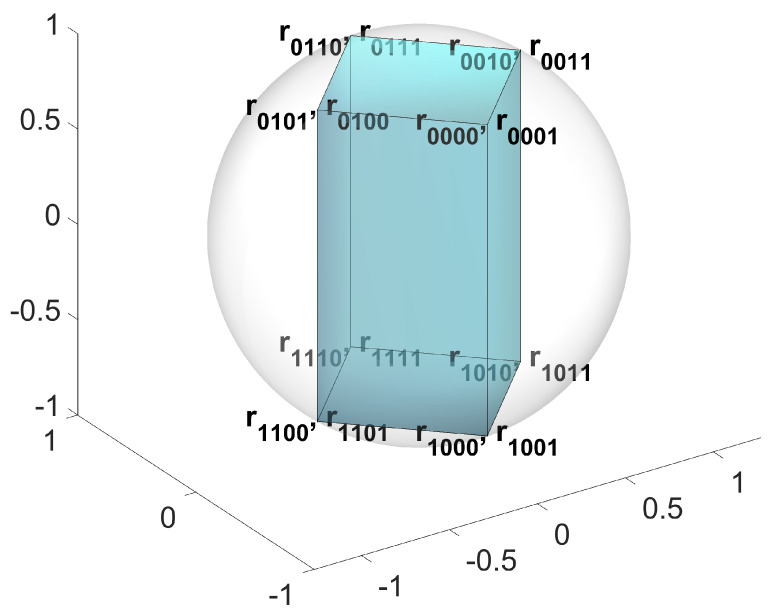 Figure 2
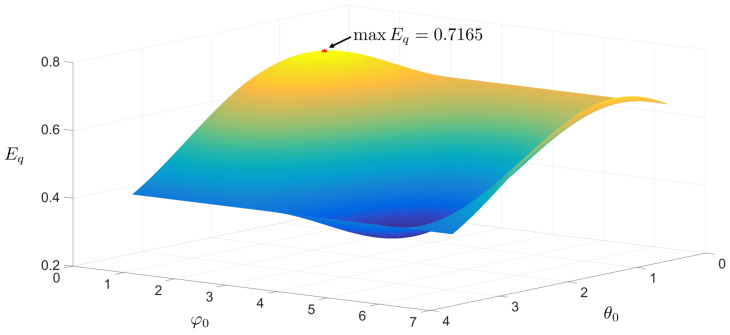 Figure 3
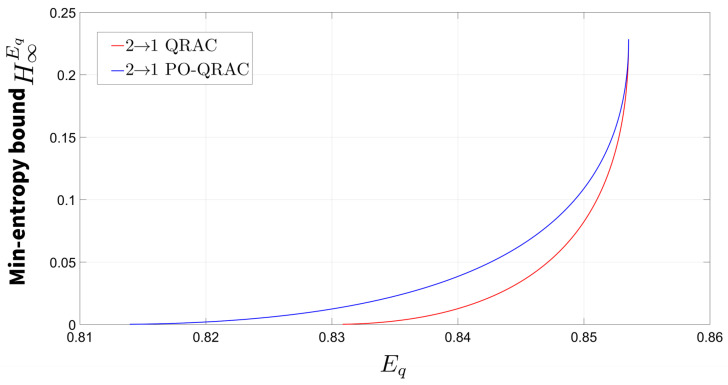 Figure 4
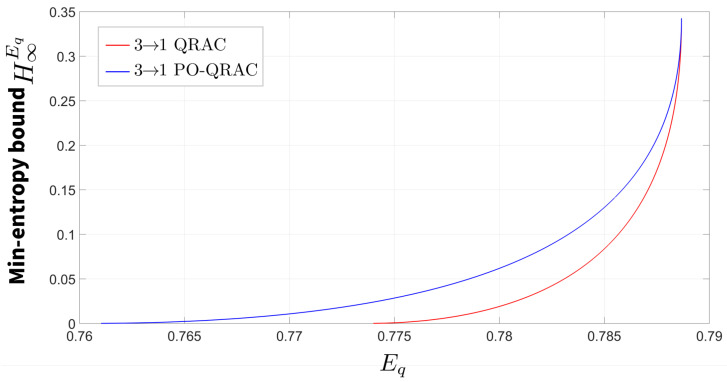 Figure 5
Peer Reviews
No public reviews on file for this paper yet. If you reviewed it on a platform where reviews are public (OpenReview, ICLR, NeurIPS, ICML), you can paste yours below so the community can read it here.
Videos
No videos yet. Explain this paper in a talk, walkthrough, or lecture? Add one.
Taxonomy
TopicsQuantum Mechanics and Applications · Quantum Information and Cryptography · Quantum Computing Algorithms and Architecture