Association Between Sarcopenia Measured by Computed Tomography at the Third Lumbar Vertebra and Mortality in Inpatients with Delirium Referred to a Liaison Psychiatry Team: A Follow-Up Study
Miguel Alonso-Sánchez, Fernando Sebastian-Valles, María Robles-Camacho, Víctor Rodríguez-Laval, Víctor Navas-Moreno, Miguel Antonio Sampedro-Nuñez, Mónica Marazuela, Jose Luis Ayuso-Mateos, Eduardo Delgado-Parada

TL;DR
This study finds that low muscle mass (sarcopenia) in hospitalized older adults with delirium is linked to higher mortality rates.
Contribution
The study is the first to show sarcopenia as an independent predictor of mortality in delirium patients using CT-based measurements.
Findings
Sarcopenia was associated with higher mortality rates (56.7% vs. 33.3%) in delirium patients.
Sarcopenia was an independent predictor of mortality (HR = 2.95) in Cox regression analysis.
Kaplan–Meier analysis confirmed reduced survival in sarcopenic patients (p = 0.038).
Abstract
Background and objectives: Delirium is a prevalent disorder that is associated with morbidity and mortality in hospitalized older adults. Recent evidence highlights sarcopenia, defined by low muscle mass, as a prognostic factor of importance. This study aims to investigate the association between sarcopenia, assessed by L3-level computed tomography (CT) and clinical outcomes, particularly mortality, in inpatients with delirium managed by a liaison psychiatry team (LPT). Methods: This single-center, retrospective observational study included 57 consecutive patients diagnosed with delirium and referred to the LPT at a tertiary care hospital between 2021 and 2023. Patients with available abdominal CT scans were included. Sarcopenia was defined based on the presence of low muscle mass observed at the L3 level on CT imaging, following established diagnostic criteria. The analysis included…
Genes, proteins, chemicals, diseases, species, mutations and cell lines named across the full text — each resolved to its canonical identifier and authoritative record.
Click any figure to enlarge with its caption.
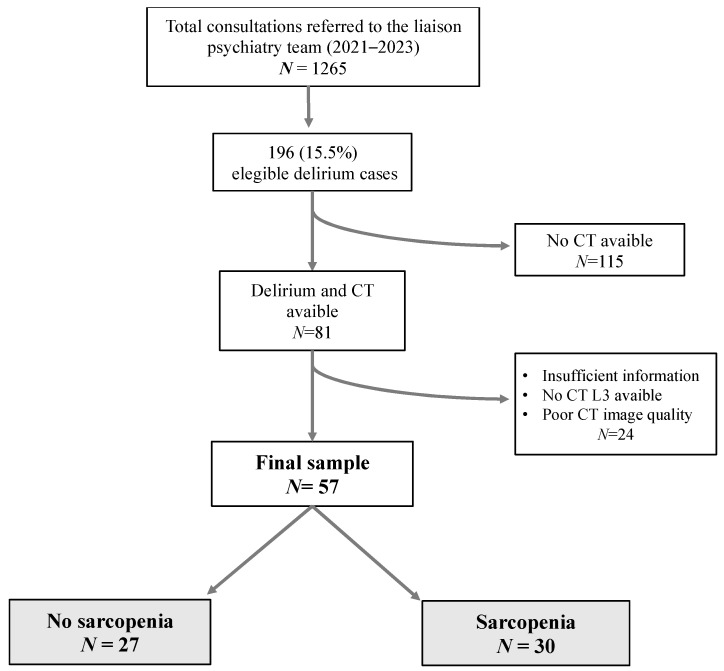 Figure 1
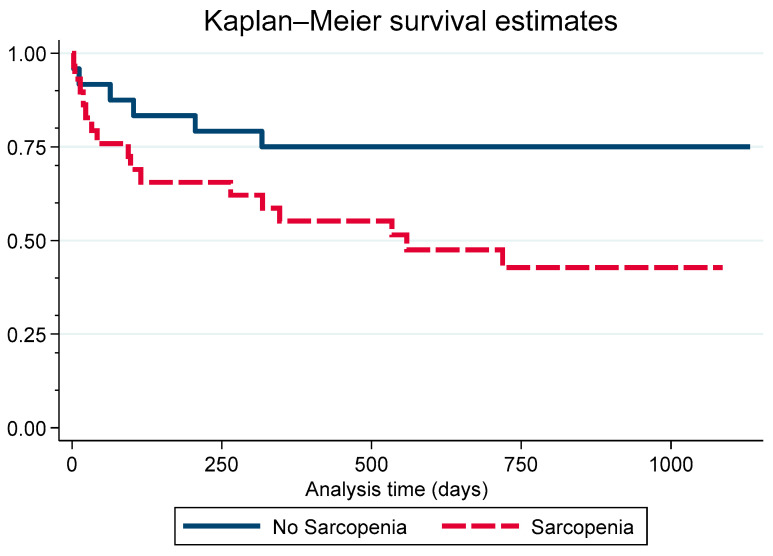 Figure 2
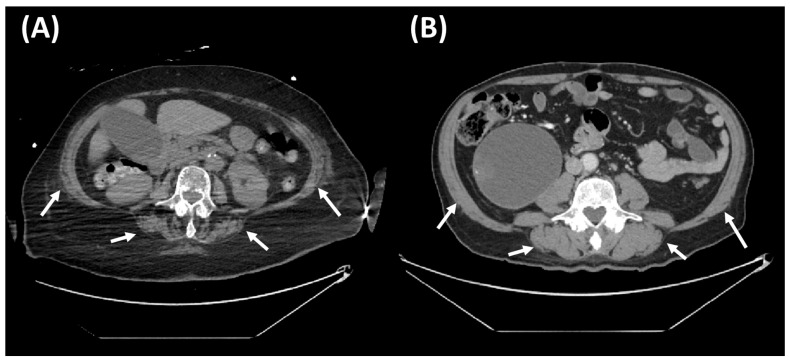 Figure 3
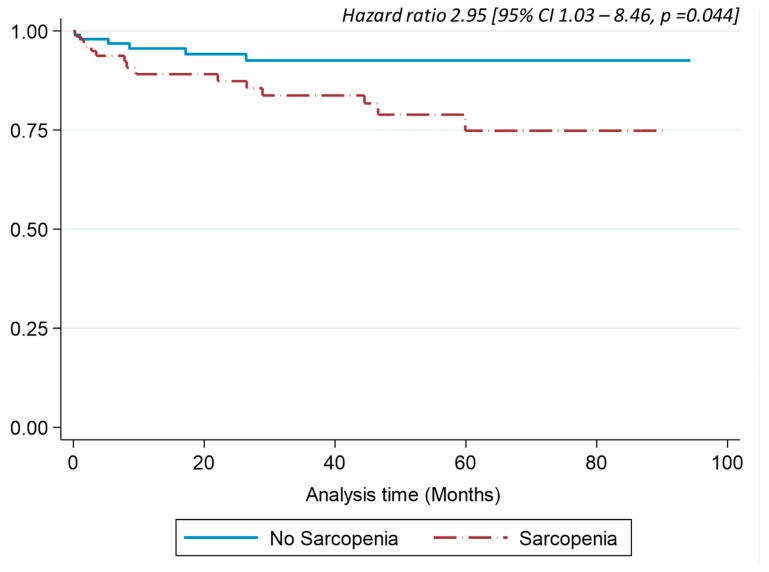 Figure 4
Peer Reviews
No public reviews on file for this paper yet. If you reviewed it on a platform where reviews are public (OpenReview, ICLR, NeurIPS, ICML), you can paste yours below so the community can read it here.
Videos
No videos yet. Explain this paper in a talk, walkthrough, or lecture? Add one.
Taxonomy
TopicsIntensive Care Unit Cognitive Disorders · Nutrition and Health in Aging · Frailty in Older Adults