The Complete Chloroplast Genome of Water Crowfoot of Ranunculus cf. penicillatus and Phylogenetic Insight into the Genus Ranunculus (sect. Batrachium)
Jurgita Butkuvienė, Donatas Naugžemys, Donatas Žvingila

TL;DR
This paper presents the first complete chloroplast genome of Ranunculus cf. penicillatus and explores its evolutionary relationships within the genus.
Contribution
The study provides the first complete chloroplast genome for Ranunculus cf. penicillatus and offers new phylogenetic insights into the genus.
Findings
The chloroplast genome of Ranunculus cf. penicillatus is 158,313 base pairs long and has a circular structure.
Comparative analysis reveals structural variations that may indicate adaptive evolutionary mechanisms.
Phylogenetic analysis places the species in a well-defined clade, clarifying its relationships with other taxa.
Abstract
This study describes the first complete chloroplast genome of Ranunculus cf. penicillatus and provides new insights into the genetic composition and evolutionary relationships of the Ranunculus genus. The genome was assembled and characterized using high-throughput sequencing technologies, revealing a circular structure encompassing 158,313 base pairs. Comparative analysis with the chloroplast genomes of related species within the Ranunculus genus highlights notable variations in structural organization, which can elucidate potential adaptive evolutionary mechanisms. Phylogenetic analyses conducted using the maximum likelihood approach resulted in the placement of Ranunculus cf. penicillatus within a well-defined clade, revealing its relationship with other taxa. This study not only enriches the existing plastid genomic data of the genus Ranunculus but also serves as an additional…
Genes, proteins, chemicals, diseases, species, mutations and cell lines named across the full text — each resolved to its canonical identifier and authoritative record.
Click any figure to enlarge with its caption.
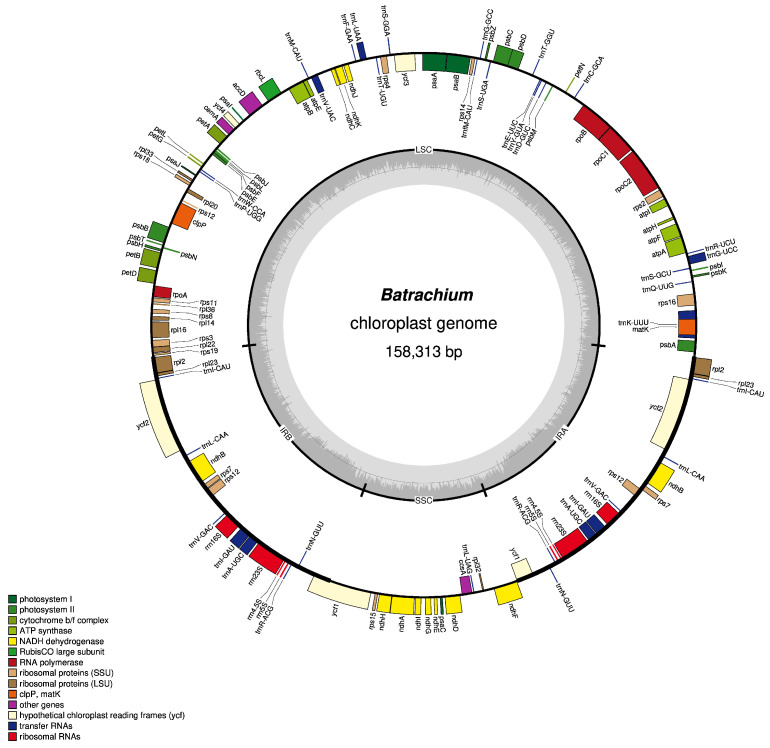 Figure 1
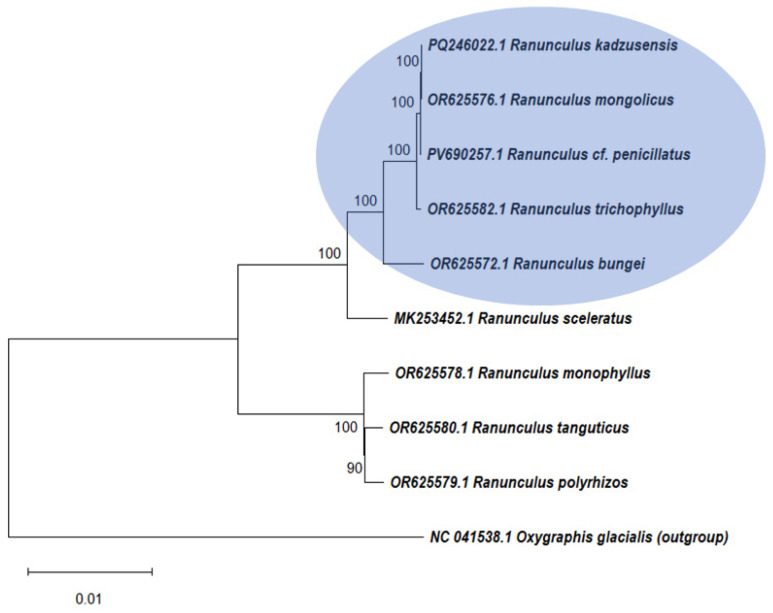 Figure 2
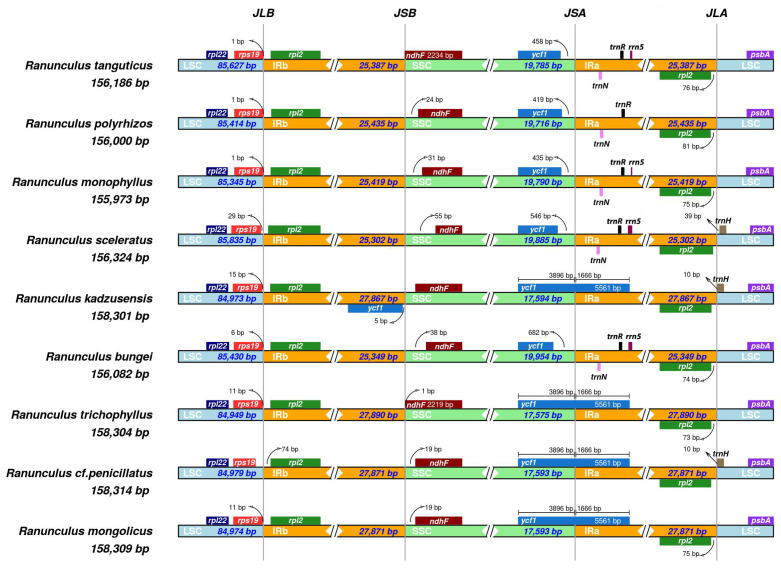 Figure 3
Peer Reviews
No public reviews on file for this paper yet. If you reviewed it on a platform where reviews are public (OpenReview, ICLR, NeurIPS, ICML), you can paste yours below so the community can read it here.
Videos
No videos yet. Explain this paper in a talk, walkthrough, or lecture? Add one.
Taxonomy
TopicsGenomics and Phylogenetic Studies · Plant Pathogens and Fungal Diseases · Microbial Community Ecology and Physiology