Discovery of Germplasm Resources and Molecular Marker-Assisted Breeding of Oilseed Rape for Anticracking Angle
Cheng Zhu, Zhi Li, Ruiwen Liu, Taocui Huang

TL;DR
This study improves oilseed rape breeding by combining molecular markers and phenotyping to enhance resistance to cracking, aiding mechanized harvesting.
Contribution
A novel dual-track genotype–phenotype screening strategy using KASP markers and phenotyping for angular resistance in oilseed rape.
Findings
The KASP marker S12.68 achieved a 73.34% introgression rate, significantly higher than traditional breeding methods.
Seven high-resistance oilseed rape resources were identified, including materials with a cracking resistance index above 0.8.
A novel resistance mechanism was discovered in materials not linked to the primary effector locus, involving gene expression changes in BnIND1.
Abstract
Introduction: Scattering of kernels due to angular dehiscence is a key bottleneck in mechanized harvesting of oilseed rape. Materials and Methods: In this study, a dual-track “genotype–phenotype” screening strategy was established by innovatively integrating high-throughput KASP molecular marker technology and a standardized random collision phenotyping system for the complex quantitative trait of angular resistance. Results: Through the systematic evaluation of 634 oilseed rape hybrid progenies, it was found that the KASP marker S12.68, targeting the cleavage resistance locus (BnSHP1) on chromosome C9, achieved a 73.34% introgression rate (465/634), which was significantly higher than the traditional breeding efficiency (<40%). Phenotypic characterization screened seven excellent resources with cracking resistance index (SRI) > 0.6, of which four reached the high resistance standard…
Genes, proteins, chemicals, diseases, species, mutations and cell lines named across the full text — each resolved to its canonical identifier and authoritative record.
Click any figure to enlarge with its caption.
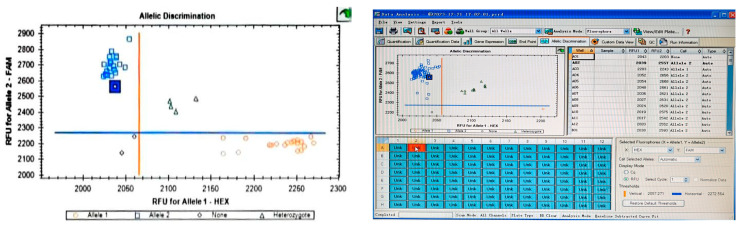 Figure 1
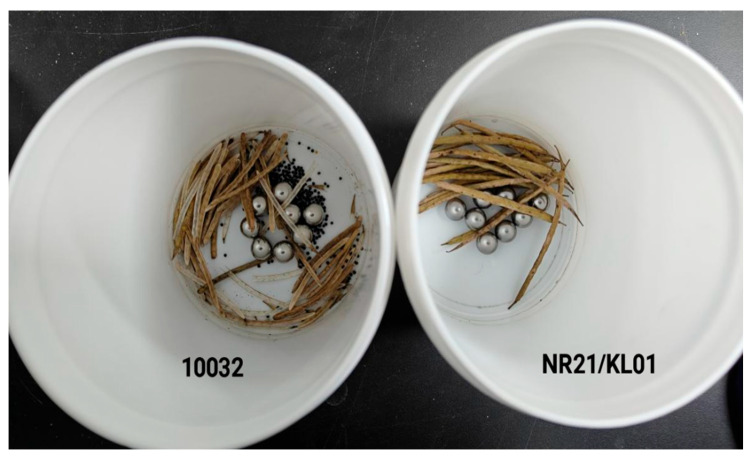 Figure 2
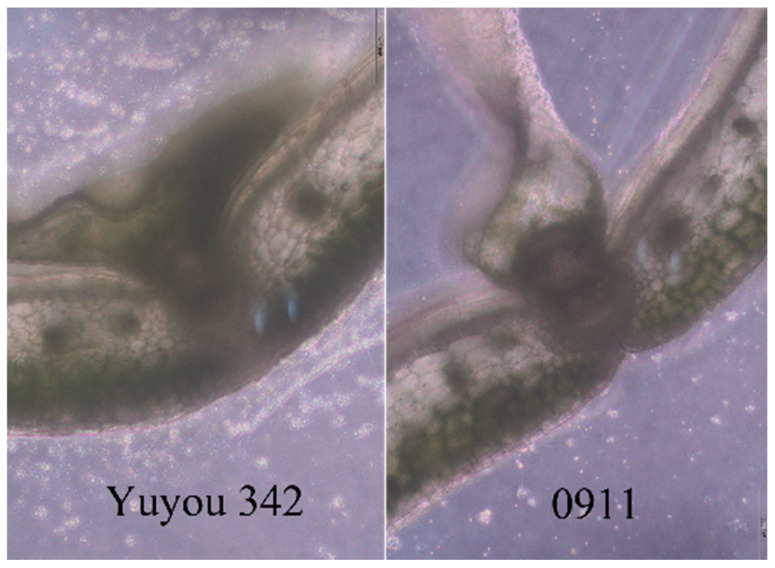 Figure 3
Peer Reviews
No public reviews on file for this paper yet. If you reviewed it on a platform where reviews are public (OpenReview, ICLR, NeurIPS, ICML), you can paste yours below so the community can read it here.
Videos
No videos yet. Explain this paper in a talk, walkthrough, or lecture? Add one.
Taxonomy
TopicsNitrogen and Sulfur Effects on Brassica · Genetic Mapping and Diversity in Plants and Animals · Wheat and Barley Genetics and Pathology