Human Dialyzable Leukocyte Extract Enhances Albendazole Efficacy and Promotes Th1/Th2-Biased Lymphocyte and Antibody Responses in Peritoneal Cavity of Murine Model of Mesocestoides vogae Infection
Gabriela Hrčková, Dagmar Mudroňová, Katarína Reiterová, Serena Cavallero, Ilaria Bellini

TL;DR
A human leukocyte extract improves albendazole's effectiveness against a parasitic infection by boosting immune responses in mice.
Contribution
Demonstrates that HLE enhances ABZ efficacy by modulating Th1/Th2 and reducing immunosuppressive Treg/Breg activity.
Findings
HLE combined with ABZ increased larval clearance and suppressed 14-3-3 gene expression in larvae.
HLE and combination therapy increased CD3+ T cells and reduced regulatory Tregs and Bregs.
ABZ+HLE treatment restored Th1 responses and modulated antibody profiles against parasite antigens.
Abstract
Human leukocyte extract (HLE), a non-immunogenic dialyzable leukocyte preparation (<10 kDa), may serve as a safe adjuvant in immunotherapy. We investigated the effects of albendazole (ABZ), HLE, and their combination in Mesocestoides vogae infected mice, focusing on lymphoid cells in the peritoneal cavity, the site of larval proliferation and parasite-induced immunosuppression. Peritoneal lymphoid cells were analysed by flow cytometry and qPCR. Cells proliferative responses to ConA, LPS, and parasite excretory/secretory (E/S) antigens, cytokine production (ELISA), IgM and IgG isotypes in exudates and parasite antigen recognition (Western blot) were assessed. Efficacy was measured by larval burden and 14-3-3 gene expression in larvae. HLE combined with ABZ enhanced larval clearance and suppressed 14-3-3 gene expression in larvae. HLE and combination therapy increased CD3+ T cell…
Genes, proteins, chemicals, diseases, species, mutations and cell lines named across the full text — each resolved to its canonical identifier and authoritative record.
Click any figure to enlarge with its caption.
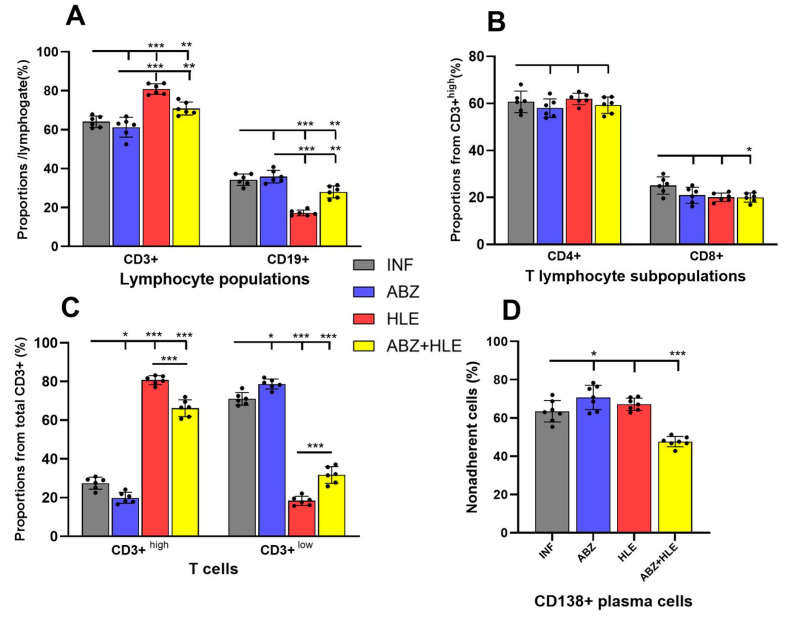 Figure 1
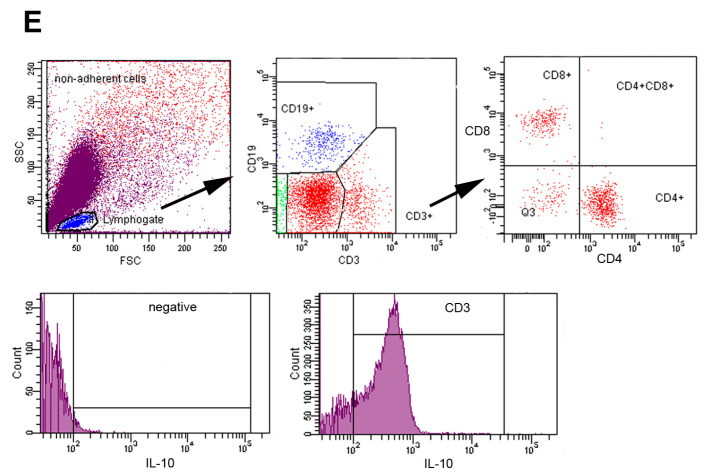 Figure 2
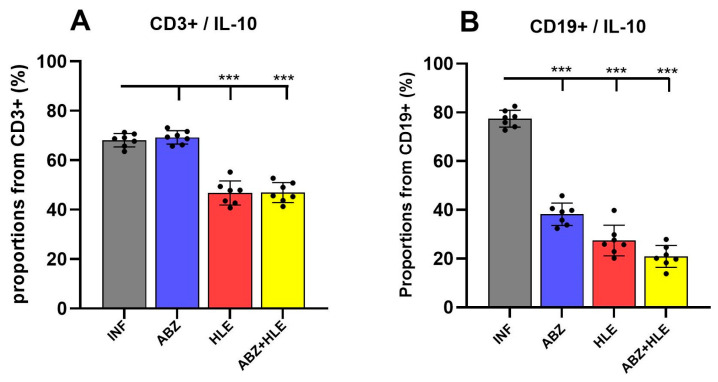 Figure 3
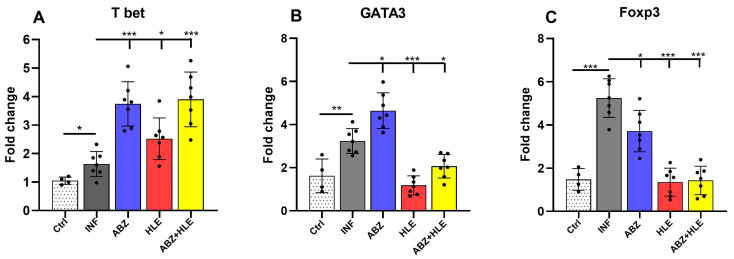 Figure 4
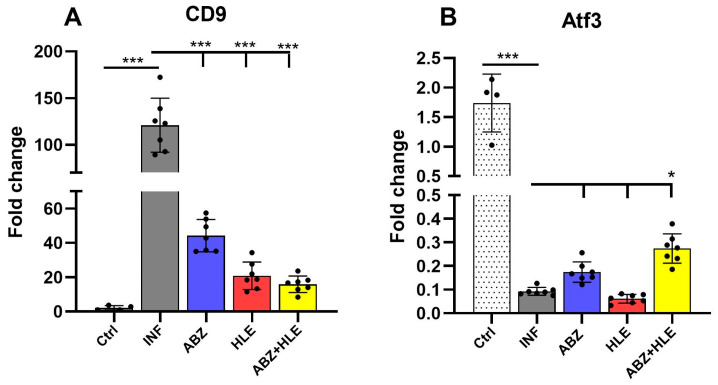 Figure 5
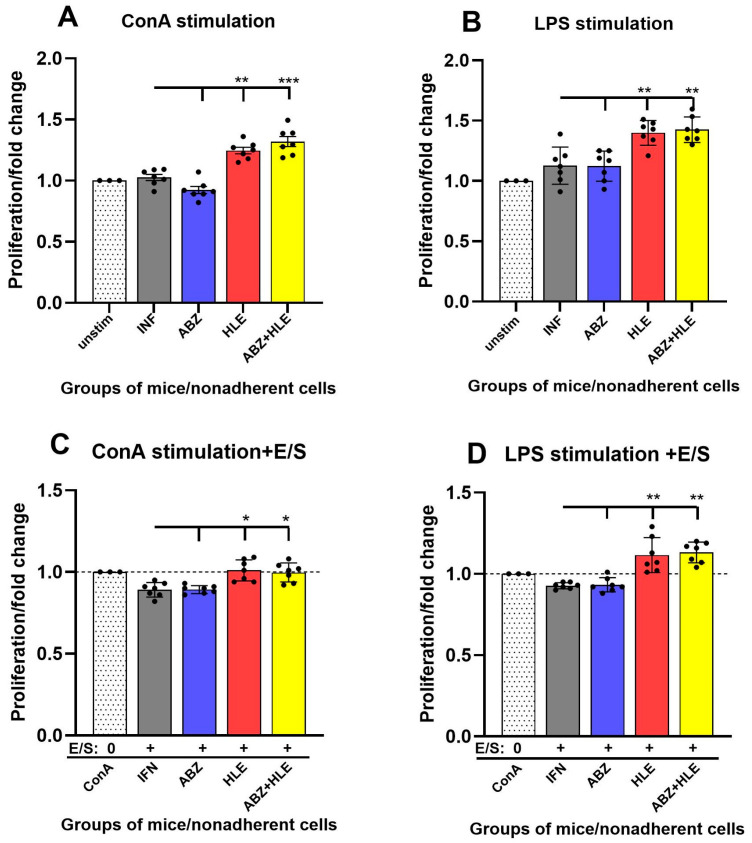 Figure 6
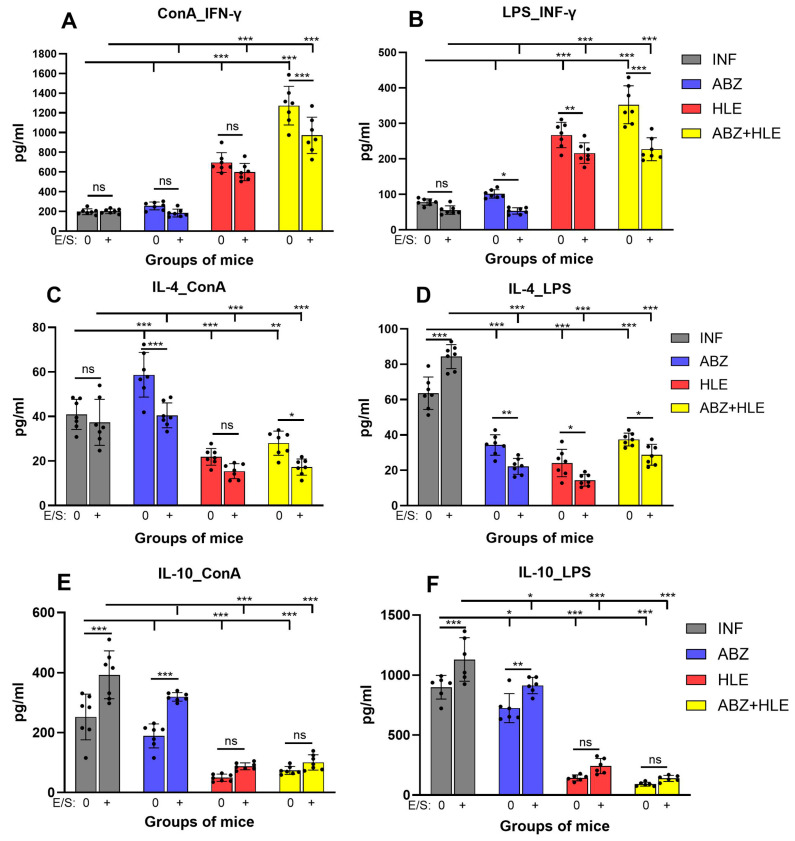 Figure 7
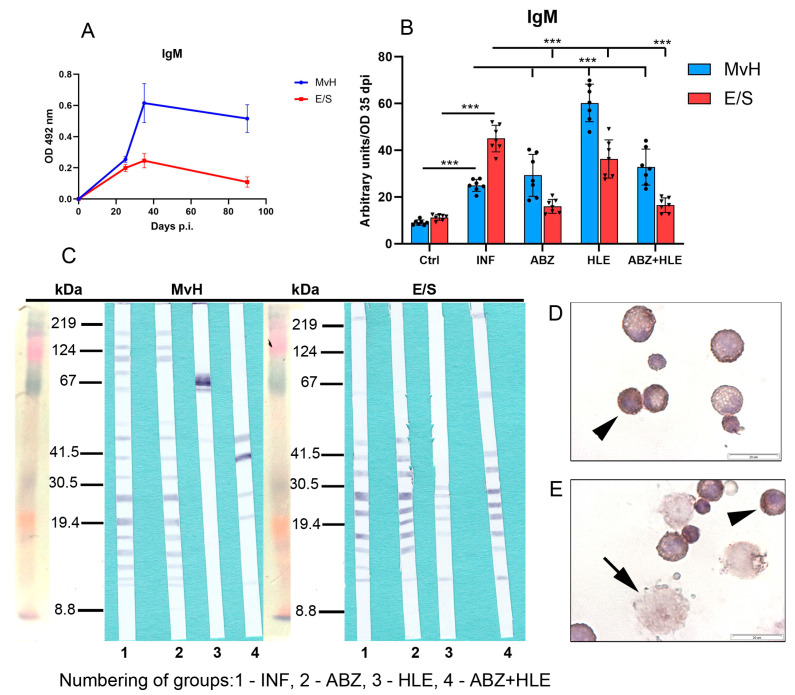 Figure 8
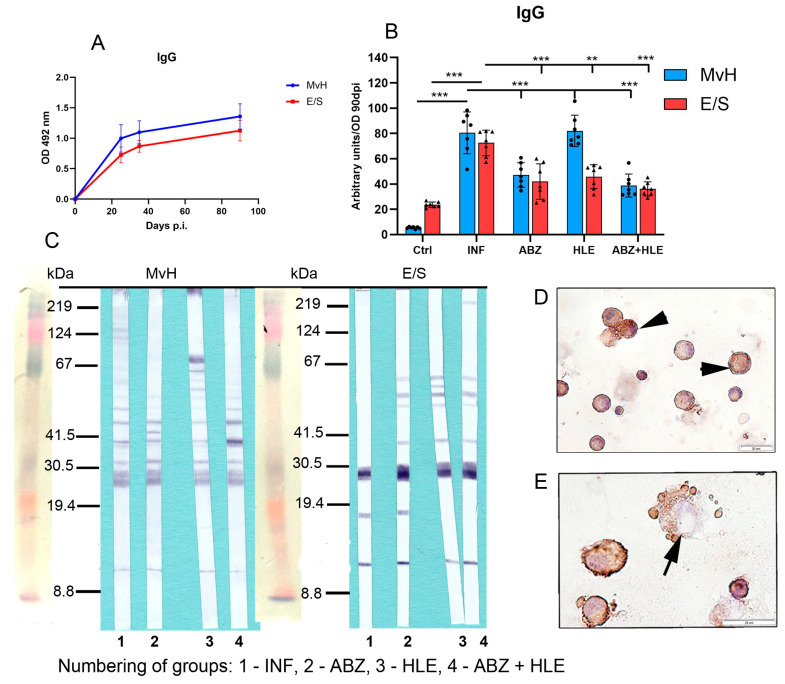 Figure 9
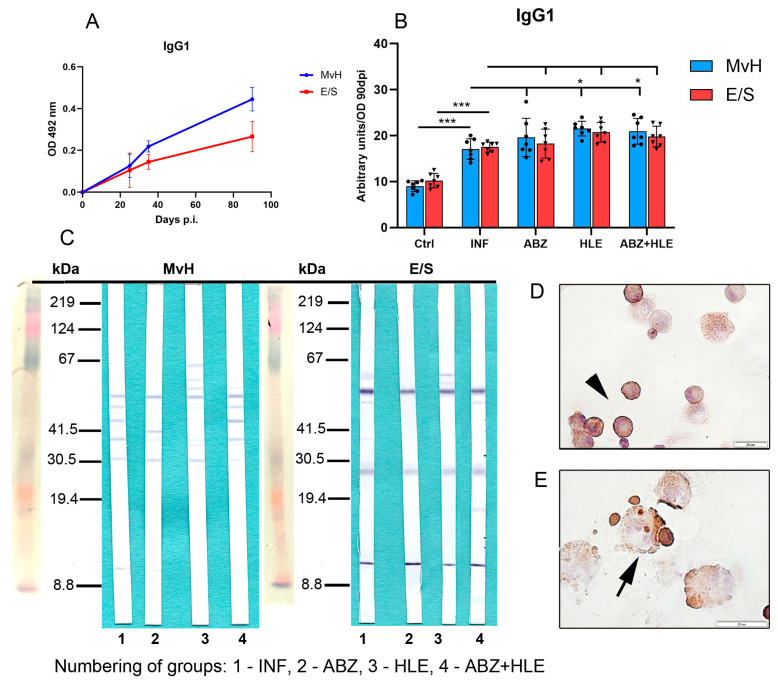 Figure 10
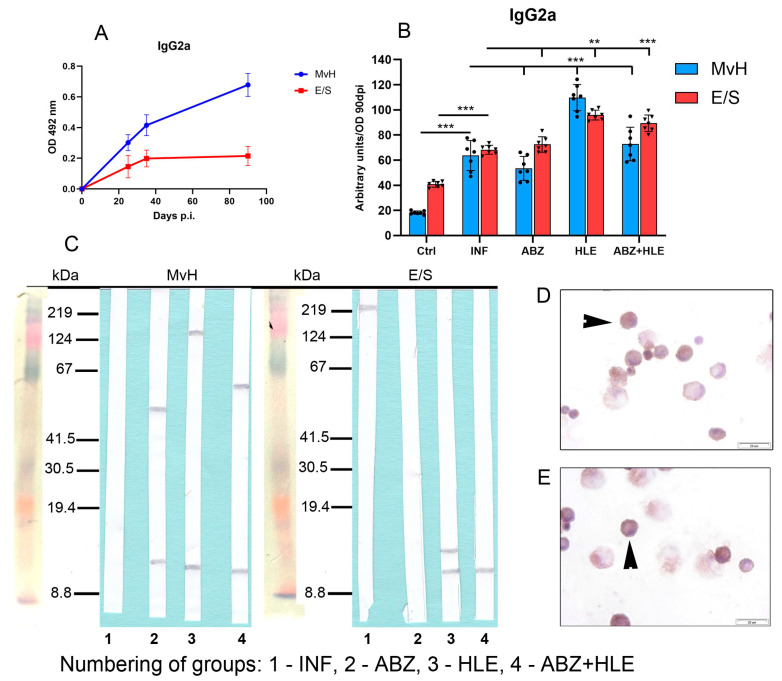 Figure 11
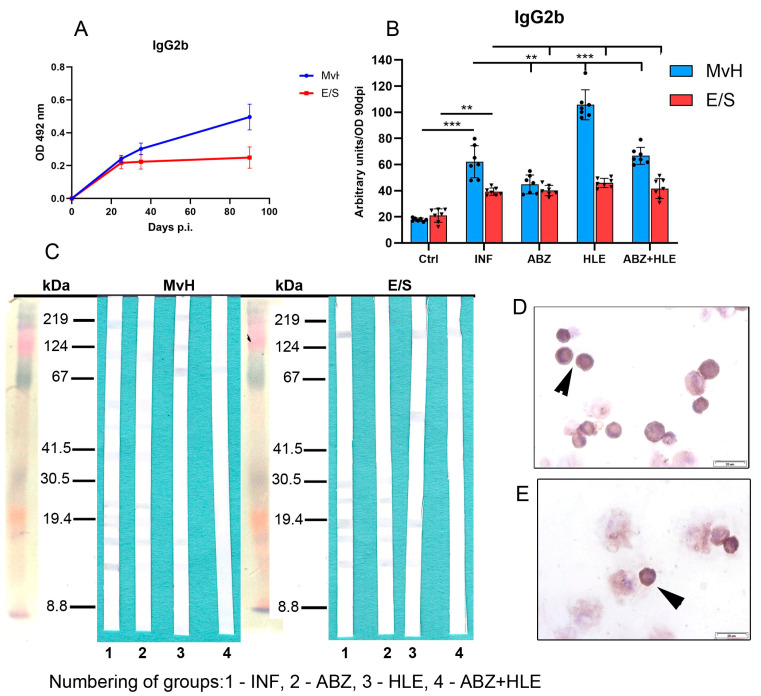 Figure 12
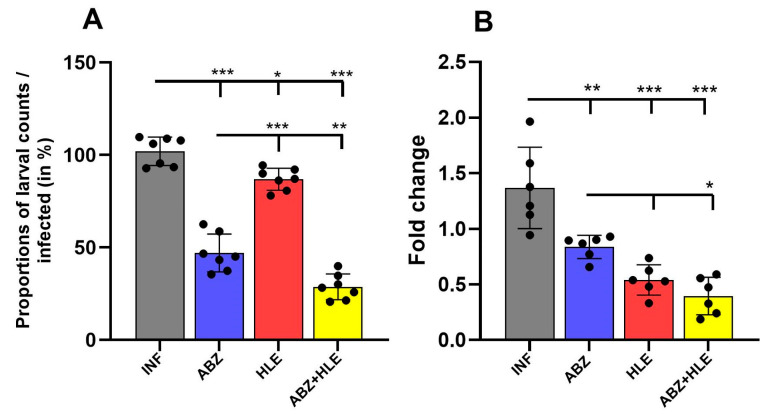 Figure 13
Peer Reviews
No public reviews on file for this paper yet. If you reviewed it on a platform where reviews are public (OpenReview, ICLR, NeurIPS, ICML), you can paste yours below so the community can read it here.
Videos
No videos yet. Explain this paper in a talk, walkthrough, or lecture? Add one.
Taxonomy
TopicsParasites and Host Interactions · Parasitic infections in humans and animals · Amoebic Infections and Treatments