Evaluating Liquid Biopsy for Circulating Tumor DNA (ctDNA) Detection as a Complementary Diagnostic Tool in Thyroid Cancer Among Ecuadorian Women
Santiago Cadena-Ullauri, Viviana A. Ruiz-Pozo, Elius Paz-Cruz, Rafael Tamayo-Trujillo, Patricia Guevara-Ramírez, Oscar Jaramillo-Calvas, Cristhian García, Mikaela García, Ana Pérez, Maritza Ochoa-Castro, Fausto Zaruma-Torres, Favian Bayas-Morejón, Lenín Guamán-Herrera

TL;DR
This study explores liquid biopsy for detecting tumor DNA in blood as a complementary diagnostic tool for thyroid cancer in Ecuadorian women.
Contribution
The study evaluates ctDNA concordance with tumor tissue in an Ecuadorian cohort, highlighting potential and challenges in admixed populations.
Findings
71 cancer-associated variants were detected with 81.69% concordance between ctDNA and tumor DNA.
TP53 was the most frequently mutated gene, and some variants were exclusive to ctDNA, indicating tumor heterogeneity.
Ancestry analysis showed a predominant Native American genetic component in the Ecuadorian cohort.
Abstract
Thyroid cancer (TC) is the most common endocrine malignancy, with a rising global incidence. In Ecuador, TC rates are among the highest worldwide. Generally, fine-needle aspiration (FNA) remains the standard diagnostic tool; however, due to its limitations, alternative or complementary approaches are required. In this context, liquid biopsy, particularly circulating tumor DNA (ctDNA), offers a promising, minimally invasive option for tumor genotyping. Objective: This study evaluated the concordance between genetic variants identified in ctDNA and tumor tissue. Thirty-six women with papillary thyroid cancer were included. Tumor tissue and blood samples were collected, and DNA was extracted. Next-Generation Sequencing (NGS) using the TruSight Tumor 15 panel identified genetic variants in both ctDNA and tumor DNA. Variant pathogenicity was assessed following ACMG guidelines. Genetic…
Genes, proteins, chemicals, diseases, species, mutations and cell lines named across the full text — each resolved to its canonical identifier and authoritative record.
Click any figure to enlarge with its caption.
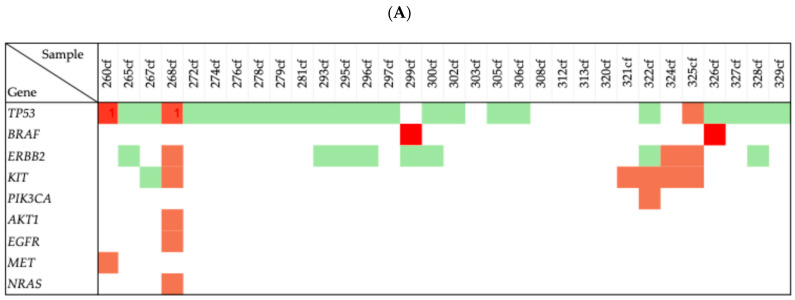 Figure 1
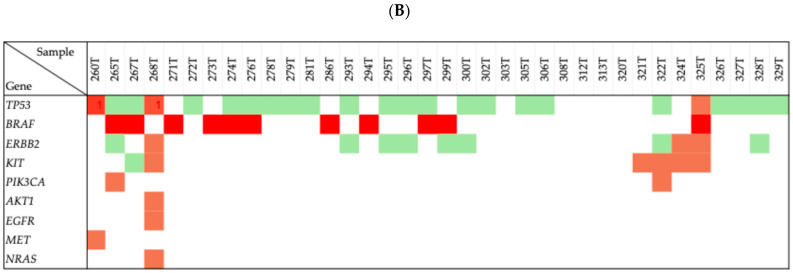 Figure 2
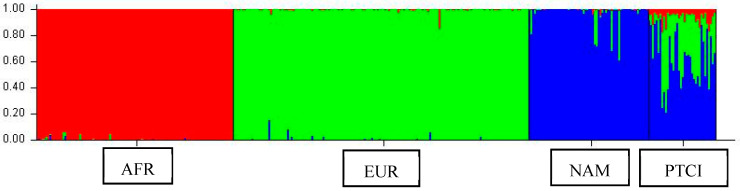 Figure 3
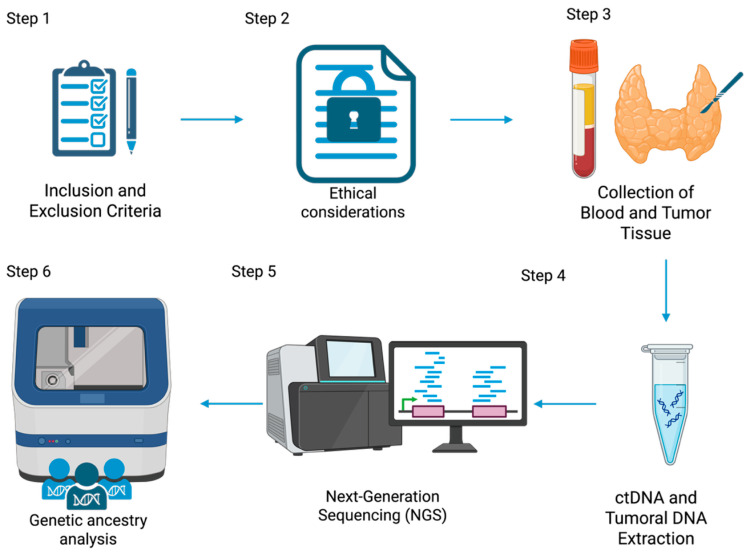 Figure 4
Peer Reviews
No public reviews on file for this paper yet. If you reviewed it on a platform where reviews are public (OpenReview, ICLR, NeurIPS, ICML), you can paste yours below so the community can read it here.
Videos
No videos yet. Explain this paper in a talk, walkthrough, or lecture? Add one.
Taxonomy
TopicsCancer Genomics and Diagnostics · BRCA gene mutations in cancer · Genetic factors in colorectal cancer