Titin’s Intrinsically Disordered PEVK Domain Modulates Actin Polymerization
Áron Gellért Altorjay, Hedvig Tordai, Ádám Zolcsák, Nikoletta Kósa, Tamás Hegedűs, Miklós Kellermayer

TL;DR
This study shows that the disordered PEVK domain of the titin protein can speed up actin polymerization, potentially influencing muscle function.
Contribution
The novel finding is that the PEVK domain modulates actin assembly by enhancing nucleation without affecting critical concentration.
Findings
PEVKII enhances initial and log-phase actin assembly rates in a concentration-dependent manner.
AFM images reveal radially symmetric complexes of short actin filaments in the presence of PEVKII.
PEVK does not alter the critical concentration of actin polymerization.
Abstract
The multi-domain muscle protein titin provides elasticity and mechanosensing functions to the sarcomere. Titin’s PEVK domain is intrinsically disordered due to the presence of a large number of prolines and highly charged residues. Although PEVK does not have canonical actin-binding motifs, it has been shown to bind F-actin. Here, we explored whether the PEVK domain may also affect actin assembly. We cloned the middle, 733-residue-long segment (called PEVKII) of the full-length PEVK domain, expressed in E. coli and purified by using His- and Avi-tags engineered to the N- and C-termini, respectively. Actin assembly was monitored by the pyrene assay in the presence of varying PEVKII concentrations. The structural features of PEVKII-associated F-actin were studied with atomic force microscopy. The added PEVKII enhanced the initial and log-phase rates of actin assembly and the peak F-actin…
Genes, proteins, chemicals, diseases, species, mutations and cell lines named across the full text — each resolved to its canonical identifier and authoritative record.
Click any figure to enlarge with its caption.
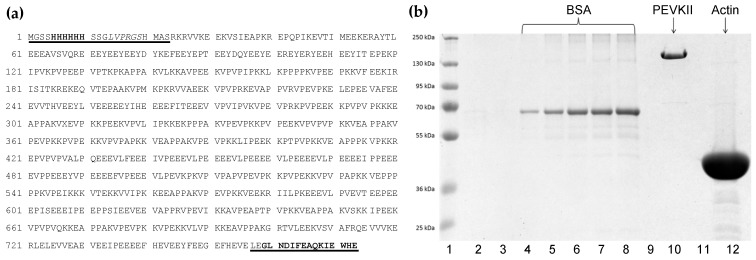 Figure 1
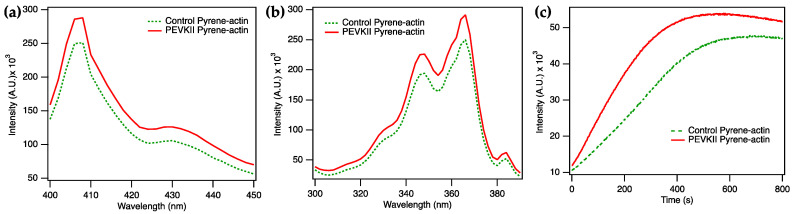 Figure 2
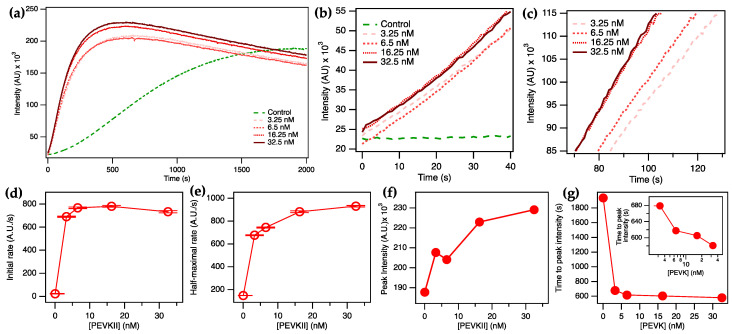 Figure 3
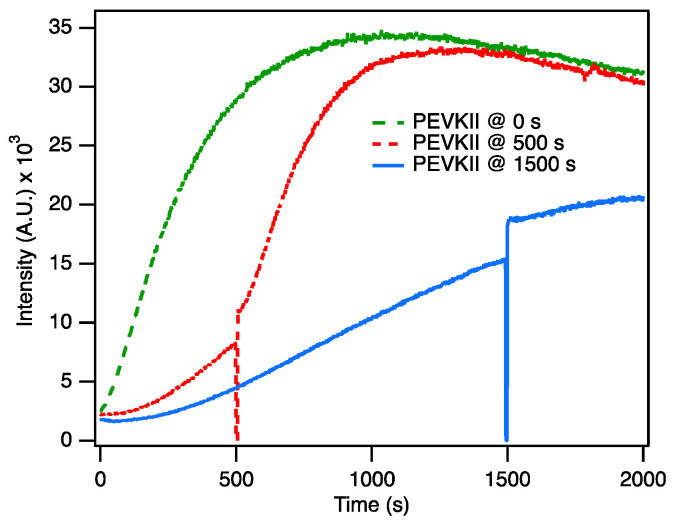 Figure 4
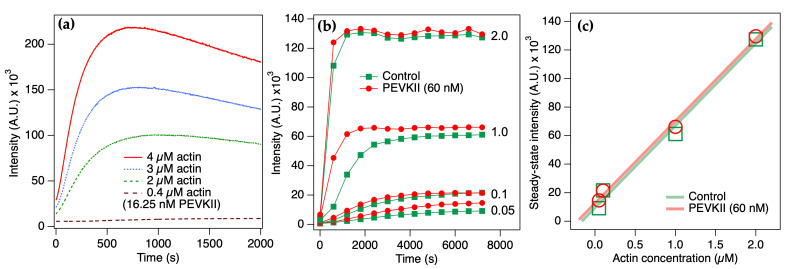 Figure 5
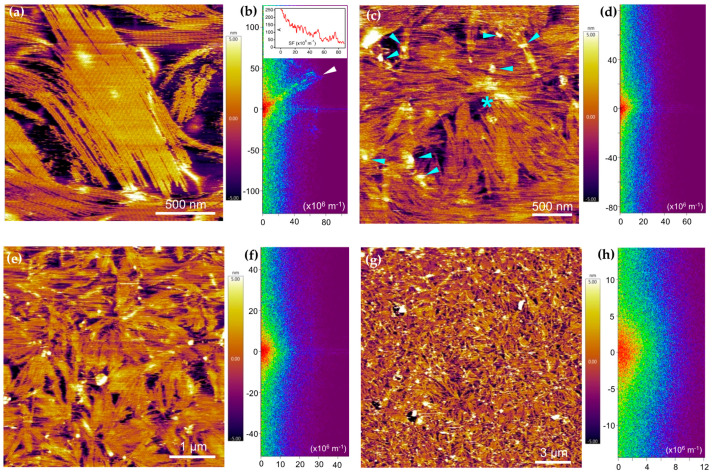 Figure 6
 Figure 7
Peer Reviews
No public reviews on file for this paper yet. If you reviewed it on a platform where reviews are public (OpenReview, ICLR, NeurIPS, ICML), you can paste yours below so the community can read it here.
Videos
No videos yet. Explain this paper in a talk, walkthrough, or lecture? Add one.
Taxonomy
TopicsCellular Mechanics and Interactions · Cardiomyopathy and Myosin Studies · Cellular transport and secretion