Effect of Maternal Dietary DHA and Prenatal Stress Mouse Model on Autistic-like Behaviors, Lipid Peroxidation Activity, and GABA Expression in Offspring Pups
Taeseon Woo, Nick I. Ahmed, Michael K. Appenteng, Candice King, Runting Li, Kevin L. Fritsche, Grace Y. Sun, Jiankun Cui, Matthew J. Will, Sara V. Maurer, Hanna E. Stevens, David Q. Beversdorf, C. Michael Greenlief

TL;DR
This study explores how maternal DHA intake and prenatal stress affect autistic-like behaviors and brain chemistry in offspring using a mouse model.
Contribution
The study investigates the combined effects of maternal DHA supplementation and prenatal stress on GABAergic gene expression and behavior in a genetic mouse model of ASD.
Findings
Male offspring of stressed SERT-KO dams showed reduced social preference and increased repetitive grooming.
DHA supplementation reduced repetitive grooming in male SERT-het mice but not social behaviors.
Gad2 gene expression in the cortex of female SERT-KO offspring was rescued by DHA supplementation.
Abstract
Autism spectrum disorder (ASD) is a neurodevelopmental disorder characterized by restricted social communication and repetitive behaviors. Prenatal stress is critical in neurodevelopment and increases risk for ASD, particularly in those with greater genetic susceptibility to stress. Docosahexaenoic acid (DHA) is one of the most abundant ω-3 fatty acids in the membrane phospholipids of the mammalian brain, and dietary DHA plays an important role in brain development and maintenance of brain structure. In this study, we investigated whether peri-natal supplementation of DHA can alleviate autistic-like behaviors in a genetic risk/stress mouse model and how it alters lipid peroxidation activity and GABAergic system gene expression in the forebrain. Pregnant heterozygous serotonin transporter knockout (SERT-KO) and wild-type (WT) dams were placed in either non-stressed control conditions or…
Genes, proteins, chemicals, diseases, species, mutations and cell lines named across the full text — each resolved to its canonical identifier and authoritative record.
Click any figure to enlarge with its caption.
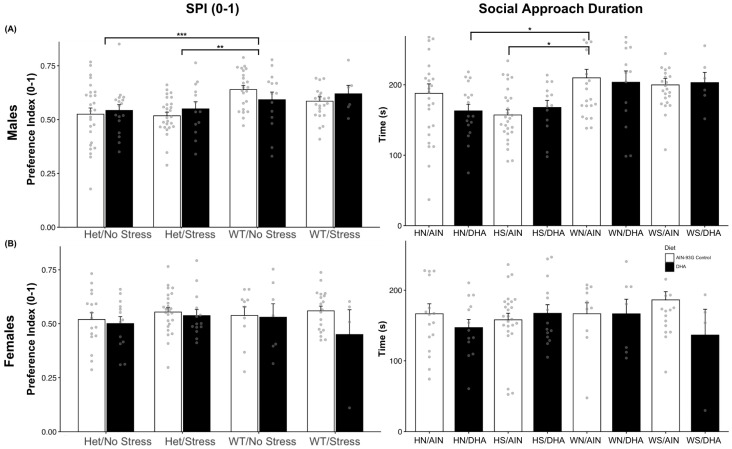 Figure 1
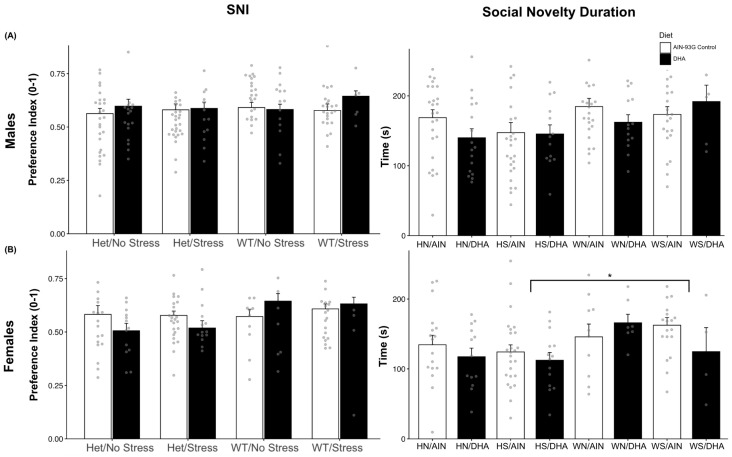 Figure 2
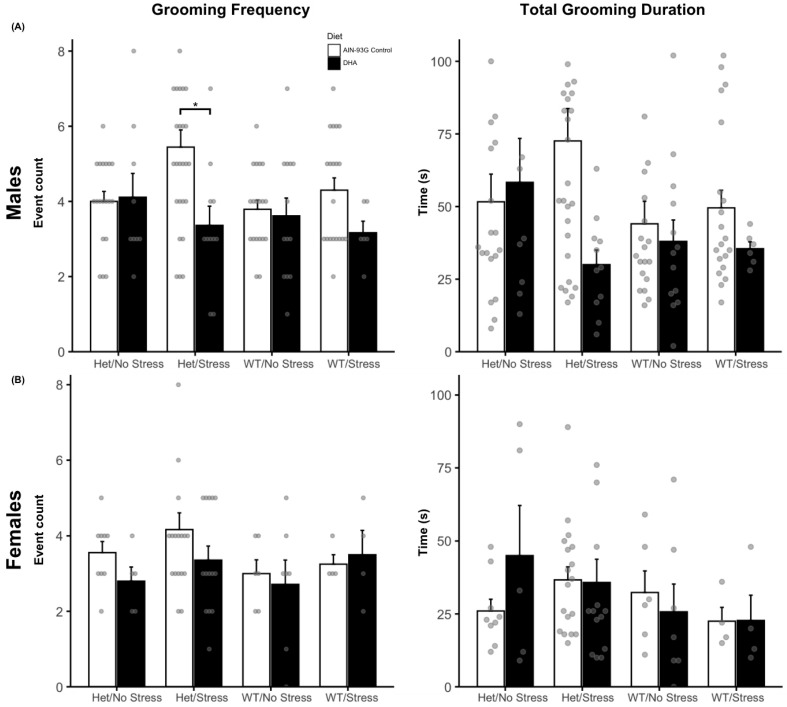 Figure 3
 Figure 4
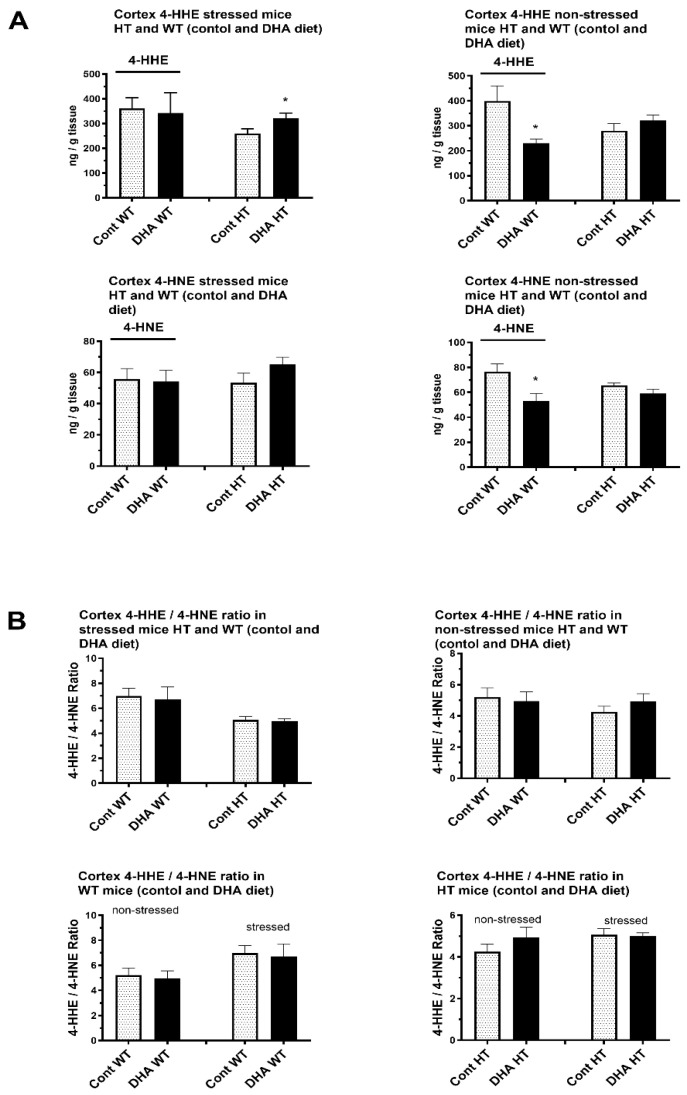 Figure 5
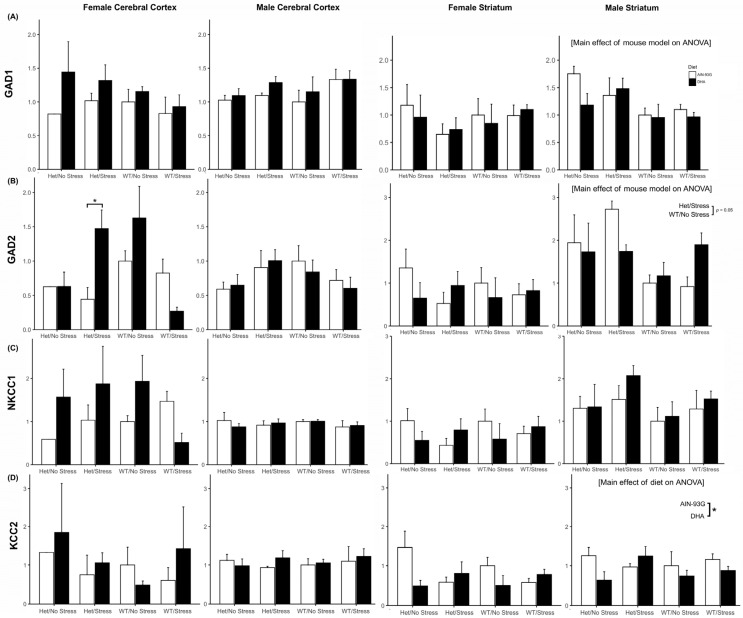 Figure 6
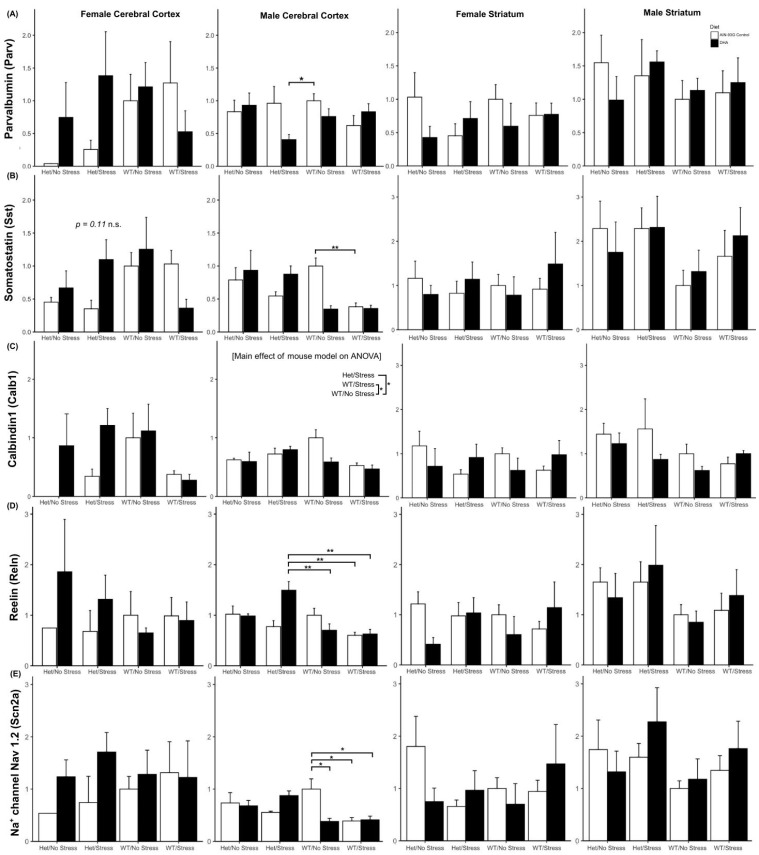 Figure 7
Peer Reviews
No public reviews on file for this paper yet. If you reviewed it on a platform where reviews are public (OpenReview, ICLR, NeurIPS, ICML), you can paste yours below so the community can read it here.
Videos
No videos yet. Explain this paper in a talk, walkthrough, or lecture? Add one.
Taxonomy
TopicsFatty Acid Research and Health · Early Childhood Education and Development · Neuroendocrine regulation and behavior