Interneuron-Driven Ictogenesis in the 4-Aminopyridine Model: Depolarization Block and Potassium Accumulation Initiate Seizure-like Activity
Elena Yu. Proskurina, Julia L. Ergina, Aleksey V. Zaitsev

TL;DR
This study reveals how seizures start in a mouse model, showing that overactive inhibitory brain cells trigger a chain of events leading to seizure-like activity.
Contribution
The paper identifies a precise sequence involving interneuron depolarization block and potassium accumulation as a trigger for seizure initiation.
Findings
Interneurons fire rapidly before entering depolarization block, which coincides with potassium accumulation.
Pyramidal neurons start firing 1.1 seconds after depolarization block, marking seizure onset.
Hippocampal neurons show distinct activity, suggesting region-specific seizure mechanisms.
Abstract
The mechanisms of ictal discharge initiation remain incompletely understood, particularly the paradoxical role of inhibitory fast-spiking interneurons in seizure generation. Using simultaneous whole-cell recordings of interneurons and pyramidal neurons combined with extracellular [K+]o monitoring in mouse entorhinal cortex-hippocampal slices (4-aminopyridine model of epileptiform activity), we identified a critical transition sequence: interneurons displayed high-frequency firing during the preictal phase before entering depolarization block (DB). DB onset coincided with the peak of rate of extracellular [K+] accumulation. Pyramidal cells remained largely silent during interneuronal hyperactivity but started firing within 1.1 ± 0.3 s after DB onset, marking the transition to ictal discharges. This consistent sequence (interneuron DB → [K+]o rate peak → pyramidal cell firing) was…
Genes, proteins, chemicals, diseases, species, mutations and cell lines named across the full text — each resolved to its canonical identifier and authoritative record.
Click any figure to enlarge with its caption.
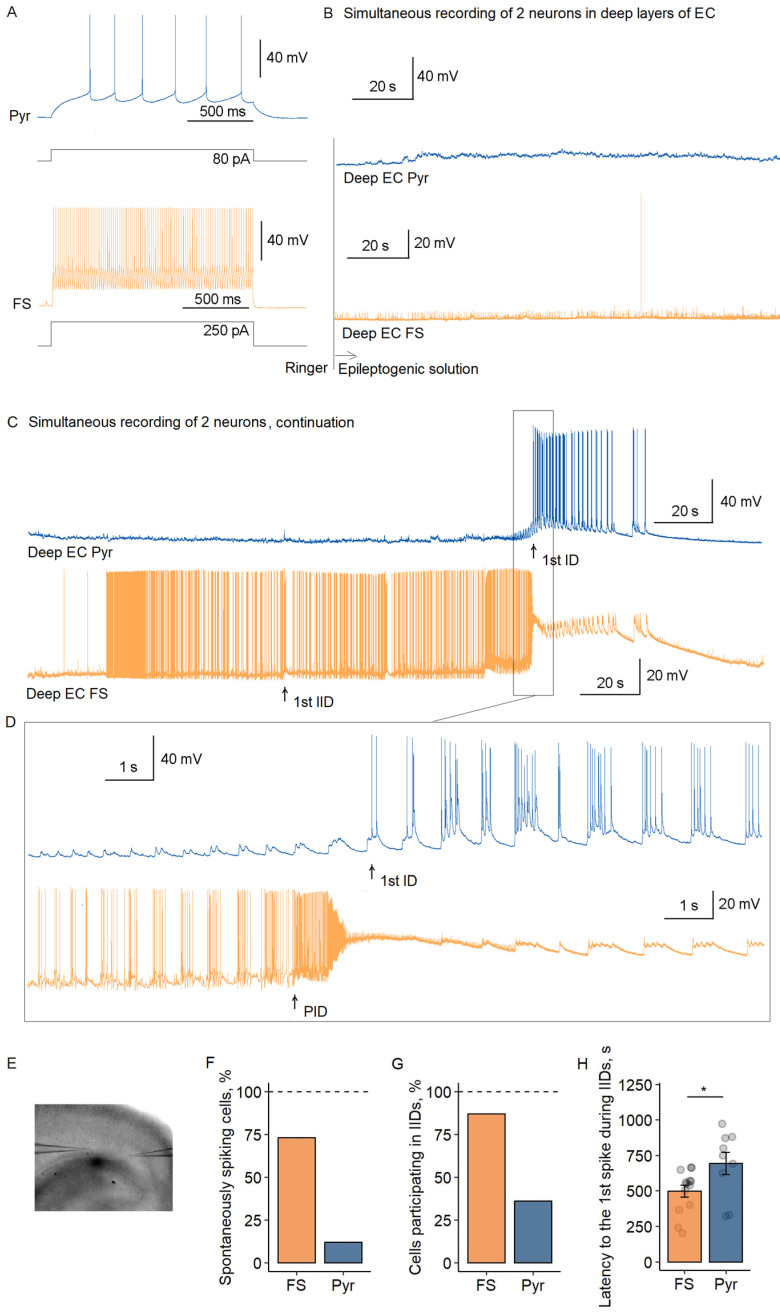 Figure 1
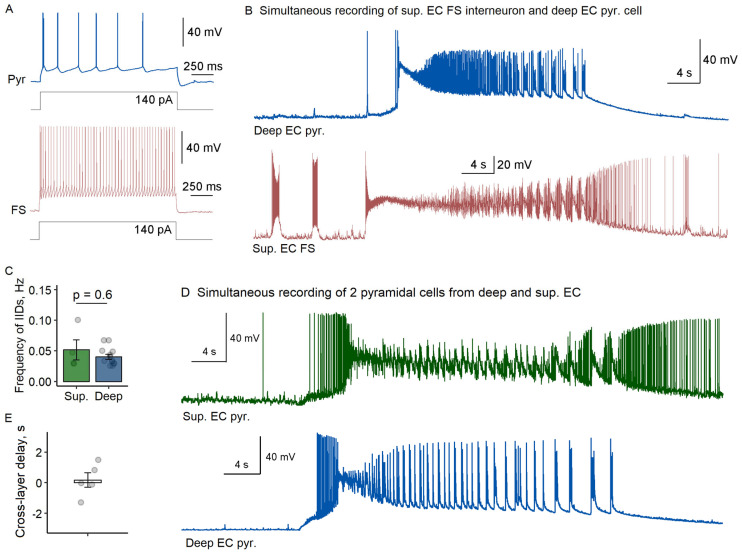 Figure 2
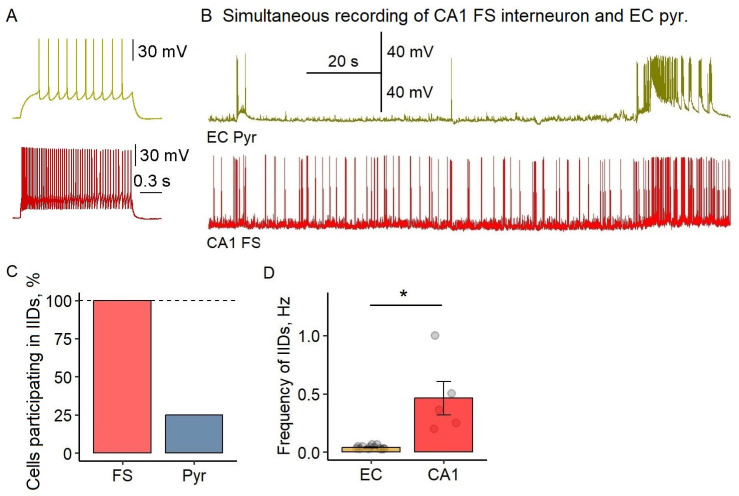 Figure 3
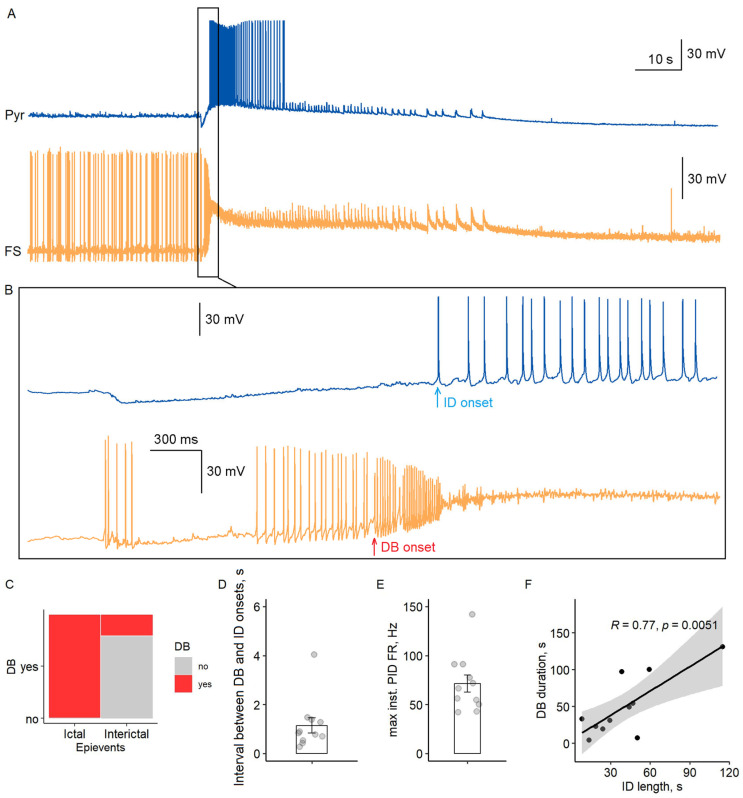 Figure 4
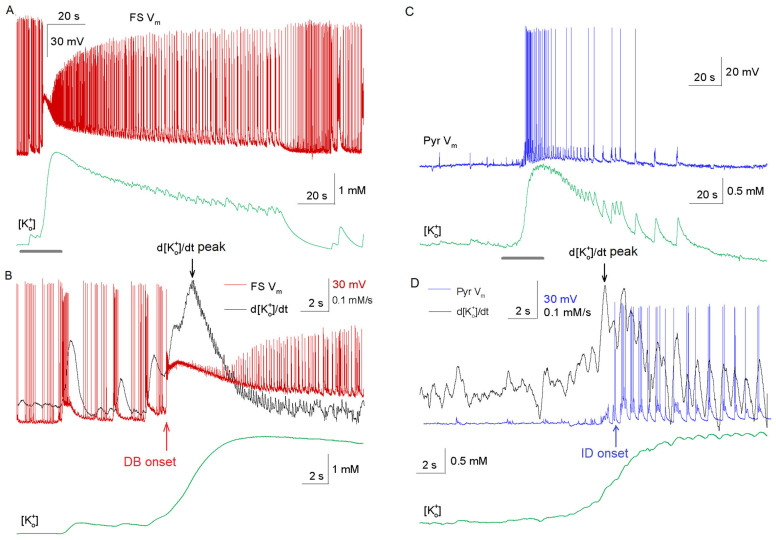 Figure 5
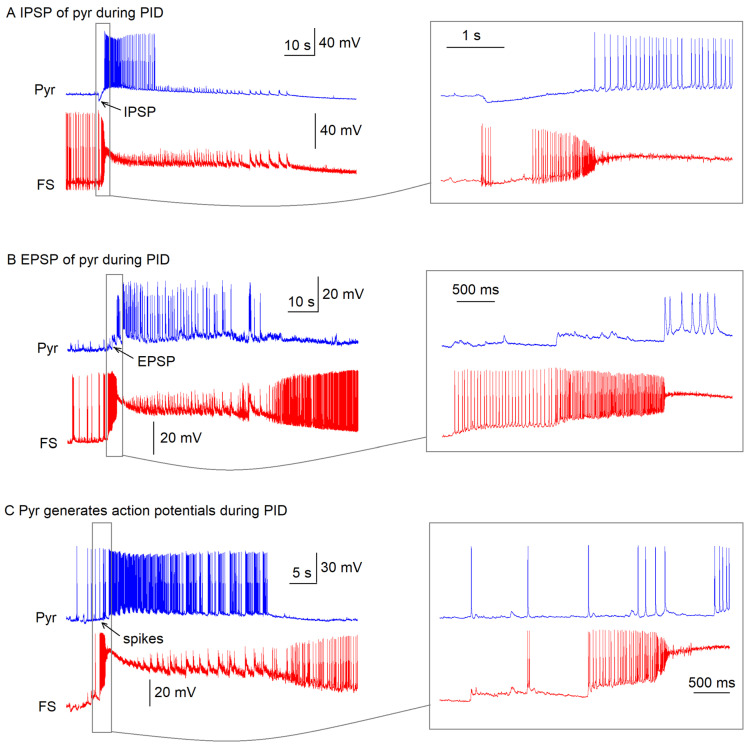 Figure 6
Peer Reviews
No public reviews on file for this paper yet. If you reviewed it on a platform where reviews are public (OpenReview, ICLR, NeurIPS, ICML), you can paste yours below so the community can read it here.
Videos
No videos yet. Explain this paper in a talk, walkthrough, or lecture? Add one.
Taxonomy
TopicsNeuroscience and Neuropharmacology Research · Neural dynamics and brain function · Neuroscience and Neural Engineering