The GnRH Agonist Triptorelin Causes Reversible, Focal, and Partial Testicular Atrophy in Rats, Maintaining Sperm Production
Alberto Marcos, Maria Cruz Rodríguez del Cerro, Rosa María Fernández, Eduardo Pásaro, Nuria Arias-Ramos, Pilar López-Larrubia, Pilar González-Peramato, Antonio Guillamon, Maria P. De Miguel

TL;DR
Triptorelin, a hormone treatment, causes temporary testicular shrinkage in rats but does not fully stop sperm production, suggesting it could be safe for transgender girls undergoing gender transition.
Contribution
The study introduces a rat model to evaluate the effects of triptorelin on testicular maturation and fertility during pubertal delay.
Findings
Triptorelin treatment reduced testosterone levels in rats, indicating delayed puberty.
Testicular atrophy was focal and partial, with most seminiferous tubules maintaining spermatogenesis.
Sperm production was preserved in all treated rats, ensuring fertility.
Abstract
We aim to provide a translational model to investigate the reproductive consequences of pubertal delay using the GnRH agonist triptorelin in transgender girls, tested in particular on testicular maturation in peripubertal rats. A total of 30 Sprague Dawley rats were utilized, with 10 subjects assigned to each of three groups from day P30 postpartum (prepubertal) until day P95 (postpubertal), mimicking treatment timing in patients. Rats received triptorelin at three time points (P30, P50, and P71), or only at P30 and P50. Control rats were injected with vehicle. Plasma testosterone levels were determined using MRM analysis. Testes and epididymides were examined histologically. There were significantly lower testosterone levels at postnatal day 48 in treated rats, indicating delayed puberty, with further reductions by day 69. By day 93, testosterone levels had recovered in rats given…
Genes, proteins, chemicals, diseases, species, mutations and cell lines named across the full text — each resolved to its canonical identifier and authoritative record.
Click any figure to enlarge with its caption.
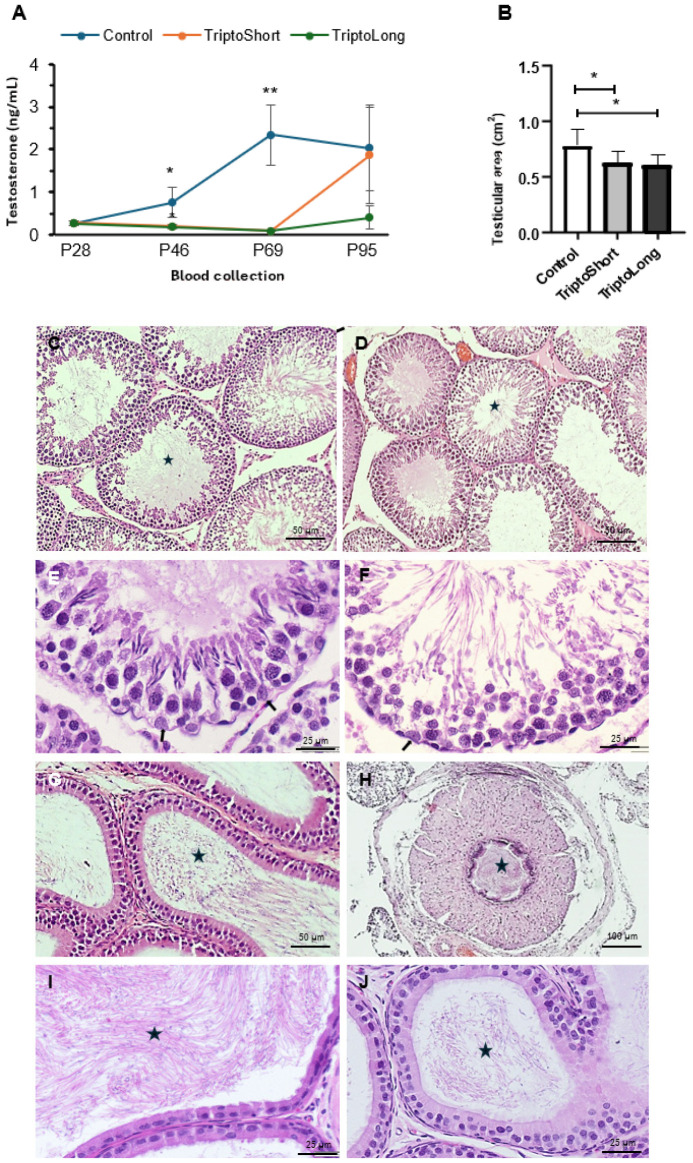 Figure 1
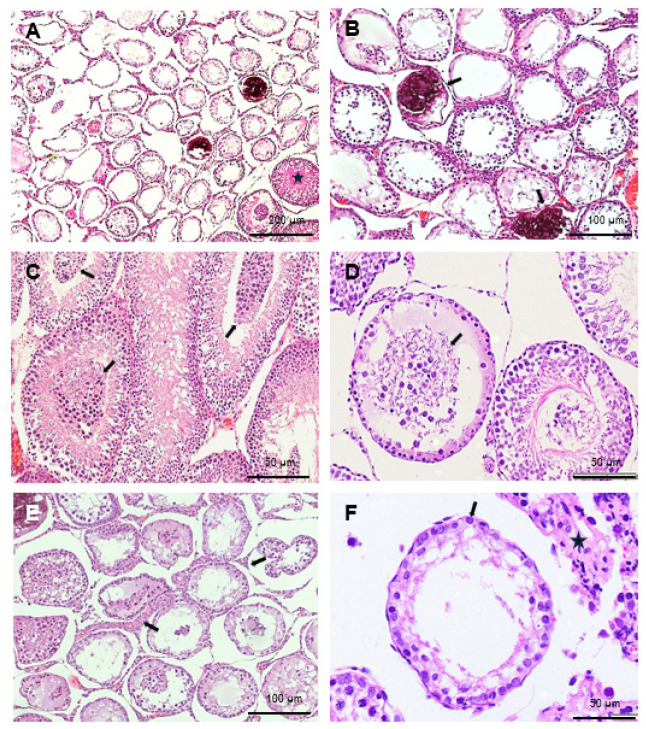 Figure 2
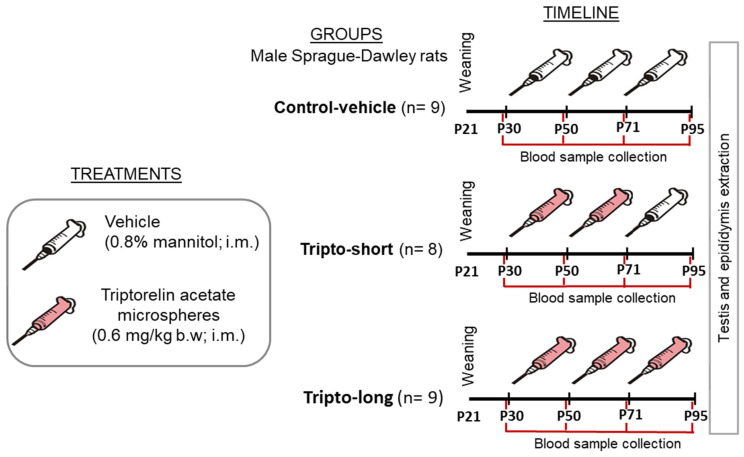 Figure 3
Peer Reviews
No public reviews on file for this paper yet. If you reviewed it on a platform where reviews are public (OpenReview, ICLR, NeurIPS, ICML), you can paste yours below so the community can read it here.
Videos
No videos yet. Explain this paper in a talk, walkthrough, or lecture? Add one.
Taxonomy
TopicsHypothalamic control of reproductive hormones · Sexual Differentiation and Disorders · Genetic and Clinical Aspects of Sex Determination and Chromosomal Abnormalities