Quantitative Flow Ratio-Guided vs. Angiography-Guided Percutaneous Coronary Intervention: A Systematic Review and Meta-Analysis of One-Year Clinical Outcomes
Viet Nghi Tran, Amreen Dhindsa, Kuchalambal Agadi, Hoang Nhat Pham, Hong Hieu Truong, Chau Doan Nguyen, Hanad Bashir, Huan Dat Pham, Thanh Vien Truong, Phillip Tran, Thach Nguyen

TL;DR
This study compares the one-year outcomes of heart procedures guided by a new technique called QFR versus traditional angiography, finding similar results but highlighting the need for more research.
Contribution
The study provides a systematic review and meta-analysis comparing QFR-guided and angiography-guided PCI outcomes, emphasizing the need for further high-quality trials.
Findings
QFR-guided PCI showed numerically lower but not statistically significant risks of MACEs, revascularization, and rehospitalization compared to angiography-guided PCI.
High heterogeneity was observed in MACEs and revascularization outcomes, suggesting variability across studies.
Low risk of bias was found in most studies, but larger trials are needed to confirm results.
Abstract
Background: Quantitative Flow Ratio (QFR) is a novel, wire-free, and hyperemia-free physiological assessment for guiding Percutaneous Coronary Intervention (PCI), which may offer advantages over traditional angiography-guided PCI. This systematic review with meta-analysis compares clinical outcomes after one year in patients who underwent QFR-guided versus angiography-guided PCI. Methods: This study was conducted following the Preferred Reporting Items for Systematic Reviews and Meta-Analyses (PRISMA) guidelines and was registered on 4 November 2024 in PROSPERO (ID: CRD42024609799). A systematic search was performed across multiple databases to identify clinical trials comparing QFR-guided and angiography-guided PCI. Random-effects models were used to assess one-year outcomes of major adverse cardiovascular events (MACEs), revascularization, and rehospitalization, with heterogeneity…
Genes, proteins, chemicals, diseases, species, mutations and cell lines named across the full text — each resolved to its canonical identifier and authoritative record.
Click any figure to enlarge with its caption.
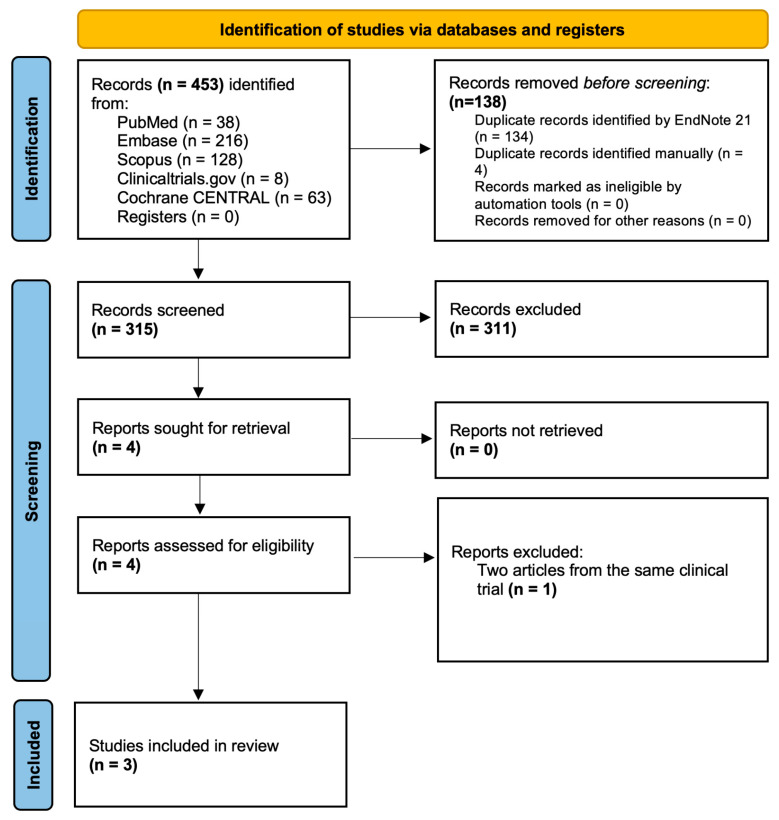 Figure 1
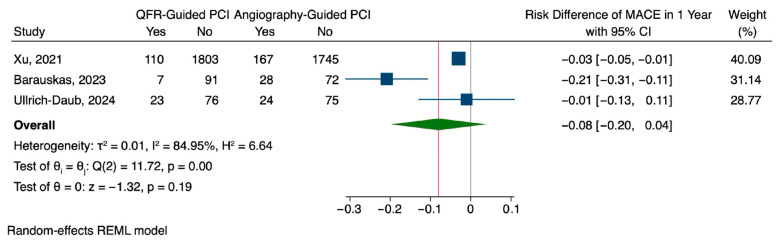 Figure 2
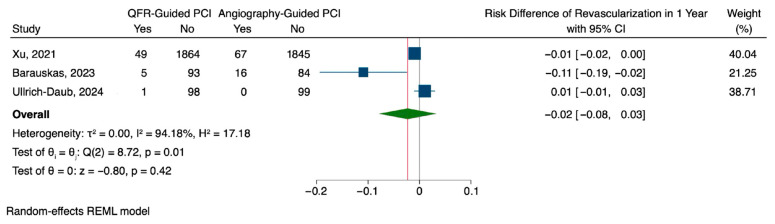 Figure 3
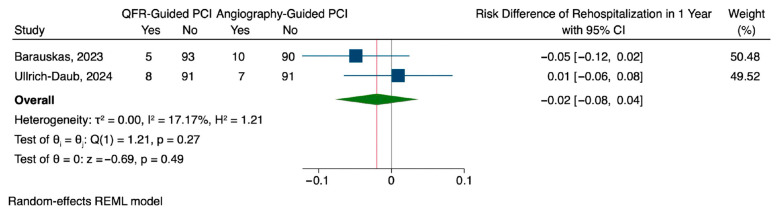 Figure 4
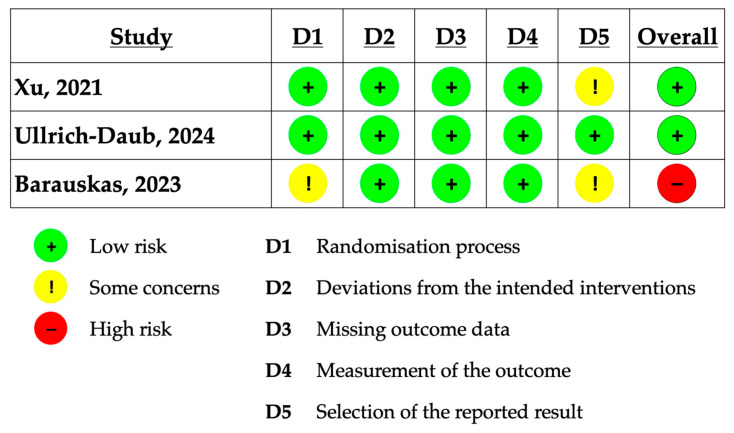 Figure 5
Peer Reviews
No public reviews on file for this paper yet. If you reviewed it on a platform where reviews are public (OpenReview, ICLR, NeurIPS, ICML), you can paste yours below so the community can read it here.
Videos
No videos yet. Explain this paper in a talk, walkthrough, or lecture? Add one.
Taxonomy
TopicsCoronary Interventions and Diagnostics · Acute Myocardial Infarction Research · Cardiac Imaging and Diagnostics