Inhibitory Effects of Vandetanib on Catecholamine Synthesis in Rat Pheochromocytoma PC12 Cells
Yoshihiko Itoh, Kenichi Inagaki, Tomohiro Terasaka, Eisaku Morimoto, Takahiro Ishii, Kimitomo Yamaoka, Satoshi Fujisawa, Jun Wada

TL;DR
This study shows that vandetanib, a drug targeting RET signaling, reduces catecholamine synthesis in rat pheochromocytoma cells.
Contribution
The study identifies RET-ERK and RET-AKT signaling as key pathways through which vandetanib inhibits catecholamine synthesis.
Findings
Vandetanib reduces dopamine and noradrenaline levels in PC12 cells in a concentration-dependent manner.
RET signaling suppression by vandetanib leads to decreased catecholamine synthesis.
Inhibition of ERK and AKT pathways by vandetanib contributes to reduced catecholamine levels.
Abstract
Gain-of-function gene alterations in rearranged during transfection (RET), a receptor tyrosine kinase, are observed in both sporadic and hereditary medullary thyroid cancers (MTCs) and pheochromocytomas and paragangliomas (PPGLs). Several tyrosine kinase inhibitors (TKIs) that target RET have been proven to be effective on MTCs and PCCs. Recently, TKIs, namely, sunitinib and selpercatinib, which were clinically used to target PPGLs, have been reported to decrease catecholamine levels without reducing tumor size. Our clinical case of metastatic medullary thyroid cancer, which is associated with RET mutations undergoing treatment with vandetanib, also suggests that vandetanib can decrease catecholamine levels. Therefore, we investigated the effect of vandetanib, a representative multi-targeted TKI for RET-related MTC, on cell proliferation and catecholamine synthesis in rat…
Genes, proteins, chemicals, diseases, species, mutations and cell lines named across the full text — each resolved to its canonical identifier and authoritative record.
Click any figure to enlarge with its caption.
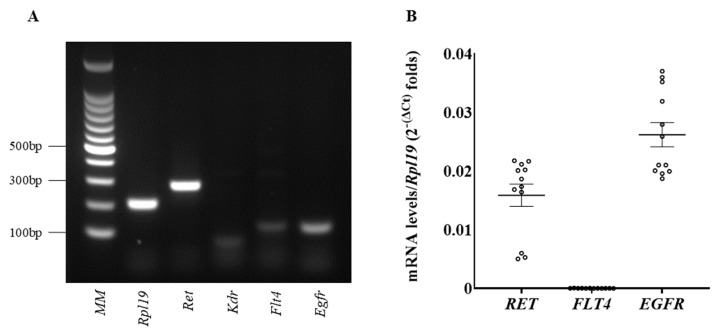 Figure 1
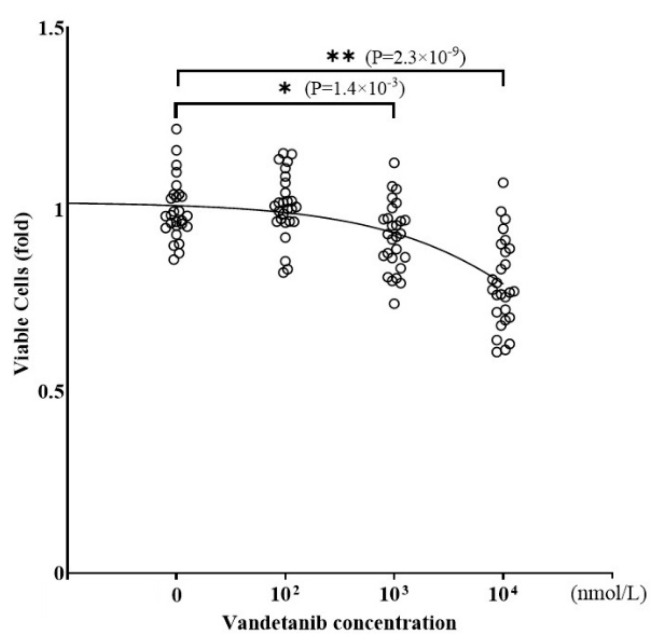 Figure 2
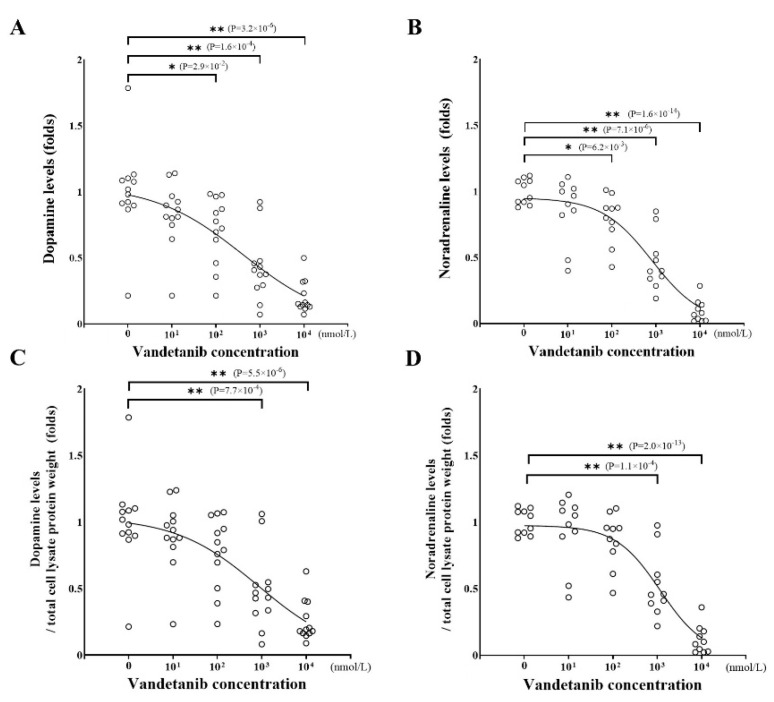 Figure 3
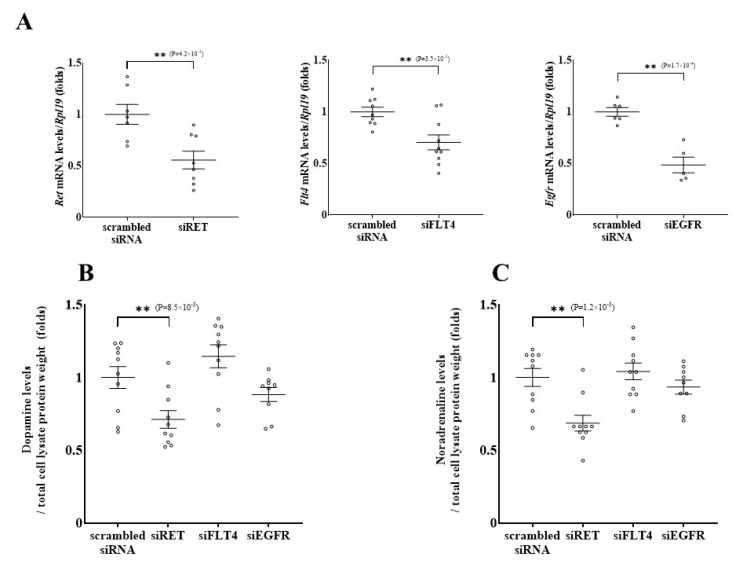 Figure 4
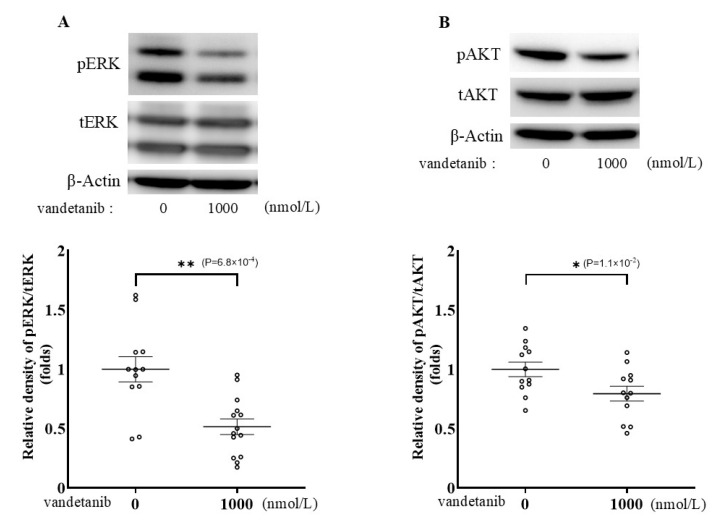 Figure 5
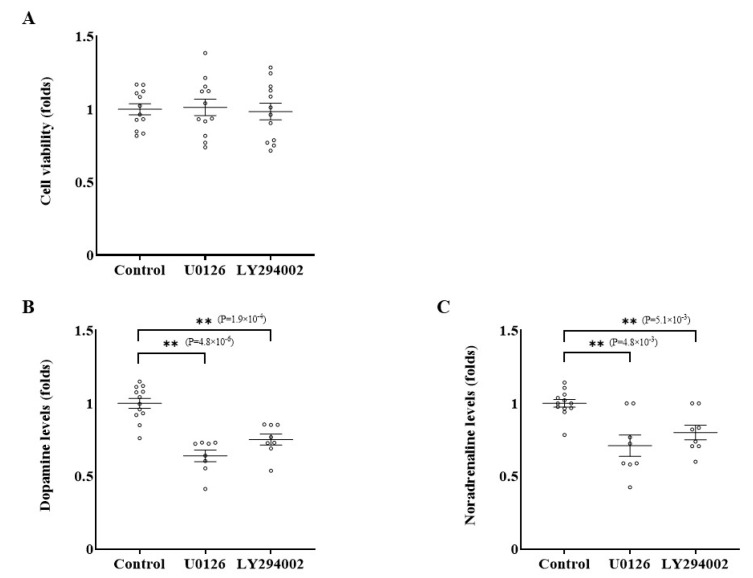 Figure 6
Peer Reviews
No public reviews on file for this paper yet. If you reviewed it on a platform where reviews are public (OpenReview, ICLR, NeurIPS, ICML), you can paste yours below so the community can read it here.
Videos
No videos yet. Explain this paper in a talk, walkthrough, or lecture? Add one.
Taxonomy
TopicsHormonal Regulation and Hypertension · Neuroblastoma Research and Treatments · Cancer, Hypoxia, and Metabolism