Urinary Titin as a Non-Invasive Biomarker for Sarcopenia Sex Differences in Unresectable Digestive Malignancies: A Retrospective Cohort Study
Shiho Kaneko, Kazuaki Harada, Masatsugu Ohara, Shintaro Sawaguchi, Tatsuya Yokoyama, Koichi Ishida, Yasuyuki Kawamoto, Satoshi Yuki, Yoshito Komatsu, Naoya Sakamoto

TL;DR
This study shows that urinary titin can help diagnose sarcopenia in cancer patients, especially in men with unresectable digestive cancers.
Contribution
The study demonstrates urinary titin as a non-invasive, sex-specific biomarker for sarcopenia in unresectable digestive malignancies.
Findings
Urinary titin levels were significantly higher in male sarcopenia patients compared to non-sarcopenic males.
Urinary titin was an independent predictor of sarcopenia in males with an odds ratio of 13.4.
The diagnostic performance of urinary titin had a fair AUC of 0.729 with a cutoff of 3.676 pmol/mgCr.
Abstract
The prognosis of sarcopenia is poor in cancer patients. Recently, urinary titin, a biomarker of muscle damage, has been suggested as a potential marker for sarcopenia. However, its utility in patients with unresectable digestive malignancies remains unclear. In addition, sex differences have been reported in the association between sarcopenia and urinary titin levels. This study aimed to evaluate urinary titin as a diagnostic marker for unresectable digestive malignancies, focusing on sex differences. This retrospective study enrolled 96 patients (58 males, 38 females; median age 70), and urinary titin was evaluated as a diagnostic biomarker in relation to clinical factors (e.g., age, Eastern Cooperative Oncology Group performance status [ECOG PS], albumin [Alb]) and muscle indicators (e.g., psoas muscle index [PMI], handgrip strength). In male patients, urinary titin levels were…
Genes, proteins, chemicals, diseases, species, mutations and cell lines named across the full text — each resolved to its canonical identifier and authoritative record.
Click any figure to enlarge with its caption.
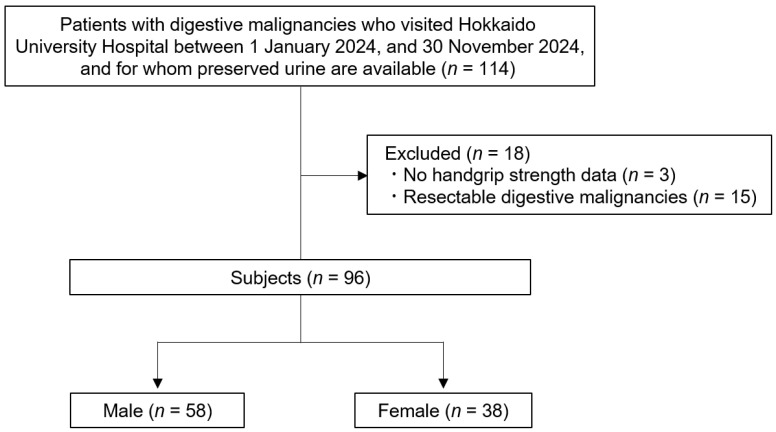 Figure 1
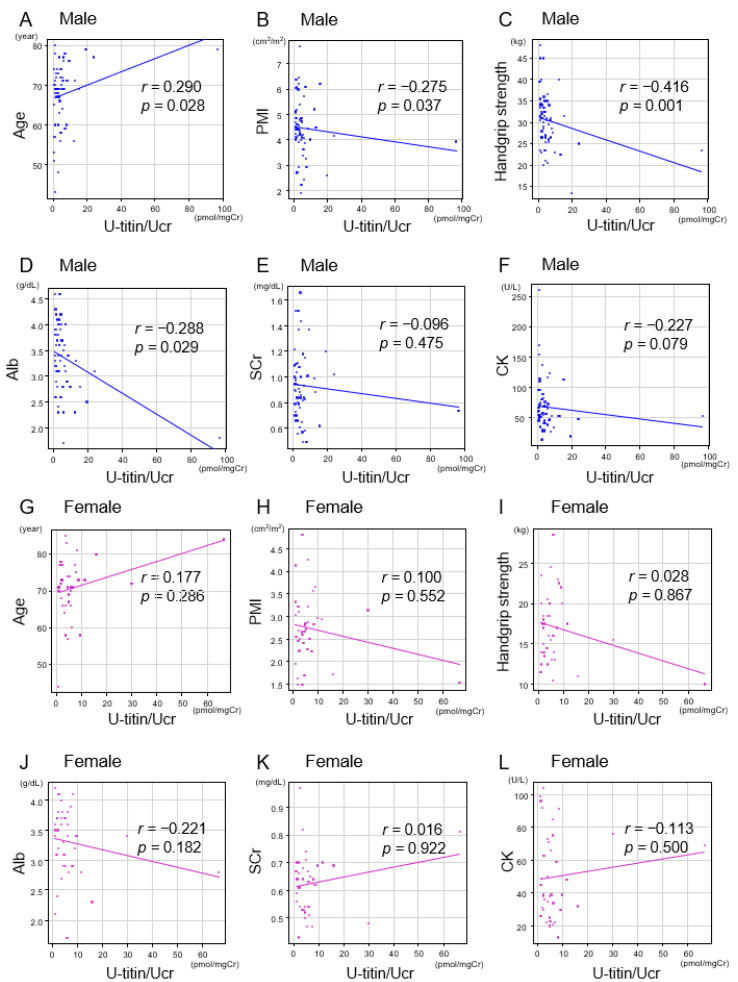 Figure 2
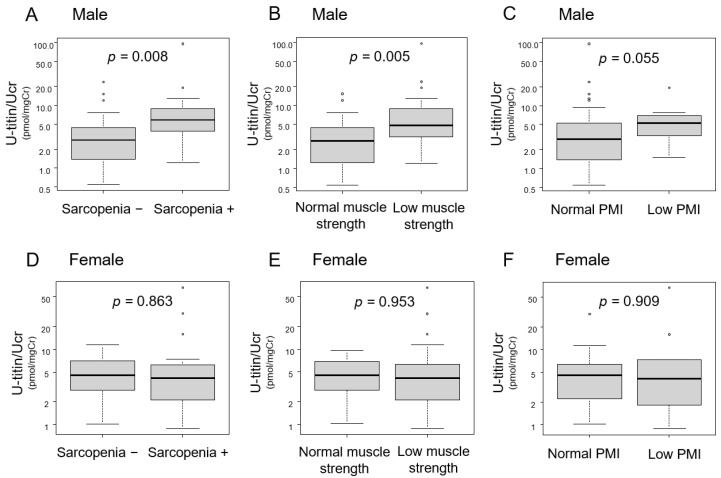 Figure 3
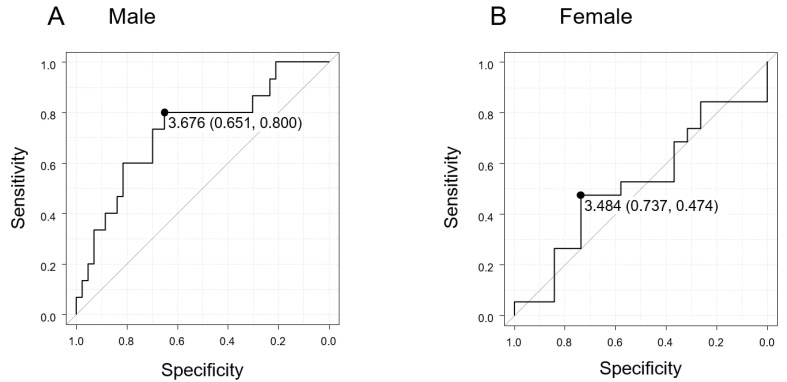 Figure 4
Peer Reviews
No public reviews on file for this paper yet. If you reviewed it on a platform where reviews are public (OpenReview, ICLR, NeurIPS, ICML), you can paste yours below so the community can read it here.
Videos
No videos yet. Explain this paper in a talk, walkthrough, or lecture? Add one.
Taxonomy
TopicsNutrition and Health in Aging · Body Composition Measurement Techniques · Muscle Physiology and Disorders