The Potential of Normobaric Oxygen Therapy to Enhance Erythropoiesis, Reduce Oxidative Stress, and Modulate Immune Function in Colorectal Cancer Patients Undergoing Chemotherapy: Study Protocol for a Prospective, Randomized, Double-Blind, Placebo-Controlled Trial (NBO-ONCO)
Jacek Polański, Beata Jankowska-Polańska, Robert Dymarek, Olga Zajączkowska, Sebastian Makuch, Beata Freier, Dorota Kamińska, Edyta Pawlak, Adam Busławski, Jerzy Zwoździak

TL;DR
This study explores whether breathing higher oxygen levels can help colorectal cancer patients during chemotherapy by improving blood cell production, reducing stress, and boosting immunity.
Contribution
The study introduces a novel clinical trial protocol to evaluate normobaric oxygen therapy's effects on erythropoiesis, oxidative stress, and immune function in colorectal cancer patients.
Findings
Normobaric oxygen therapy may enhance erythropoiesis through increased EPO and HIF-1α levels.
NBO could reduce oxidative stress and improve psychological well-being in CRC patients.
The therapy may modulate immune function by altering cytokine profiles.
Abstract
Colorectal cancer is a major global health challenge, and patients undergoing chemotherapy often experience anemia, immune dysfunction, and oxidative stress, which can negatively affect treatment outcomes and quality of life. A simple and non-invasive approach like normobaric oxygen therapy may help by boosting red blood cell production, reducing inflammation, and strengthening the immune system. This study aims to evaluate its effectiveness in patients with colorectal cancer receiving chemotherapy, assessing its impact on erythropoiesis, immune function, oxidative stress, and psychological well-being. By exploring this potential therapy, we hope to uncover a safer and more accessible way to support cancer patients during treatment with chemotherapy. If proven beneficial, normobaric oxygen therapy could be integrated into oncology treatment protocols, enhancing patient outcomes and…
Genes, proteins, chemicals, diseases, species, mutations and cell lines named across the full text — each resolved to its canonical identifier and authoritative record.
Click any figure to enlarge with its caption.
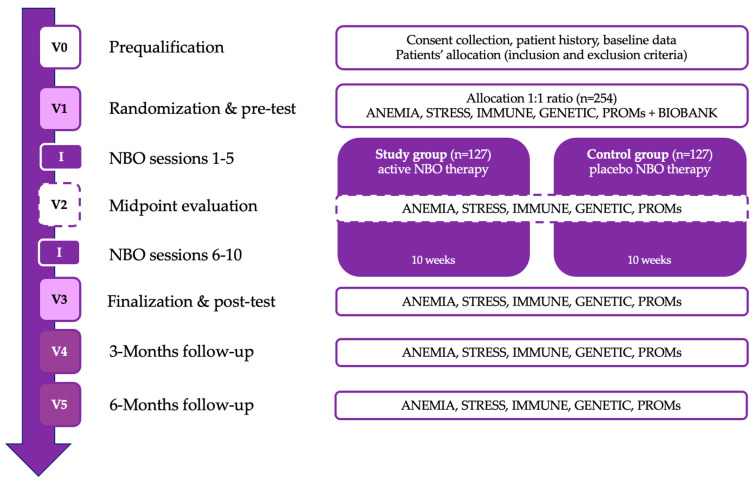 Figure 1
Peer Reviews
No public reviews on file for this paper yet. If you reviewed it on a platform where reviews are public (OpenReview, ICLR, NeurIPS, ICML), you can paste yours below so the community can read it here.
Videos
No videos yet. Explain this paper in a talk, walkthrough, or lecture? Add one.
Taxonomy
TopicsErythropoietin and Anemia Treatment · Cancer survivorship and care · Cancer-related cognitive impairment studies