A Proton Magnetic Resonance Spectroscopy (1H MRS) Pilot Study Revealing Altered Glutamatergic and Gamma-Aminobutyric Acid (GABA)ergic Neurotransmission in Social Anxiety Disorder (SAD)
Sonja Elsaid, Ruoyu Wang, Stefan Kloiber, Kimberly L. Desmond, Bernard Le Foll

TL;DR
This study uses brain scans to find differences in brain chemicals related to anxiety in people with social anxiety disorder.
Contribution
The study identifies altered GABA and glutamate levels in specific brain regions in social anxiety disorder using 1H MRS.
Findings
Increased GABA+ levels in the dorsolateral prefrontal cortex in social anxiety disorder participants.
Higher Glx levels in the insula of individuals with social anxiety disorder compared to controls.
Abstract
Social anxiety disorder (SAD) is characterized by fear and avoidance of social situations. Considering the reduced availability of conventional therapies, we aimed to improve our understanding of the biological mechanisms in SAD by evaluating gamma-aminobutyric acid (GABA) and other neurometabolites (including glutamate + glutamine/glutamix (Glx), N-acetyl aspartate (NAA), myo-inositol (mI), total choline (tCho), and total creatine (tCr) in the dorsomedial prefrontal cortex/anterior cingulate cortex (dmPFC/ACC), dorsolateral prefrontal cortex (dlPFC), and the insula). In this pilot study, we recruited 26 (age: 25.3 ± 5.0 years; 61.5% female) individuals with SAD and 26 (age: 25.1 ± 4.4 years; 61.5% female) sex-age-matched controls. Using proton magnetic resonance spectroscopy, we found that compared to the controls, GABA+ macromolecular signal (GABA+) in dlPFC (t = 2.63; p = 0.012) and…
Genes, proteins, chemicals, diseases, species, mutations and cell lines named across the full text — each resolved to its canonical identifier and authoritative record.
Click any figure to enlarge with its caption.
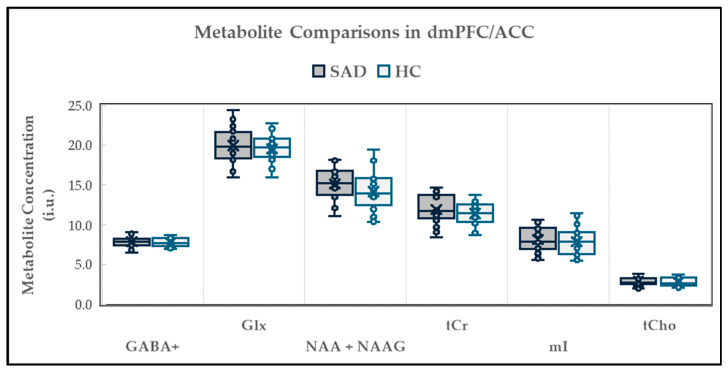 Figure 1
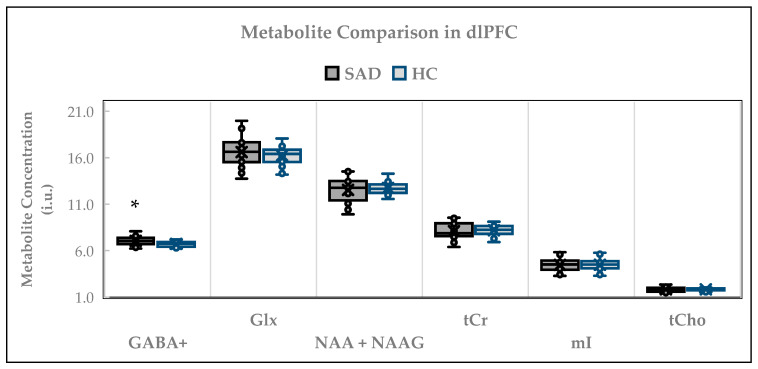 Figure 2
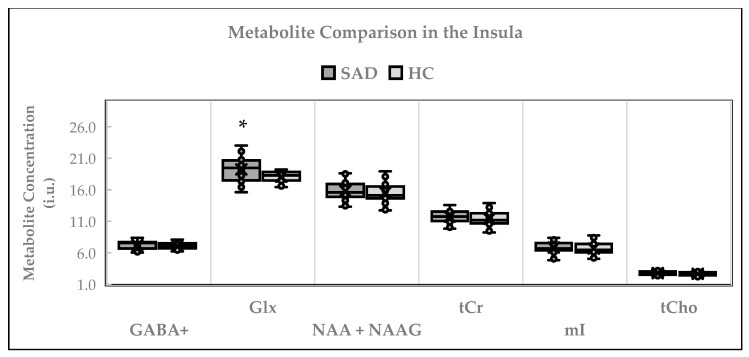 Figure 3
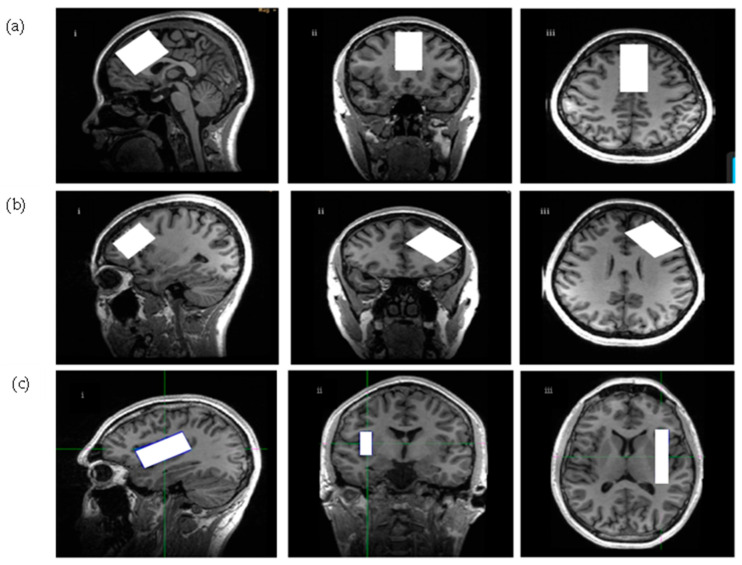 Figure 4
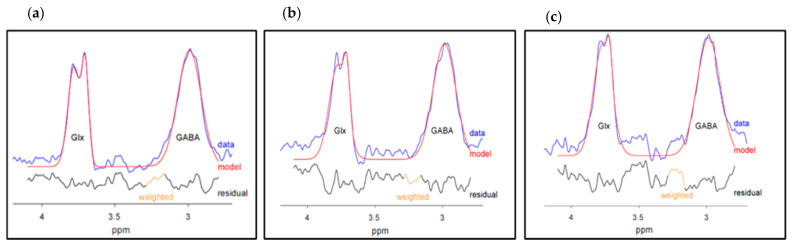 Figure 5
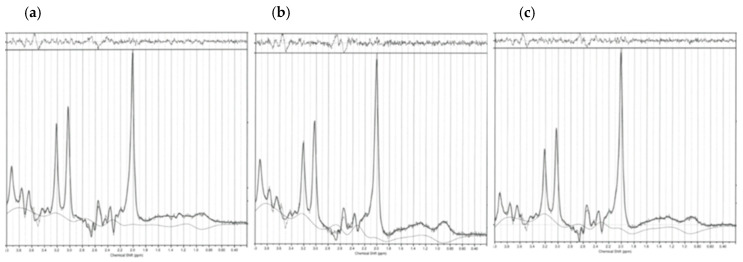 Figure 6
Peer Reviews
No public reviews on file for this paper yet. If you reviewed it on a platform where reviews are public (OpenReview, ICLR, NeurIPS, ICML), you can paste yours below so the community can read it here.
Videos
No videos yet. Explain this paper in a talk, walkthrough, or lecture? Add one.
Taxonomy
TopicsAdvanced NMR Techniques and Applications · Atomic and Subatomic Physics Research · Electron Spin Resonance Studies