Integrated Behavioral and Proteomic Characterization of MPP+-Induced Early Neurodegeneration and Parkinsonism in Zebrafish Larvae
Adolfo Luis Almeida Maleski, Felipe Assumpção da Cunha e Silva, Marcela Bermudez Echeverry, Carlos Alberto-Silva

TL;DR
This study uses zebrafish larvae to model early Parkinson's-like symptoms and identifies key molecular changes linked to neurodegeneration.
Contribution
The study introduces an integrated behavioral and proteomic approach to model early Parkinsonism in zebrafish larvae.
Findings
MPP+ exposure in zebrafish larvae caused Parkinsonian-like motor dysfunction, including reduced movement and light-evoked responses.
Proteomic analysis identified 40 differentially expressed proteins linked to mitochondrial dysfunction, oxidative stress, and synaptic impairment.
Key Parkinsonism-related proteins like DJ-1 and SDHA showed coordinated dysregulation, suggesting early-stage neurodegenerative pathways.
Abstract
Zebrafish (Danio rerio) combine accessible behavioral phenotypes with conserved neurochemical pathways and molecular features of vertebrate brain function, positioning them as a powerful model for investigating early neurodegenerative processes and screening neuroprotective strategies. In this context, integrated behavioral and proteomic analyses provide valuable insights into the initial pathophysiological events shared by conditions such as Parkinson’s disease and related disorders—including mitochondrial dysfunction, oxidative stress, and synaptic impairment—which emerge before overt neuronal loss and offer a crucial window to understand disease progression and evaluate therapeutic candidates prior to irreversible damage. To investigate this early window of dysfunction, zebrafish larvae were exposed to 500 μM 1-methyl-4-phenylpyridinium (MPP+) from 1 to 5 days post-fertilization and…
Genes, proteins, chemicals, diseases, species, mutations and cell lines named across the full text — each resolved to its canonical identifier and authoritative record.
Click any figure to enlarge with its caption.
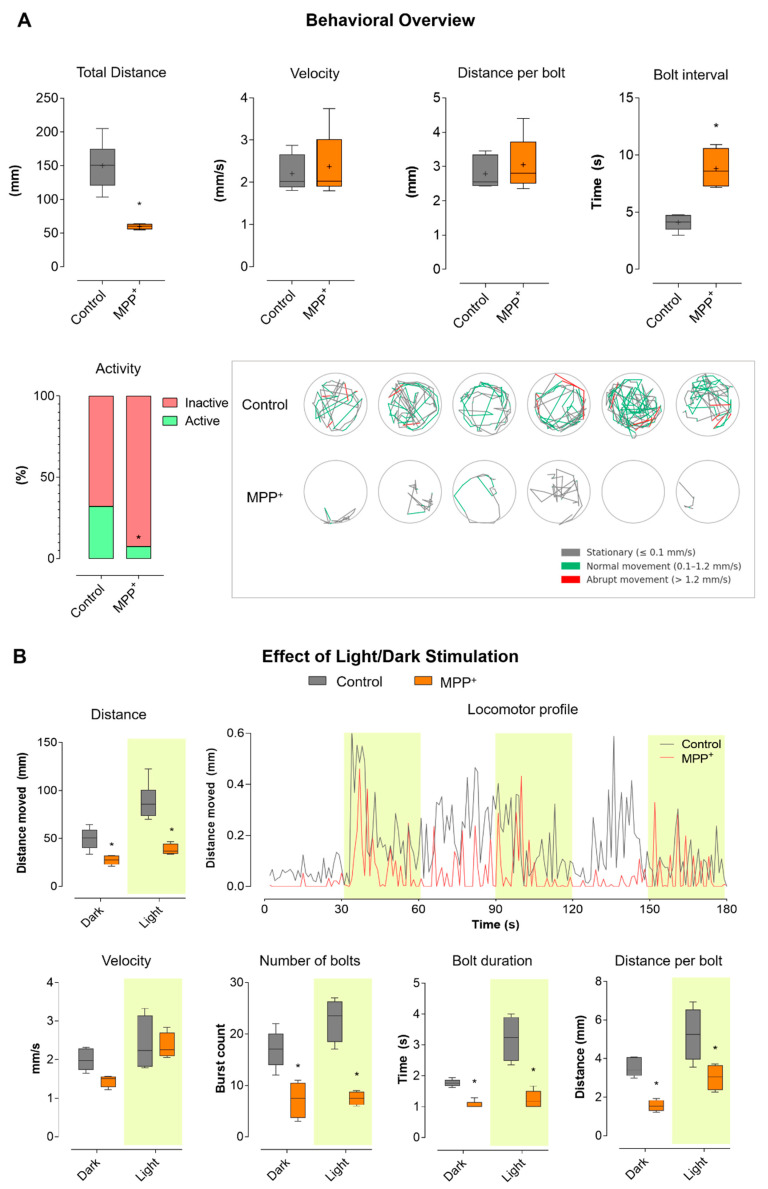 Figure 1
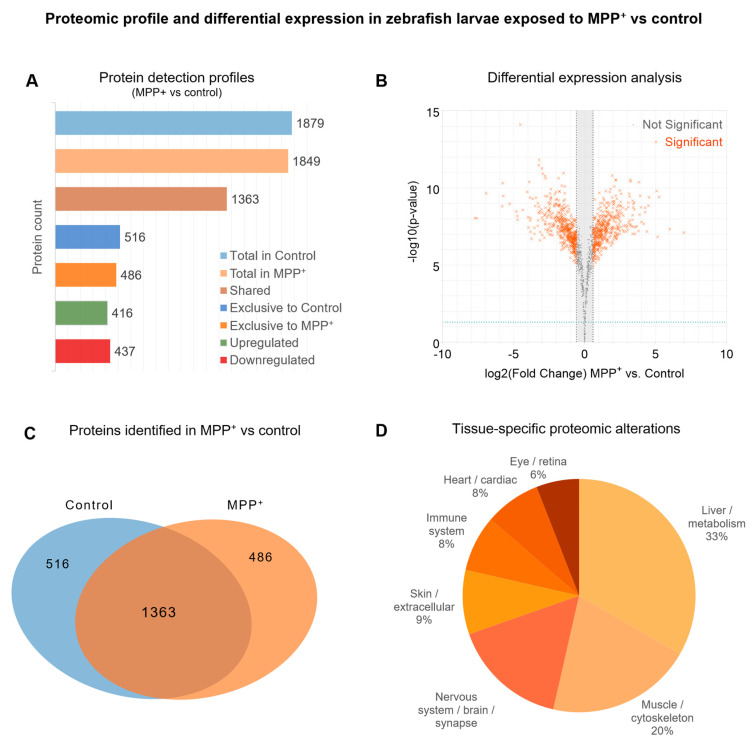 Figure 2
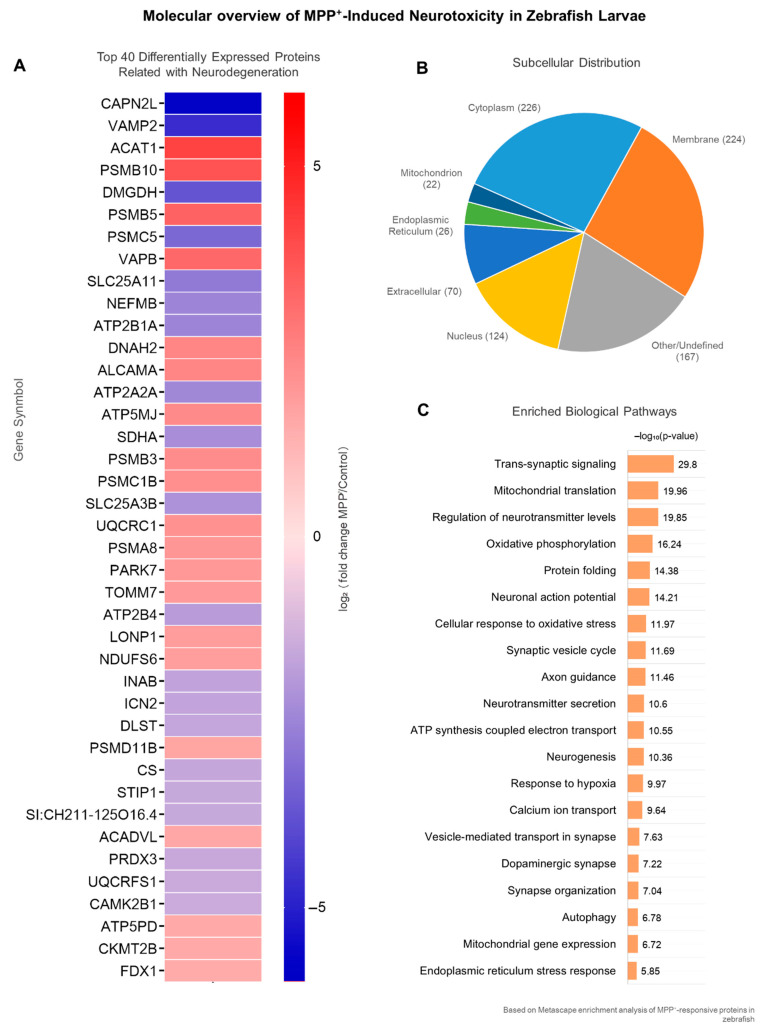 Figure 3
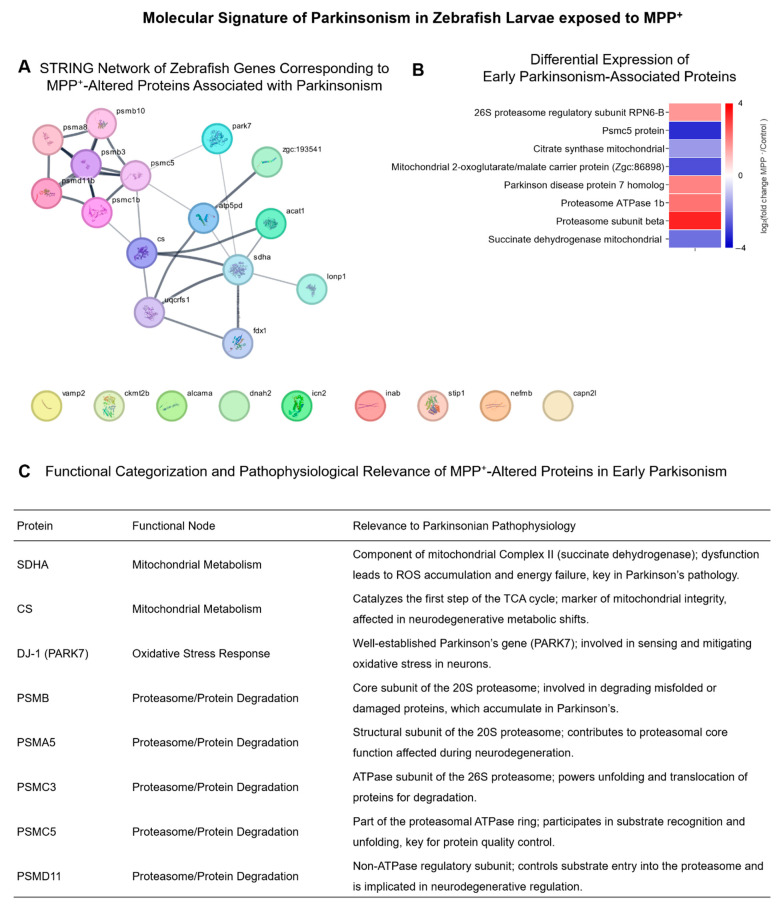 Figure 4
Peer Reviews
No public reviews on file for this paper yet. If you reviewed it on a platform where reviews are public (OpenReview, ICLR, NeurIPS, ICML), you can paste yours below so the community can read it here.
Videos
No videos yet. Explain this paper in a talk, walkthrough, or lecture? Add one.
Taxonomy
TopicsNeuroinflammation and Neurodegeneration Mechanisms · Zebrafish Biomedical Research Applications · Parkinson's Disease Mechanisms and Treatments