Virulence Factors and Molecular Identification of Candida Species Causing Candidemia in Honduras
José Fernando Chávez, Bryan Ortiz, Roque López, Carlos Muñoz, Kateryn Aguilar, Isis Laínez-Arteaga, Celeste Galindo, Luis Rivera, Manuel G. Ballesteros-Monrreal, Kathy Montes, Mauricio Hernández, Asly Villeda Barahona, Stephanie Hereira-Pacheco, Gustavo Fontecha

TL;DR
This study identifies Candida species causing blood infections in Honduras and highlights the importance of accurate molecular diagnosis due to high virulence and antifungal resistance.
Contribution
The study provides the first detailed molecular and virulence characterization of Candida species causing candidemia in Honduras.
Findings
C. albicans and C. tropicalis were the most common species, each accounting for 30% of isolates.
Phenotypic methods misidentified 13.8% of isolates, emphasizing the need for molecular diagnostics.
C. tropicalis showed the strongest biofilm formation, while C. albicans had the highest phospholipase activity.
Abstract
Invasive fungal infections (IFIs), primarily caused by Candida species, represent a significant global public health concern due to their high mortality rates and growing antifungal resistance. In Honduras, data on their epidemiology remains scarce. This study aimed to characterize Candida species associated with candidemia and assess key virulence factors. A total of 80 clinical isolates were collected from four hospitals in Honduras’s major cities, Tegucigalpa and San Pedro Sula. Identification was performed using both phenotypic and molecular methods. Hemolytic activity, phospholipase and protease production, and biofilm formation were evaluated. C. albicans and C. tropicalis were the most prevalent species (30% each), followed by C. parapsilosis (27.5%). Phenotypic methods misidentified 13.8% of the isolates. Most strains (96.3%) exhibited strong hemolytic activity. C. albicans…
Genes, proteins, chemicals, diseases, species, mutations and cell lines named across the full text — each resolved to its canonical identifier and authoritative record.
Click any figure to enlarge with its caption.
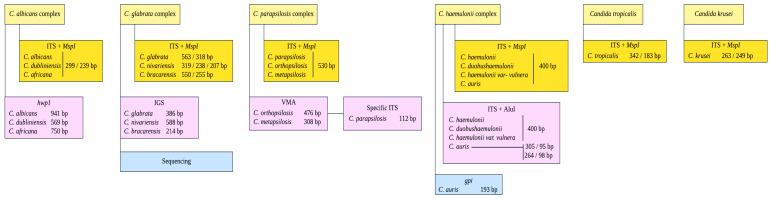 Figure 1
 Figure 2
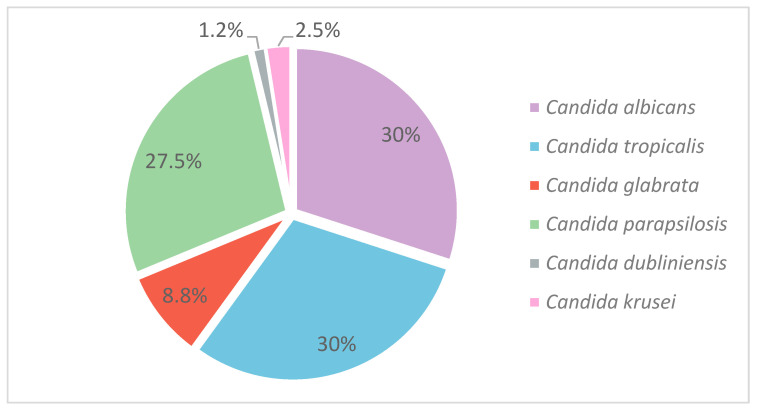 Figure 3
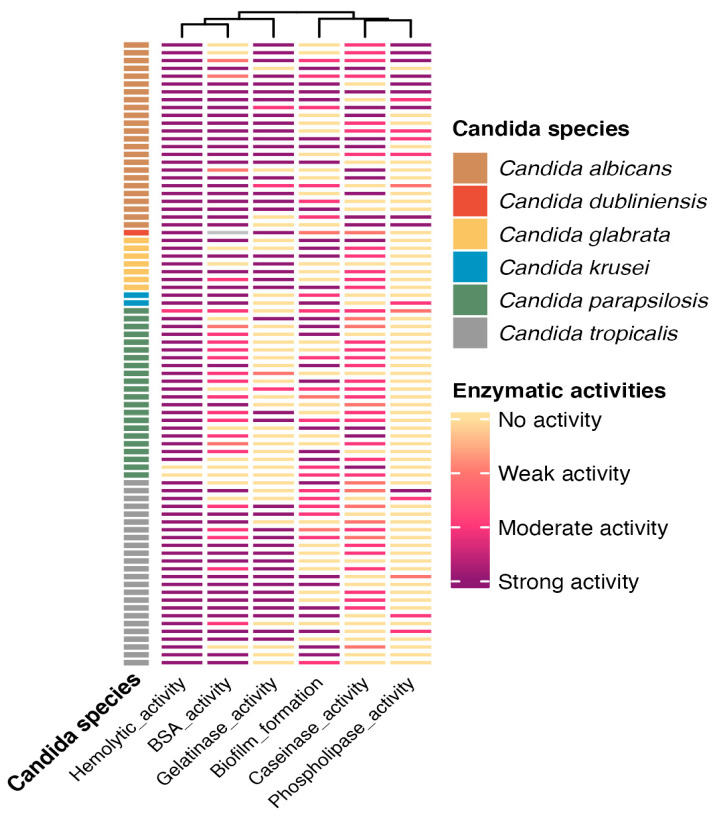 Figure 4
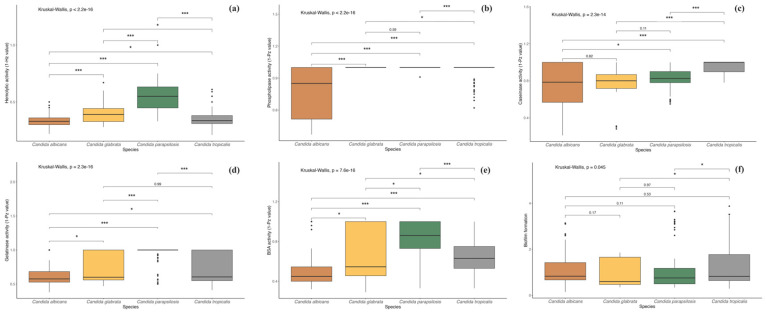 Figure 5
 Figure 6
Peer Reviews
No public reviews on file for this paper yet. If you reviewed it on a platform where reviews are public (OpenReview, ICLR, NeurIPS, ICML), you can paste yours below so the community can read it here.
Videos
No videos yet. Explain this paper in a talk, walkthrough, or lecture? Add one.
Taxonomy
TopicsAntifungal resistance and susceptibility · Fungal Infections and Studies · Oral microbiology and periodontitis research