MST-AI: Skin Color Estimation in Skin Cancer Datasets
Vahid Khalkhali, Hayan Lee, Joseph Nguyen, Sergio Zamora-Erazo, Camille Ragin, Abhishek Aphale, Alfonso Bellacosa, Ellis P. Monk, Saroj K. Biswas

TL;DR
This paper introduces MST-AI, a new method to estimate skin color in skin cancer datasets to improve AI diagnosis accuracy for diverse populations.
Contribution
The novel MST-AI method uses the Monk Skin Tone scale and advanced AI techniques to address skin color bias in skin cancer datasets.
Findings
MST-AI outperformed K-means clustering with Kendall’s Tau, Spearman’s Rho, and NDGC scores of 0.68, 0.69, and 1.00.
The method successfully modeled normal skin tones using a Variational Bayesian Gaussian Mixture Model.
MST-AI provides a foundation for unbiased AI models in early skin cancer diagnosis.
Abstract
The absence of skin color information in skin cancer datasets poses a significant challenge for accurate diagnosis using artificial intelligence models, particularly for non-white populations. In this paper, based on the Monk Skin Tone (MST) scale, which is less biased than the Fitzpatrick scale, we propose MST-AI, a novel method for detecting skin color in images of large datasets, such as the International Skin Imaging Collaboration (ISIC) archive. The approach includes automatic frame, lesion removal, and lesion segmentation using convolutional neural networks, and modeling normal skin tones with a Variational Bayesian Gaussian Mixture Model (VB-GMM). The distribution of skin color predictions was compared with MST scale probability distribution functions (PDFs) using the Kullback-Leibler Divergence (KLD) metric. Validation against manual annotations and comparison with K-means…
Genes, proteins, chemicals, diseases, species, mutations and cell lines named across the full text — each resolved to its canonical identifier and authoritative record.
Click any figure to enlarge with its caption.
 Figure 1
 Figure 2
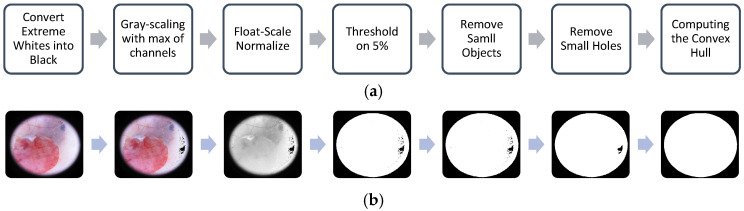 Figure 3
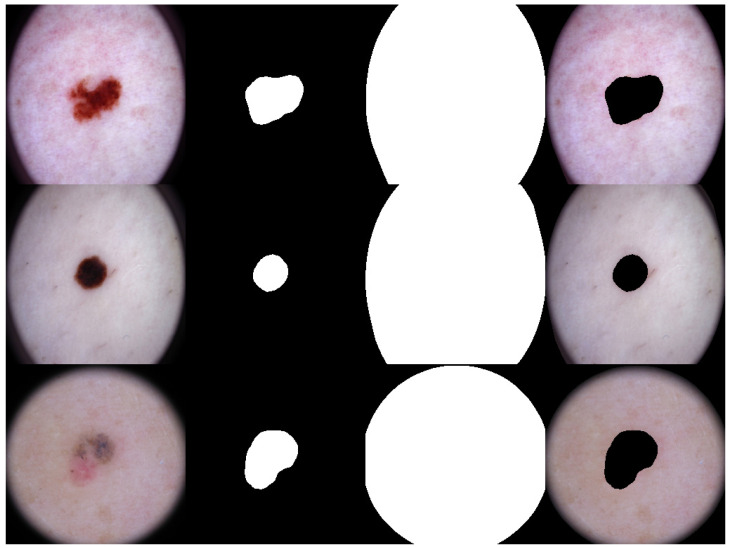 Figure 4
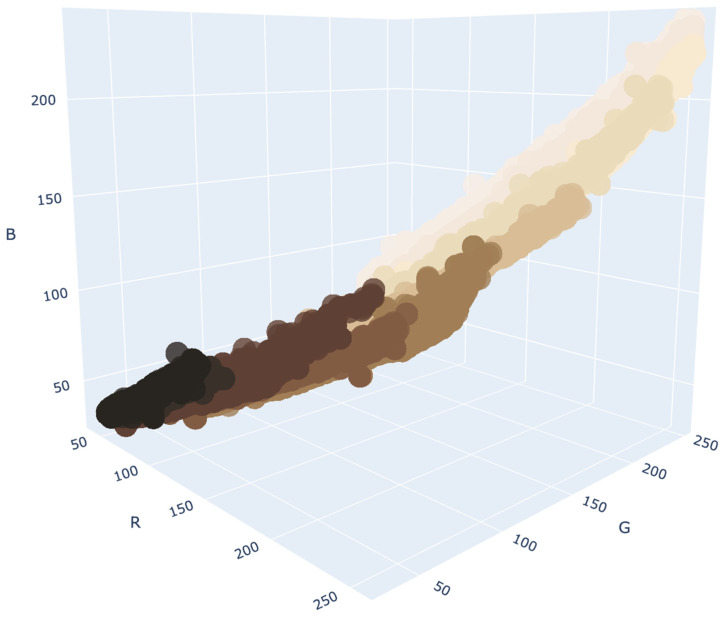 Figure 5
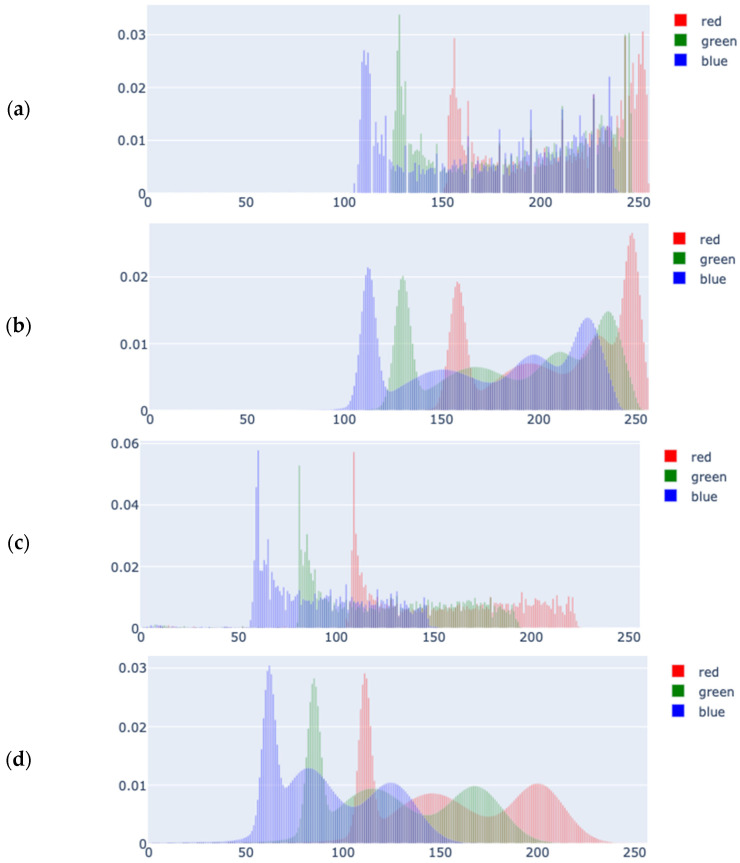 Figure 6
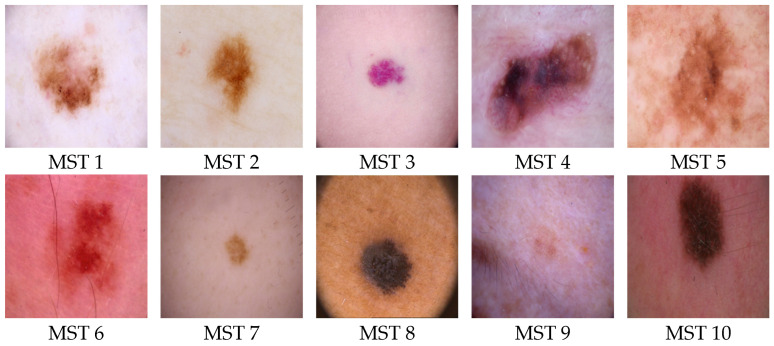 Figure 7
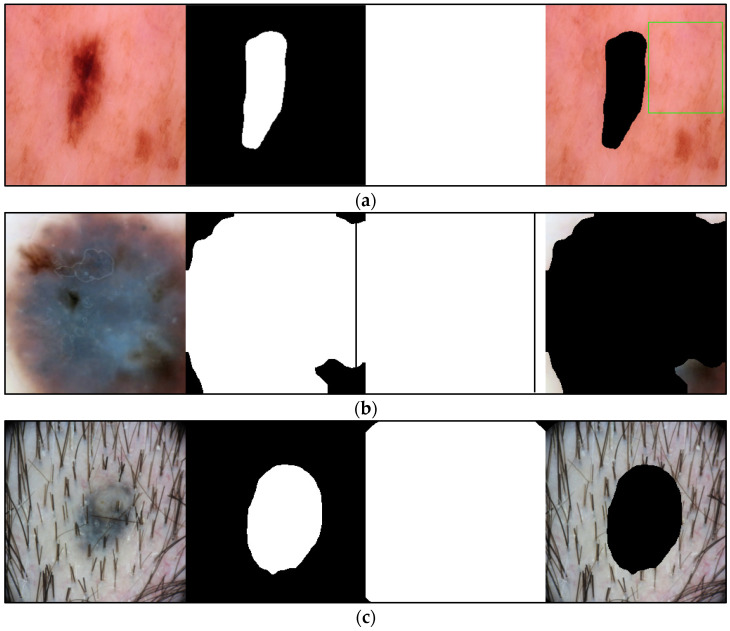 Figure 8
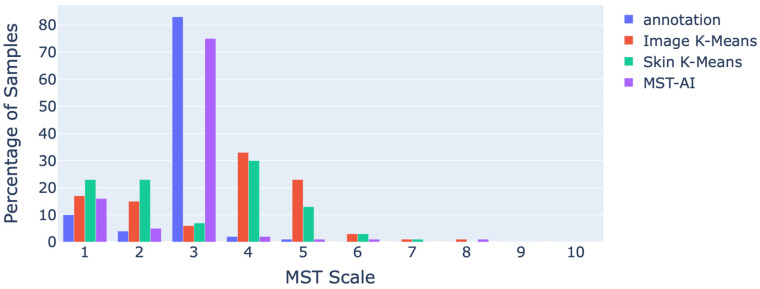 Figure 9
 Figure 10
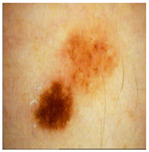 Figure 11
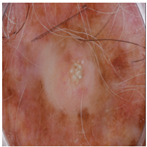 Figure 12
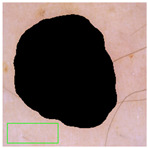 Figure 13
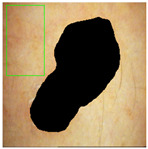 Figure 14
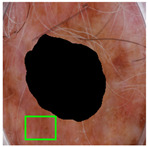 Figure 15
 Figure 16
 Figure 17
 Figure 18
 Figure 19
 Figure 20
 Figure 21
 Figure 22
 Figure 23
 Figure 24
 Figure 25
 Figure 26
 Figure 27
 Figure 28
 Figure 29
 Figure 30
 Figure 31
Peer Reviews
No public reviews on file for this paper yet. If you reviewed it on a platform where reviews are public (OpenReview, ICLR, NeurIPS, ICML), you can paste yours below so the community can read it here.
Videos
No videos yet. Explain this paper in a talk, walkthrough, or lecture? Add one.
Taxonomy
TopicsCutaneous Melanoma Detection and Management · Skin Protection and Aging · AI in cancer detection