Cardiac Magnetic Resonance Imaging and Arrhythmic Risk Stratification in Cardiomyopathies
Gianluca Di Bella, Antonino Micari, Roberto Licordari, Pasquale Crea, Luigi Colarusso, Maurizio Cusmà-Piccione, Rocco Donato, Tommaso D’Angelo, Giuseppe Dattilo, Antonino Recupero, Cesare de Gregorio, Antonio Micari, Giovanni Donato Aquaro

TL;DR
This review discusses how cardiac MRI helps assess arrhythmic risk in different types of cardiomyopathies beyond just measuring heart function.
Contribution
The paper highlights the specific role of late gadolinium enhancement in predicting sudden cardiac death across different cardiomyopathy types.
Findings
In dilated cardiomyopathy, LGE location predicts arrhythmic risk.
In hypertrophic cardiomyopathy, LGE extent (>15%) correlates with higher cardiac death risk.
In arrhythmogenic cardiomyopathy, LGE is more significant when combined with fat infiltration.
Abstract
Cardiac magnetic resonance imaging (CMRI) has become an indispensable tool in evaluating arrhythmic risk and guiding therapeutic decisions in patients with non-ischemic cardiomyopathies (NICMs), including dilated (DCM), hypertrophic (HCM), and arrhythmogenic cardiomyopathies (ACM). Both European and American guidelines have given an additive and different value of late gadolinium enhancement (LGE) in specific morpho-functional (hypertrophic, dilated, and arrhythmogenic) phenotypes. In particular, LGE plays a different weight in relation to different cardiomyopathies. In dilated cardiomyopathy, LGE is able to predict arrhythmic risk in relationship to the presence and localization (septal and/or ring like LGE). On the contrary, in HCM, LGE is related to increased risk of cardiac death according to the extent (LGE >15%), while in ACM, it has a greater role in the presence of fat…
Genes, proteins, chemicals, diseases, species, mutations and cell lines named across the full text — each resolved to its canonical identifier and authoritative record.
Click any figure to enlarge with its caption.
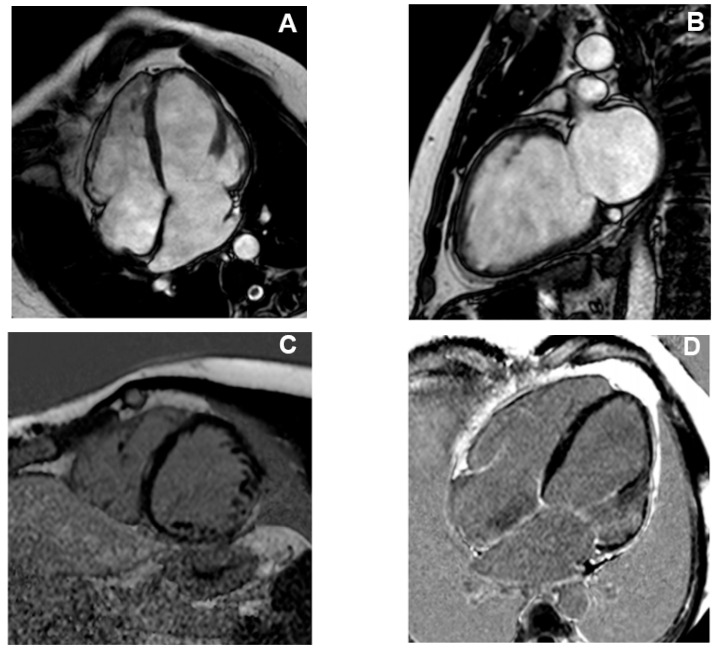 Figure 1
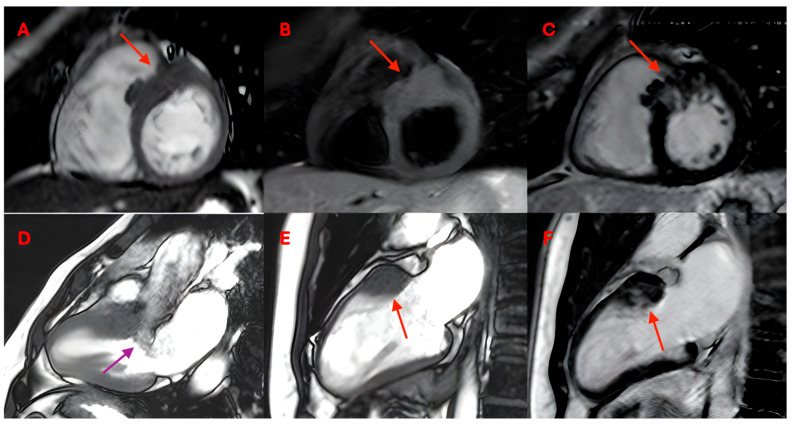 Figure 2
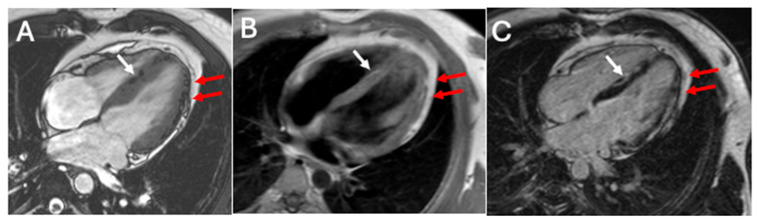 Figure 3
Peer Reviews
No public reviews on file for this paper yet. If you reviewed it on a platform where reviews are public (OpenReview, ICLR, NeurIPS, ICML), you can paste yours below so the community can read it here.
Videos
No videos yet. Explain this paper in a talk, walkthrough, or lecture? Add one.
Taxonomy
TopicsCardiovascular Effects of Exercise · Cardiomyopathy and Myosin Studies · Cardiac electrophysiology and arrhythmias