Crebanine Induces Cell Death and Alters the Mitotic Process in Renal Cell Carcinoma In Vitro
Hung-Jen Shih, Hsuan-Chih Hsu, Chien-Te Liu, Ya-Chuan Chang, Chia-Ying Yu, Wen-Wei Sung

TL;DR
Crebanine, a compound from the Stephania genus, shows promise in killing kidney cancer cells and disrupting their cell cycle, suggesting it could be a useful treatment for advanced renal cell carcinoma.
Contribution
This study is the first to investigate the antitumor effects of crebanine specifically in renal cell carcinoma.
Findings
Crebanine inhibited RCC cell proliferation and caused G1-phase cell-cycle arrest.
Crebanine induced apoptosis in RCC cells, as evidenced by chromatin condensation and activation of apoptotic markers.
Gene and protein analyses revealed disruption of DNA replication and mitotic processes in RCC cells treated with crebanine.
Abstract
Advanced renal cell carcinoma (RCC) has a poor prognosis; this drives the exploration of alternative systemic therapies to identify more effective treatment options. Recent research has revealed that crebanine, an alkaloid derivative of the Stephania genus, induces apoptotic effects in various cancers; however, a thorough investigation of the role of crebanine in RCC has not been conducted thus far. For this study, we evaluated tumor cell viability, clonogenicity, cell-cycle distributions, morphological changes, and cell mortality with the aim of exploring the antitumor effects of crebanine in RCC. Furthermore, we compared gene and protein expressions using RNA sequencing analysis and Western blotting. The findings indicated that crebanine significantly inhibited RCC colonies and caused G1-phase cell-cycle arrest with sub-G1-phase accumulation, thus leading to suppressed cell…
Genes, proteins, chemicals, diseases, species, mutations and cell lines named across the full text — each resolved to its canonical identifier and authoritative record.
Click any figure to enlarge with its caption.
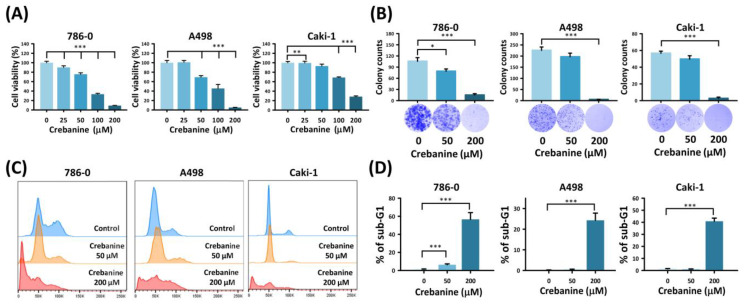 Figure 1
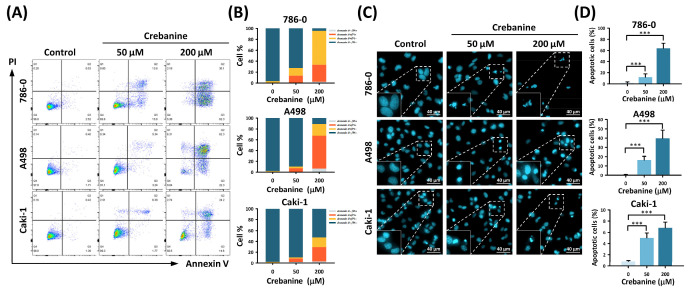 Figure 2
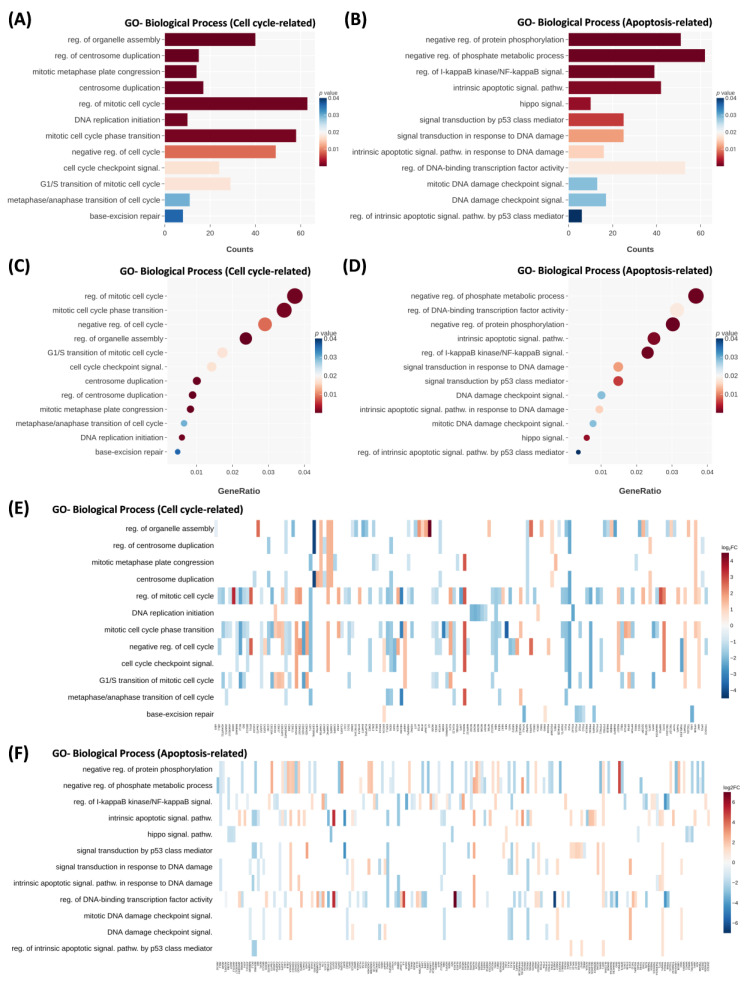 Figure 3
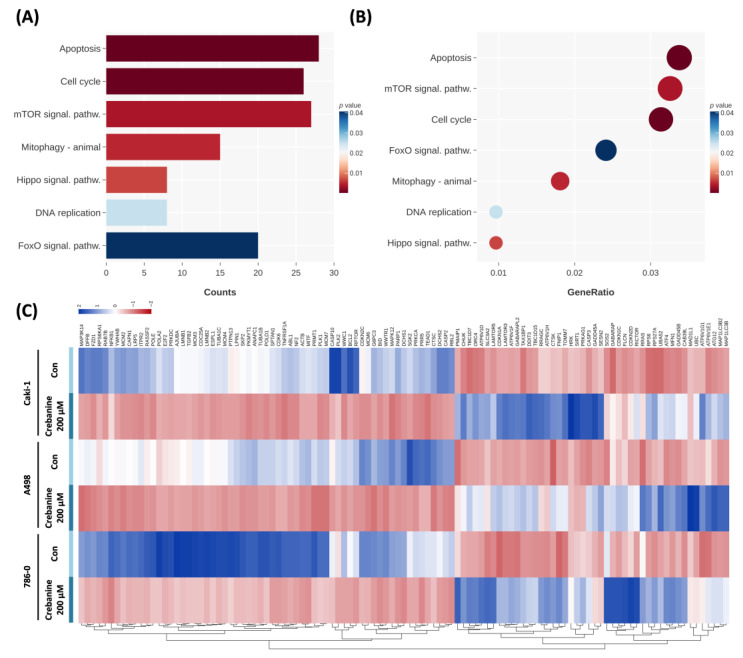 Figure 4
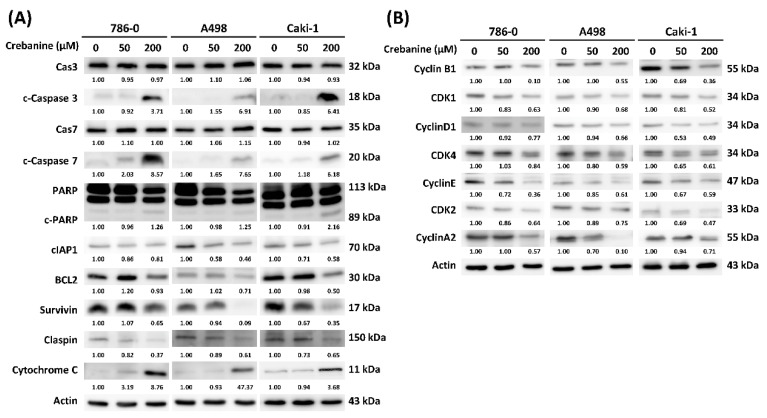 Figure 5
Peer Reviews
No public reviews on file for this paper yet. If you reviewed it on a platform where reviews are public (OpenReview, ICLR, NeurIPS, ICML), you can paste yours below so the community can read it here.
Videos
No videos yet. Explain this paper in a talk, walkthrough, or lecture? Add one.
Taxonomy
TopicsBerberine and alkaloids research · Cancer Mechanisms and Therapy · Cancer Genomics and Diagnostics