Reconstruction of a Genome-Scale Metabolic Model for Aspergillus oryzae Engineered Strain: A Potent Computational Tool for Enhancing Cordycepin Production
Nachon Raethong, Sukanya Jeennor, Jutamas Anantayanon, Siwaporn Wannawilai, Wanwipa Vongsangnak, Kobkul Laoteng

TL;DR
A new computational model for a modified Aspergillus oryzae strain helps boost cordycepin production, a valuable compound for pharmaceuticals.
Contribution
The first genome-scale metabolic model for a cordycepin-producing Aspergillus oryzae strain is reconstructed and validated.
Findings
The GSMM iNR1684 includes 1684 genes and 1947 reactions with high coverage and was validated experimentally.
In silico analysis identified key gene targets in pentose phosphate and one-carbon metabolism pathways for enhancing cordycepin production.
Optimal carbon-to-nitrogen ratio of 11.6:1 was found to maximize cordycepin production in A. oryzae.
Abstract
Cordycepin, a bioactive adenosine analog, holds promise in pharmaceutical and health product development. However, large-scale production remains constrained by the limitations of natural producers, Cordyceps spp. Herein, we report the reconstruction of the first genome-scale metabolic model (GSMM) for a cordycepin-producing strain of recombinant Aspergillus oryzae. The model, iNR1684, incorporated 1684 genes and 1947 reactions with 93% gene-protein-reaction coverage, which was validated by the experimental biomass composition and growth rate. In silico analyses identified key gene amplification targets in the pentose phosphate and one-carbon metabolism pathways, indicating that folate metabolism is crucial for enhancing cordycepin production. Nutrient optimization simulations revealed that chitosan, D-glucosamine, and L-aspartate preferentially supported cordycepin biosynthesis.…
Genes, proteins, chemicals, diseases, species, mutations and cell lines named across the full text — each resolved to its canonical identifier and authoritative record.
Click any figure to enlarge with its caption.
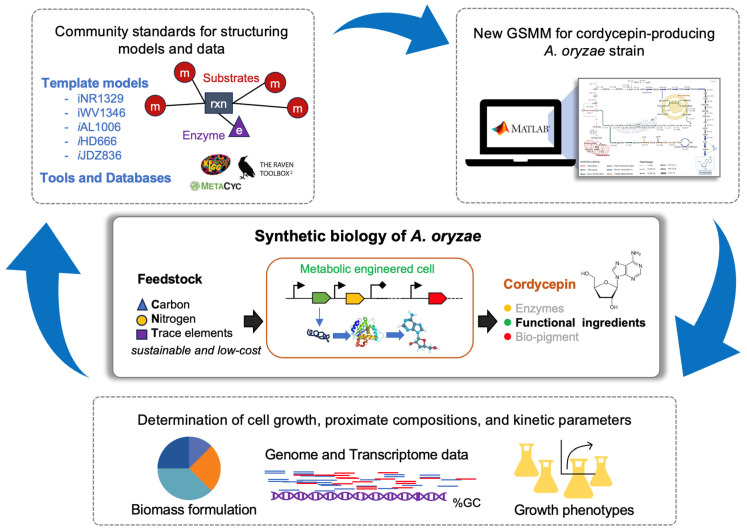 Figure 1
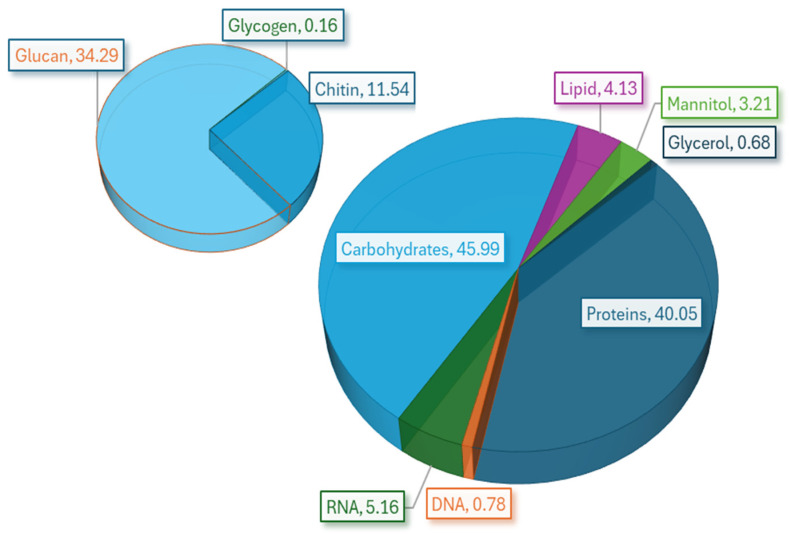 Figure 2
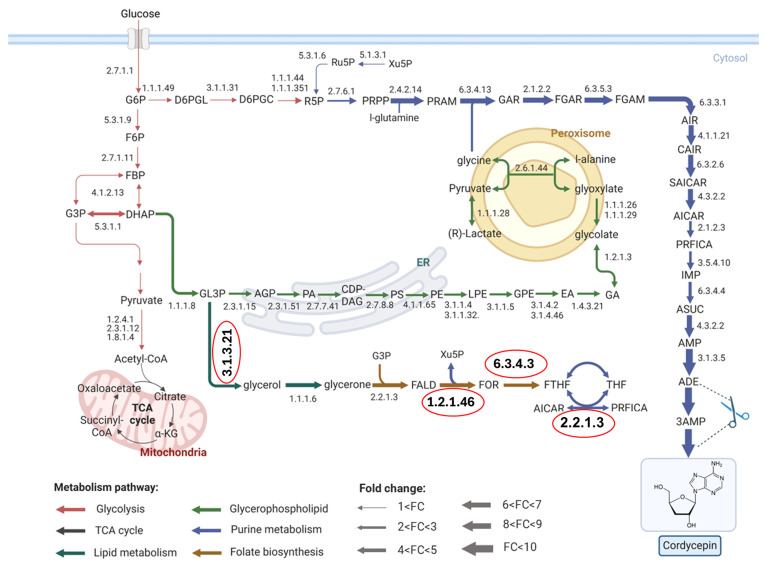 Figure 3
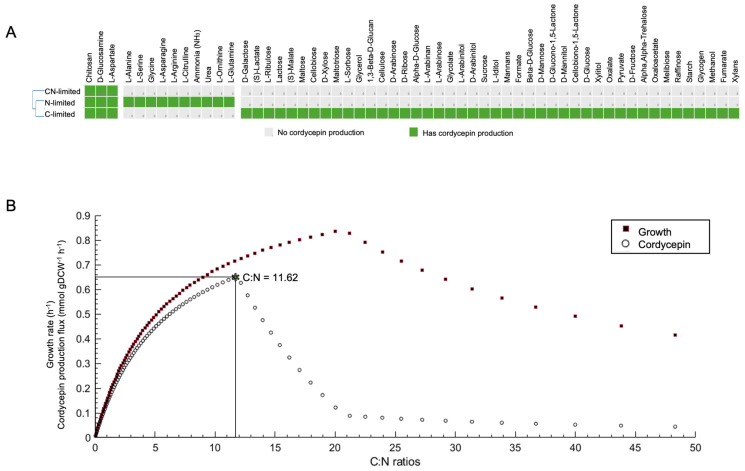 Figure 4
Peer Reviews
No public reviews on file for this paper yet. If you reviewed it on a platform where reviews are public (OpenReview, ICLR, NeurIPS, ICML), you can paste yours below so the community can read it here.
Videos
No videos yet. Explain this paper in a talk, walkthrough, or lecture? Add one.
Taxonomy
TopicsMicrobial Metabolic Engineering and Bioproduction · Biofuel production and bioconversion · Enzyme Catalysis and Immobilization